What native tree species will I receive?
Species selection is matched to your plantation location's climate, soil, and ecosystem needs. Common restorative natives include neem, sal, teak, sheesham, and fruit-bearing species like mango and jamun. You'll receive confirmation of your specific species before planting.
How do I verify my tree is actually being planted and cared for?
Every sapling is GPS geo-tagged at plantation with coordinates you can view on our platform. Your digital dashboard provides progress photos, care updates, and maintenance records throughout the 3-year period. You own the GPS coordinates and certificate—permanent proof of your contribution.
Can I gift a tree to someone else?
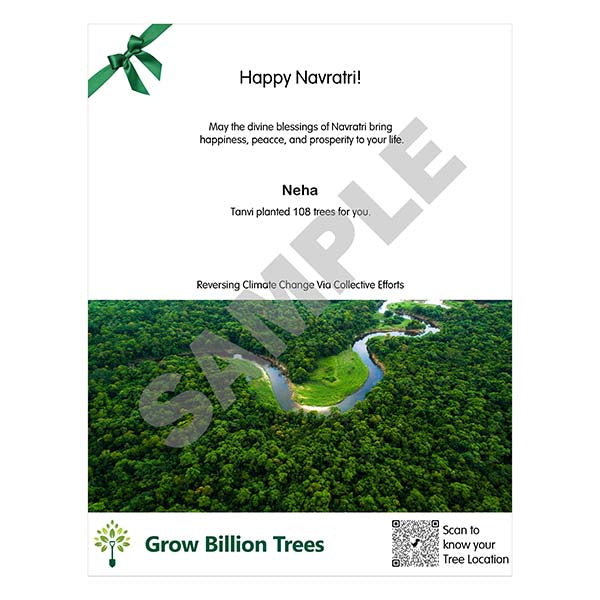
Yes. The digital certificate can be personalized with the recipient's name and a custom message. Gifting is popular for weddings, births, memorials, and corporate recognition—your recipient receives their own access to track the tree's growth via GPS.
What exactly does '3 years of care' include?
Maintenance covers watering and soil care during dry seasons, weeding and pest management, protective staking and pruning, and regular monitoring. Our field partners ensure your sapling survives establishment and matures successfully. Care is location-specific and adjusted for seasonal rainfall.
How does GPS geo-tagging work?
Your sapling's exact coordinates are recorded at plantation. You can view its location on a map, share it with friends, and track it across years. The GPS record creates permanent, verifiable proof of environmental contribution—useful for corporate impact reporting and personal accountability.
Is this product suitable for corporate CSR and ESG programs?
Absolutely. Thousands of businesses use our trees for CSR drives, employee gifting, and ESG reporting. Bulk orders receive customized certificates, impact dashboards, and carbon-offset calculations. Contact us for corporate packages and transparent ROI tracking.
What happens to my tree after the 3-year care period ends?
Your tree is established and self-sufficient by year three. It continues growing for decades, delivering carbon sequestration, soil conservation, and wildlife habitat. You retain ownership and GPS access forever. The sapling becomes a permanent environmental asset.
Can I physically visit and see my tree?
Yes, many planters visit their plantation sites. While not every location offers organized access, your GPS coordinates and our field partner contact enable personal visits. We also provide periodic photo and video updates of your tree's development.
How do I track my tree's growth over time?
Your digital dashboard displays progress photos, height/crown measurements, and care notes uploaded by our field teams. Most saplings show visible growth within 6–12 months. Annual milestone photos document the journey from sapling to thriving young tree.
What if my tree doesn't survive?
Survival is our priority—we select hardy natives, provide intensive care, and monitor regularly. Should an unexpected loss occur, our terms outline support options including replanting. Transparency and accountability are built into every partnership.
Why does native-species restoration matter?
Native trees are adapted to local soil, rainfall, and wildlife—they thrive with less intervention and deliver greater ecosystem benefits than exotic species. They restore habitats, stabilize soil, support local fauna, and anchor long-term forest function. Restoration reverses decades of monoculture and degradation.
Can I plant multiple trees or scale up?
Yes. Individuals can plant as many trees as they choose. Corporate clients can order hundreds or thousands, with bulk pricing, custom reporting, and program coordination. Start with one tree or commit to a larger restoration—your choice.