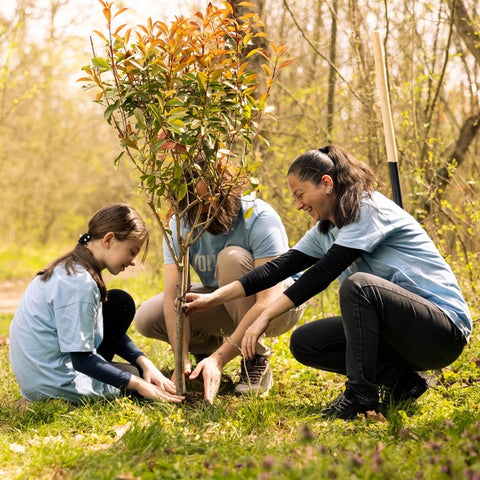
Tree plantation in Delhi NCR offers an immediate path to combat air pollution and create sustainable urban forests. With the region facing severe environmental challenges, planting trees has become essential for improving air quality and creating green spaces. Our comprehensive tree plantation programs welcome communities to join the mission of planting 100 crore trees across India.
Delhi NCR's rapid urbanization has led to significant environmental degradation. However, we're happy to share that strategic tree plantation initiatives are transforming the landscape. Through collective action and innovative approaches like Miyawaki forests and agroforestry, we can create lasting environmental impact.
Why Tree Plantation in Delhi NCR is Critical for Environmental Health
The National Capital Region faces unprecedented air quality challenges. According to the United Nations Climate Change initiative, urban forestry plays a crucial role in mitigating climate impacts. Tree plantation in Delhi NCR directly addresses these concerns by improving air quality and reducing urban heat islands.
Trees act as natural air purifiers, absorbing harmful pollutants and releasing oxygen. A single mature tree can absorb up to 48 pounds of carbon dioxide annually. In densely populated areas like Delhi NCR, this impact multiplies significantly across thousands of planted trees.
Strategic tree plantation creates green corridors that enhance biodiversity. These corridors welcome various bird species and support local ecosystems.
Urban forests also provide crucial temperature regulation. During summer months, areas with dense tree cover experience temperatures 2-8 degrees Celsius lower than concrete-dominated spaces. This natural cooling effect reduces energy consumption and creates more comfortable living environments.
Popular Tree Plantation Projects Transforming Delhi NCR
Large-scale tree plantation can restore degraded ecosystems.
Corporate partnerships can drive tree plantation success. Businesses can achieve net zero targets through environmental action.
Infosys has partnered with local communities for tree plantation drives in their Gurgaon campus and surrounding areas. Their initiative focuses on native species that thrive in Delhi NCR's climate. We're glad to see such corporate leadership in environmental restoration.
HCL Technologies has implemented comprehensive tree plantation programs across their Delhi NCR facilities. Their approach includes employee engagement and long-term tree care protocols. This holistic model ensures sustainable growth and community involvement.
Native Tree Species Perfect for Delhi NCR Climate
Selecting appropriate tree species is crucial for successful tree plantation in Delhi NCR. Native species adapt better to local climate conditions and support indigenous wildlife. Our team recommends focusing on drought-resistant varieties that can withstand the region's extreme weather patterns.
Neem trees offer excellent air purification properties and medicinal benefits. These hardy trees require minimal water once established and provide shade throughout the year. Their natural pest-resistant qualities make them ideal for urban environments.
Peepal trees are considered sacred and provide exceptional oxygen production. A single peepal tree can support the oxygen needs of two people. These trees also offer extensive canopy coverage, making them perfect for parks and residential areas.
Jamun trees provide both environmental and nutritional benefits. Their fruits support local food systems while the trees contribute to carbon sequestration. These native species thrive in Delhi NCR's soil conditions and require minimal maintenance.
Banyan trees create natural gathering spaces and support diverse ecosystems. While they require more space, their extensive root systems help prevent soil erosion. These magnificent trees become community landmarks that bring people together.
Miyawaki Forest Method: Revolutionary Urban Forestry
The Miyawaki method is a Japanese technique that creates dense forests of native species in urban environments.
This method involves planting native species in high density, creating natural competition that accelerates growth. The forest becomes self-sustaining within three years, requiring minimal intervention. We ensure each Miyawaki project includes comprehensive soil preparation and species selection.
Several Delhi NCR locations have successfully implemented Miyawaki forests. These compact forests can be established in areas as small as 100 square meters. The dense plantation creates micro-ecosystems that support various wildlife species.
Corporate campuses across Gurgaon and Noida have adopted Miyawaki methodology for their green initiatives. These forests provide employees with natural spaces while contributing to air quality improvement. The rapid growth rate makes them particularly attractive for businesses seeking quick environmental impact.
Corporate Tree Plantation Programs Driving Change
Corporate participation in tree plantation has accelerated environmental restoration across Delhi NCR. Companies recognize that sustainable practices align with business objectives and social responsibility. Our corporate programs help organizations achieve their net zero targets through verified tree plantation.
Microsoft India has invested in large-scale tree plantation projects across their Gurgaon facilities. Their commitment includes long-term maintenance and monitoring systems. This comprehensive approach ensures planted trees reach maturity and provide lasting environmental benefits.
Wipro has established extensive green belts around their Delhi NCR offices through strategic tree plantation. Their employee engagement programs encourage workforce participation in environmental initiatives. We love seeing such grassroots involvement in corporate sustainability efforts.
Dell Technologies has partnered with local communities for tree plantation drives in underprivileged areas. Their approach combines environmental restoration with social impact. These initiatives create green spaces in areas that need them most while fostering community pride.
Amazon India has committed to extensive tree plantation as part of their climate pledge. Their Delhi NCR initiatives focus on creating urban forests that provide both environmental and aesthetic benefits. The company's long-term vision aligns perfectly with sustainable development goals.
Technology Integration: GeoTag Tracking for Transparency
Modern tree plantation projects in Delhi NCR leverage technology for accountability and transparency. GeoTag systems allow individuals and corporations to track their planted trees throughout their growth journey. This innovation has revolutionized how we approach environmental restoration.
Each planted tree receives unique GPS coordinates and identification markers. Donors can access real-time updates about their tree's health and growth progress. This transparency builds trust and encourages continued participation in tree plantation initiatives.
Our GeoTag technology includes photographic documentation at regular intervals. These visual updates demonstrate the transformation from saplings to mature trees. Participants enjoy watching their environmental investment grow over time.
The system also enables precise monitoring of survival rates and growth patterns. This data helps optimize future tree plantation strategies and species selection. We continuously improve our methods based on technology-driven insights.
Agroforestry: Combining Agriculture with Tree Plantation
Agroforestry presents innovative opportunities for tree plantation in Delhi NCR's peri-urban areas. This approach combines agricultural productivity with environmental restoration. Farmers welcome the additional income streams while contributing to regional reforestation efforts.
Fruit-bearing trees provide economic benefits alongside environmental advantages. Mango, guava, and pomegranate trees offer sustainable income for farming communities. These trees also contribute to carbon sequestration and soil health improvement.
Timber species like eucalyptus and poplar can be integrated with crop rotations. These fast-growing trees provide raw materials for various industries while improving soil structure. Our agroforestry programs ensure sustainable harvesting practices that maintain forest cover.
The United Nations Environment Programme on forests recognizes agroforestry as a crucial strategy for sustainable land use. This approach addresses both food security and environmental restoration simultaneously.
Urban Forest Development: Creating Green Lungs
Urban forest development represents the future of tree plantation in Delhi NCR. These large-scale initiatives create comprehensive green spaces that serve multiple environmental functions. Our urban forestry projects transform vacant lands into thriving ecosystems.
The concept goes beyond simple tree plantation to include understory vegetation and wildlife habitats. These complex ecosystems provide enhanced air purification and biodiversity support. Urban forests become natural sanctuaries within metropolitan environments.
Planning urban forests requires careful consideration of water resources and soil conditions. Our team conducts thorough site assessments to ensure optimal species selection and placement. This scientific approach maximizes environmental benefits while ensuring long-term sustainability.
Community involvement remains central to urban forest success. Local residents become stewards of these green spaces, creating lasting connections with nature. We organize regular maintenance activities that bring communities together around environmental goals.
Mangrove Restoration: Protecting Wetland Ecosystems
While Delhi NCR lacks coastal areas, wetland restoration through appropriate tree plantation remains crucial. The region's lakes and water bodies benefit from strategic vegetation that prevents erosion and improves water quality. Our wetland restoration projects focus on native species adapted to aquatic environments.
Trees like willows and poplars thrive near water bodies and provide excellent erosion control. Their extensive root systems stabilize soil and filter runoff water. These plantations create buffer zones that protect water quality from urban pollution.
Wetland tree plantation also supports migratory bird populations that visit Delhi NCR seasonally. These green corridors provide crucial resting and feeding areas for various species. The biodiversity enhancement contributes to ecological balance across the region.
According to the World Wildlife Fund's forest conservation initiatives, wetland forests play vital roles in climate regulation and biodiversity preservation. Our restoration efforts align with global conservation strategies.
Community Engagement: Building Environmental Awareness
Successful tree plantation in Delhi NCR requires strong community participation and environmental education. Our programs welcome schools, colleges, and residential associations to join reforestation efforts. This grassroots approach creates lasting environmental consciousness.
Educational workshops accompany tree plantation drives to share knowledge about environmental benefits. Participants learn about tree care, watering schedules, and growth monitoring. This education ensures higher survival rates and community ownership of planted trees.
We organize regular tree plantation events that bring families together for environmental action. These activities create positive associations with nature conservation while building social connections. Children particularly enjoy participating in tree planting and watching their trees grow.
Social media campaigns amplify community tree plantation efforts and inspire others to participate. Sharing success stories and growth updates maintains engagement beyond initial planting events. This digital connection extends environmental awareness across broader networks.
Seasonal Considerations for Optimal Tree Plantation
Timing plays a crucial role in tree plantation success across Delhi NCR's diverse climate conditions. Monsoon season provides optimal conditions for new plantings, with natural rainfall supporting root establishment. Our planting schedule aligns with seasonal patterns to maximize survival rates.
Pre-monsoon preparation includes site selection, soil improvement, and species procurement. This advance planning ensures readiness when optimal planting conditions arrive. We coordinate with weather forecasts to time plantation activities perfectly.
Post-monsoon care becomes critical for newly planted trees. Regular watering, mulching, and protection from extreme weather help saplings establish strong root systems. Our three-year care programs ensure trees survive their most vulnerable period.
Winter months allow for maintenance activities and planning future expansions. This season provides opportunities for community education and volunteer training. We use slower growth periods to strengthen our tree plantation infrastructure.
Measuring Environmental Impact and Success
Quantifying the environmental benefits of tree plantation in Delhi NCR requires comprehensive monitoring systems. Our impact assessment includes air quality measurements, carbon sequestration calculations, and biodiversity surveys. These metrics demonstrate the tangible benefits of reforestation efforts.
Air quality monitoring stations near tree plantation sites show measurable improvements in pollutant levels. PM2.5 and PM10 concentrations decrease significantly in areas with dense tree cover. These improvements directly benefit public health and quality of life.
Carbon sequestration calculations help corporations track progress toward net zero targets. Each tree species contributes differently to carbon absorption, and our monitoring systems account for these variations. This precise tracking enables accurate environmental reporting.
Biodiversity surveys document the return of various species to restored areas. Bird populations, insect diversity, and small mammal presence indicate ecosystem health recovery. These biological indicators validate the success of our tree plantation initiatives.
Overcoming Challenges in Urban Tree Plantation
Tree plantation in Delhi NCR faces unique challenges: limited space, soil contamination, and water scarcity. These demand careful planning and adaptive strategies.
Space constraints in dense urban areas require creative approaches to tree plantation. Vertical gardens, rooftop forests, and compact Miyawaki installations maximize green coverage in limited areas. These innovative solutions prove that space limitations need not prevent environmental restoration.
Soil contamination from industrial activities requires remediation before tree plantation. Our soil improvement programs include organic matter addition and contamination neutralization. These preparatory steps ensure planted trees can thrive in restored soil conditions.
Water scarcity challenges are addressed through drought-resistant species selection and efficient irrigation systems. Drip irrigation and rainwater harvesting support tree establishment while conserving precious water resources. These sustainable practices ensure long-term project viability.
Future Vision: Scaling Tree Plantation Across Delhi NCR
The future of tree plantation in Delhi NCR involves scaling successful models across the entire region. Our vision includes creating interconnected green corridors that span multiple cities and districts. This comprehensive approach will transform the region's environmental landscape.
Technology integration will enhance monitoring capabilities and community engagement. Mobile applications will allow residents to report tree health issues and participate in care activities. This digital connectivity will create a network of environmental stewards across Delhi NCR.
Policy support and government partnerships will accelerate tree plantation initiatives. Regulatory frameworks that mandate green cover requirements for new developments will ensure sustainable urban growth. Our advocacy efforts promote legislation that prioritizes environmental restoration.
The United Nations Sustainable Development Goals provide a framework for our expansion plans. Achieving SDG 15 (Life on Land) requires massive scaling of tree plantation efforts across urban and rural areas.
Frequently Asked Questions
What is the best time for tree plantation in Delhi NCR?
The monsoon season from June to September provides optimal conditions for tree plantation in Delhi NCR. Natural rainfall supports root establishment and reduces watering requirements. Pre-monsoon preparation ensures readiness when ideal planting conditions arrive.
Which native tree species grow best in Delhi NCR climate?
Neem, peepal, jamun, and banyan trees are excellent native choices for Delhi NCR. These species adapt well to local climate conditions and support indigenous wildlife. Our team recommends drought-resistant varieties that require minimal maintenance once established.
How long does it take for planted trees to show environmental impact?
Newly planted trees begin showing environmental benefits within the first year through oxygen production and carbon absorption. Significant air quality improvements become measurable within 2-3 years as trees mature. Miyawaki forests show accelerated impact due to their dense planting methodology.
Can individuals track their planted trees using technology?
Yes, our GeoTag technology allows individuals to track their planted trees throughout their growth journey. Each tree receives unique GPS coordinates and regular photographic updates. This transparency system builds trust and encourages continued participation in environmental restoration.
What corporate tree plantation opportunities exist in Delhi NCR?
Corporations can participate through campus beautification, urban forest development, and community outreach programs. These initiatives help achieve net zero targets while demonstrating environmental leadership. Our corporate programs include comprehensive monitoring and impact reporting.
How do Miyawaki forests differ from traditional tree plantation?
Miyawaki forests involve dense planting of native species. This method creates self-sustaining ecosystems. The dense plantation approach maximizes environmental benefits in minimal space.
What maintenance is required for newly planted trees?
Newly planted trees require regular watering, mulching, and protection from extreme weather for the first three years. Our comprehensive care programs include soil monitoring and pest management. This intensive care period ensures high survival rates and healthy growth.
How does tree plantation help achieve corporate sustainability goals?
Tree plantation directly contributes to carbon sequestration and air quality improvement, supporting net zero targets. These initiatives demonstrate environmental responsibility and enhance corporate reputation. Measurable environmental benefits provide concrete data for sustainability reporting.
Can tree plantation projects include fruit-bearing species?
Yes, agroforestry approaches incorporate fruit-bearing trees that provide both environmental and economic benefits. Mango, guava, and pomegranate trees support local food systems while contributing to reforestation. These species offer sustainable income streams for farming communities.
What role does community engagement play in tree plantation success?
Community engagement ensures long-term care and protection of planted trees. Local stewardship creates emotional connections that promote tree survival and health. Educational programs build environmental awareness that extends beyond individual plantation events.Tree plantation in Delhi NCR represents our collective opportunity to combat climate change through direct environmental action. The region's transformation depends on sustained commitment to reforestation and sustainable urban development. Through innovative approaches like Miyawaki forests, corporate partnerships, and community engagement, we can create lasting environmental impact.Our comprehensive programs welcome individuals and organizations to join the mission of planting 100 crore trees across India. With GeoTag technology, three years of care, and proven methodologies, every planted tree contributes to a greener future. Plant a tree in your Name today and become part of the solution for Delhi NCR's environmental challenges. Discover how you can transform your environment and create lasting impact for generations to come.
More about tree plantation in Delhi NCR
Grow Billion Trees plans and runs plantation programmes for companies, with native species, three years of care and every tree geo-tagged on GreenTrack. 85% of trees survive across our programmes.
Talk to our team about a plantation programme in Delhi NCR.