
Pond Restoration for Villages
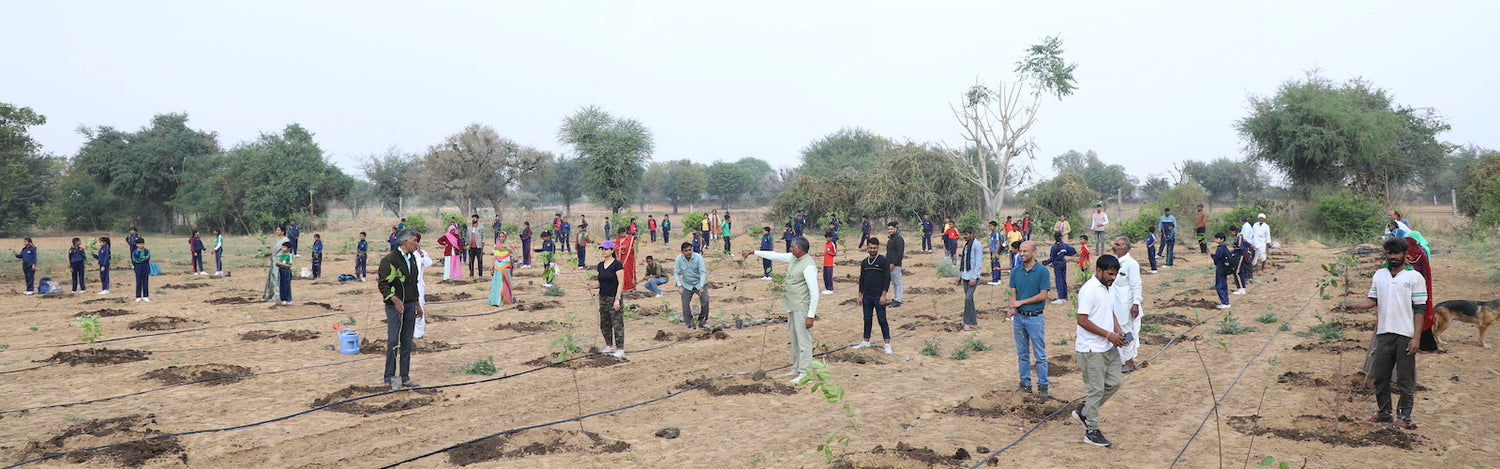
Village ponds store rainwater for farms, cattle and households and recharge groundwater, but many have silted up or been encroached. Restoring them means desilting, repairing inlets and planting native trees on the banks. Grow Billion Trees works with villages and local bodies on the planting and care that keep restored ponds healthy.
Village ponds
- Mission Amrit Sarovar (2022) set out to develop or revive water bodies in every district of India.
- Ponds store monsoon rain and help recharge groundwater for nearby farms.
- Bank planting with native trees reduces erosion and silt build-up.
- Pond projects are planned with the gram panchayat and the village community.
Sources: Mission Amrit Sarovar, Ministry of Rural Development (2022)
What it changes
- Water: Rainwater stored and groundwater recharged for nearby farms.
- Farmers: Water for crops and cattle through the dry months.
- Nature: Shade and habitat from native trees on the banks.
- Companies: A rural CSR project with visible, tracked results.
How it works
- Choose ponds with villages and panchayats
- Plan desilting and inlet repair with partners
- Native planting on banks
- Community care
- Monitoring and reporting
Frequently asked questions
Why do village ponds need restoring?
Many have silted up or been encroached, so they hold less water for farms and families.
What does pond restoration include?
Desilting, repairing inlets and planting native trees and grasses on the banks.
Who do you work with?
The village community and the gram panchayat, which manage the pond.
Is pond restoration eligible for CSR?
Yes, conservation of natural resources is covered by Schedule VII item (iv).
How long does it take?
Planning and works usually fit around the dry season, with planting timed for the monsoon.
Talk to our team to plan your programme.
