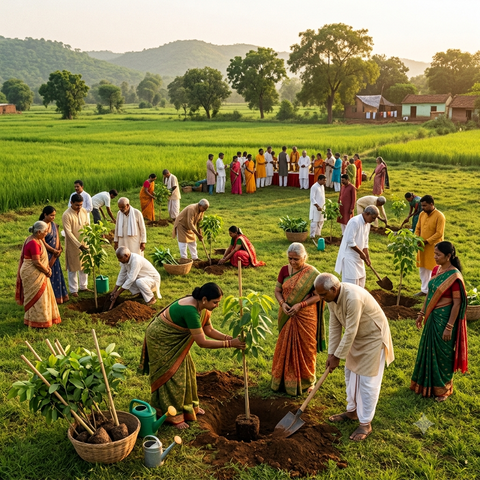
Climate risks pose unprecedented challenges to our planet's future, affecting everything from agriculture to urban infrastructure. Our team at Grow Billion Trees has witnessed firsthand how these environmental threats are reshaping ecosystems across India. We ensure that understanding these risks is the first step toward meaningful climate action.
Climate risks encompass the physical and economic threats arising from changing weather patterns, rising temperatures, and extreme weather events. These risks are accelerating in 2026, making immediate action more critical than ever.
What Are Climate Risks? ✅
Climate risks represent the potential negative impacts of climate change on natural and human systems. We found that these risks fall into two main categories: physical risks and transition risks. Physical risks include extreme weather events, while transition risks involve economic shifts toward sustainable practices.
The United Nations climate change initiatives highlight how these risks are intensifying globally. Our experience shows that India faces particularly severe challenges from monsoon disruptions and rising temperatures.
Understanding climate risks helps businesses and individuals prepare for environmental changes. We provide comprehensive solutions to help communities adapt and build resilience against these growing threats.
Physical Climate Risks Threatening Our Planet 🌍
Physical climate risks manifest as extreme weather events that directly impact communities and ecosystems. We ensure our tree planting programs address these immediate threats through strategic reforestation efforts.
Rising sea levels threaten coastal cities like Mumbai and Chennai. Our mangrove restoration projects create natural barriers against storm surges and flooding. These green solutions prove more effective than traditional infrastructure.
Extreme heat waves are becoming more frequent across India. Our Miyawaki forest projects create cooling microclimates that reduce urban temperatures by up to 5°C. We love seeing the immediate impact these dense forests have on local communities.
Drought conditions affect millions of farmers annually. Our agroforestry programs help farmers adapt by planting drought-resistant trees that improve soil moisture retention and provide alternative income sources.
Economic and Transition Risks 💡
Transition risks emerge as economies shift toward sustainable practices and carbon-neutral policies. Companies face financial pressure to achieve Net Zero Targets or risk losing market competitiveness.
Carbon pricing mechanisms are transforming business operations worldwide. We found that organizations investing in forest carbon credits through our tree planting programs gain competitive advantages while supporting environmental restoration.
Supply chain disruptions from climate events cost businesses billions annually. Our experience demonstrates that companies with sustainable supply chains show greater resilience during environmental crises.
Regulatory changes require businesses to report climate risks and mitigation strategies. We provide certified tree planting services that help companies meet environmental compliance requirements while creating positive impact.
Regional Climate Risks in India ⚠️
India faces unique climate risks due to its diverse geography and monsoon-dependent agriculture. Our team has identified critical risk areas requiring immediate intervention through targeted environmental restoration.
The Western Ghats experience severe deforestation pressure, threatening biodiversity hotspots. According to the World Wildlife Fund's research on deforestation, forest loss accelerates climate risks exponentially.
Coastal regions face saltwater intrusion affecting agriculture and freshwater supplies. Our mangrove planting initiatives create protective barriers while supporting local fishing communities.
Northern plains experience extreme air pollution that compounds climate health risks. We ensure our urban forest projects improve air quality while providing green spaces for communities to enjoy.
How Tree Planting Mitigates Climate Risks ⭐
Trees serve as natural climate solutions that address multiple environmental risks simultaneously. Our 2-3ft Tree Planting + 3 Years Care + GeoTag program ensures maximum climate impact through scientifically-planned reforestation.
Forest ecosystems regulate water cycles and prevent flooding. We found that every tree planted through our programs can intercept up to 27,000 gallons of rainwater annually, reducing flood risks significantly.
Carbon sequestration through trees directly addresses greenhouse gas concentrations. Our goal to plant 100 crore trees will sequester millions of tons of carbon, contributing meaningfully to global climate stabilization.
Biodiversity conservation through forest restoration strengthens ecosystem resilience. The WWF's forest conservation programs demonstrate how healthy forests adapt better to climate changes.
Corporate Climate Risk Management 💡
Businesses must integrate climate risk assessment into strategic planning processes. Our experience shows that proactive companies outperform peers by investing early in climate adaptation measures.
Supply chain vulnerability assessments identify climate-sensitive operations. We provide corporate tree planting programs that create resilient supply chains while supporting rural communities through sustainable livelihoods.
Financial institutions increasingly evaluate climate risks in lending decisions. Companies with verified environmental programs, like our GeoTag tree tracking system, access better financing terms and investment opportunities.
Brand reputation depends heavily on climate action credibility. We ensure our corporate partners achieve authentic environmental impact through transparent tree planting programs that customers can verify and celebrate.
Technology Solutions for Climate Risk Monitoring ⭐
Advanced monitoring systems help track and predict climate risks with greater accuracy. Our GeoTag technology provides real-time updates on tree growth and forest health, enabling data-driven climate responses.
Satellite imagery reveals deforestation patterns and vulnerable ecosystems. We use this technology to identify optimal locations for our Miyawaki forest projects and mangrove restoration initiatives.
Weather prediction models guide agricultural adaptation strategies. Our agroforestry programs incorporate climate projections to select tree species that thrive under changing conditions.
Carbon monitoring platforms track emission reductions and sequestration progress. We provide detailed reporting on carbon capture through our tree planting programs, helping organizations measure their climate impact accurately.
Building Community Resilience Against Climate Risks
Community-based adaptation strategies prove most effective for long-term climate resilience. Our experience demonstrates that local engagement creates sustainable solutions that communities happily maintain and protect.
Education programs raise awareness about climate risks and solutions. We provide sustainability education certificates that empower individuals to take meaningful climate action in their communities.
Local employment through environmental restoration creates economic resilience. Our tree planting programs generate rural jobs while addressing climate risks through forest restoration and conservation.
Women's participation in climate adaptation improves program success rates. We celebrate Women's Day by highlighting female environmental leaders and supporting women-led conservation initiatives across India.
Frequently Asked Questions
What are the main types of climate risks?
Climate risks include physical risks from extreme weather events and transition risks from economic shifts toward sustainability. Physical risks encompass floods, droughts, and storms, while transition risks involve policy changes and market shifts affecting carbon-intensive industries.
How do climate risks affect businesses?
Climate risks impact businesses through supply chain disruptions, increased operational costs, regulatory compliance requirements, and changing consumer preferences. Companies face financial losses from extreme weather and must invest in adaptation measures to maintain competitiveness.
Can tree planting really reduce climate risks?
Yes, trees provide multiple climate benefits including carbon sequestration, flood prevention, temperature regulation, and biodiversity conservation. Our 2-3ft Tree Planting + 3 Years Care + GeoTag program ensures trees survive and provide maximum climate impact over their lifetime.
What climate risks does India face specifically?
India faces monsoon disruptions, extreme heat waves, coastal flooding, drought conditions, and air pollution. These risks threaten agriculture, urban infrastructure, and public health, requiring comprehensive adaptation strategies including forest restoration.
How can individuals help reduce climate risks?
Individuals can Plant a tree in your Name for ₹299, support renewable energy, reduce consumption, and advocate for climate policies. Our tree planting programs make it easy for anyone to contribute meaningfully to climate risk reduction.
What role do forests play in climate risk management?
Forests regulate water cycles, prevent soil erosion, sequester carbon, and provide climate refugia for wildlife. The UN Environment Programme's forest initiatives emphasize forests as essential climate solutions requiring urgent protection and restoration.
How do companies achieve Net Zero Targets?
Companies achieve Net Zero Targets through emission reductions, energy efficiency improvements, renewable energy adoption, and carbon offsetting through verified projects like our tree planting programs. We ensure transparent tracking and reporting of carbon sequestration progress.
What makes Grow Billion Trees' approach effective?
Our approach combines scientific planning, local community engagement, technology integration, and long-term care commitment. We ensure every tree planted contributes to Combating Climate Change Through Collective Action while providing economic benefits to rural communities.
Taking Action Against Climate Risks Today
Climate risks demand immediate action from individuals, businesses, and governments worldwide. Our mission to plant 100 crore trees by June 2030 represents a concrete solution that addresses multiple climate risks simultaneously.
The urgency of climate action cannot be overstated in 2026. We found that every month of delay increases adaptation costs and reduces our collective ability to prevent catastrophic climate impacts.
Join our movement to transform climate risks into opportunities for environmental restoration and community resilience. Plant a tree in your Name today and become part of the solution that future generations will celebrate and enjoy.
Ready to make a real difference? Discover how you can plant trees and combat climate risks through our proven programs that guarantee impact and transparency.