


BRSR Value Chain Disclosures: Bringing Suppliers into Plantation Programmes
SEBI's value chain framework asks listed companies to report BRSR Core indicators for suppliers and customers that each make up 2% or more of purchases or sales, covering up to 75% of the value chain. In March 2025 SEBI made these disclosures voluntary. Supplier and farmer plantation programmes can support them, but removals must stay separate from Scope 3 emissions.
A large part of most companies' environmental footprint sits with their suppliers and customers. SEBI's value chain disclosures were designed to bring that into view. They are voluntary for now, but many companies are building the systems anyway, and plantation programmes with suppliers and farmers are a common part of that work.
What the framework covers
- Introduced with BRSR Core in SEBI's circular of 12 July 2023, for the top 250 listed companies.
- The value chain means upstream and downstream partners that individually account for 2% or more of the company's purchases or sales, covering up to 75% of purchases or sales in total.
- Companies report BRSR Core indicators for these partners, either together or separately.
- After an earlier deferral, SEBI made value chain disclosures, and their assessment or assurance, voluntary in March 2025.
Why companies still prepare
- Large customers, especially exporters' buyers, increasingly ask for supplier ESG data anyway.
- Scope 3 emissions are often the largest part of a footprint, and reducing them needs supplier engagement.
- Building data systems takes several reporting cycles; a voluntary period is the time to start.
Where plantation fits
Plantation with suppliers or the farmers who grow your raw materials can support value chain goals in several ways:
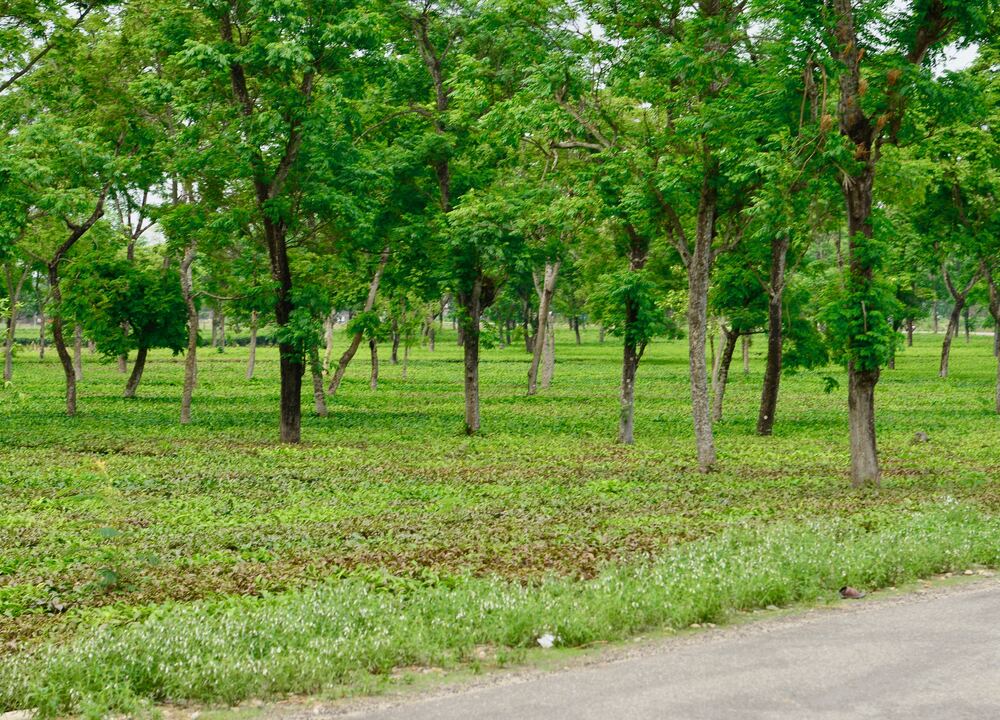
- Agroforestry with sourcing farmers: trees on farms improve soil, add income from fruit or timber and can increase climate resilience.
- Supplier green belts: co-funded plantation around supplier sites, with shared monitoring.
- Supplier engagement: joint programmes that also build trust for collecting energy and water data.
One rule matters most: removals are not reductions. Trees on supplier land should not be subtracted from Scope 3 emissions in your BRSR. Report them as initiatives, with their own data, as explained in our BRSR Principle 6 guide.
Getting supplier plantation data right
- Agree up front who owns the trees and who may claim them, so the same trees are not reported twice.
- Record locations, species and planting dates for each supplier or farmer.
- Check survival on a fixed schedule and keep photographs.
- Track benefits to farmers separately, for example fruit or timber income, so they can also support Principle 8 disclosures.
Start with farmers
Our agroforestry programmes plant fruit and timber trees with farmers, who can earn up to 3× income from the trees over time, and report every tree with geo-tags and survival data. See our agroforestry programmes or our ESG and BRSR support.
Sources: SEBI circulars · BRSR value chain disclosure (summary). Last updated: October 2026. Rules change; check the latest notification before you rely on any detail.
Further reading: BRSR Principle 6: Where Tree Plantation and Biodiversity Go in Your Report · BRSR Core Assurance in FY 2026-27: What the Top 1,000 Companies Need Ready
Frequently Asked Questions
What counts as the value chain in BRSR?
Upstream and downstream partners that each account for 2% or more of the company's purchases or sales, covering up to 75% of purchases or sales in total.
Are BRSR value chain disclosures mandatory?
Not at present. In March 2025 SEBI made value chain disclosures, and their assessment or assurance, voluntary.
Can trees planted with suppliers reduce our Scope 3 emissions?
They should not be subtracted from reported Scope 3 emissions. Report plantation separately as an initiative, with its own evidence.
How can farmer agroforestry help value chain reporting?
It can support supplier engagement, climate resilience and farmer income, and provide documented outcomes for Principle 6 and Principle 8 disclosures.
Keep reading
 BRSR Principle 6: Where Tree Plantation and Biodiversity Go in Your Report
 BRSR Core Assurance in FY 2026-27: What the Top 1,000 Companies Need Ready
 Green Credits vs Carbon Credits vs CSR vs BRSR: Which Applies to Your Company?
 Carbon Footprints of Your Organization: Calculate & Reduce
 How Tree Plantation Reduces Carbon Footprints | 2026 Guide


Leave a comment