
CSR Tree Plantation Under Schedule VII: A Compliance Checklist for 2026

Tree plantation is an eligible CSR activity under item (iv) of Schedule VII, environmental sustainability, which includes agroforestry and protection of flora and fauna. To stay compliant, use a registered implementing agency, approve the project in the board's annual action plan, keep overheads within 5%, handle unspent amounts on time and keep utilisation and survival records.
Tree plantation is one of the most common CSR activities in India, and one of the easiest to get wrong on paper. The trees may be thriving, but if the agreement, the approvals or the unspent-funds treatment are not right, the spend can be questioned. This checklist follows the Companies Act, 2013 and the CSR Rules as amended in 2021.
1. Check that CSR applies to you
Section 135 applies to a company that, in the preceding financial year, had any of: net worth of ₹500 crore or more, turnover of ₹1,000 crore or more, or net profit of ₹5 crore or more. Such a company must spend at least 2% of its average net profit of the three immediately preceding financial years on CSR.
2. Confirm the activity is in Schedule VII
Item (iv) of Schedule VII covers ensuring environmental sustainability, ecological balance, protection of flora and fauna, animal welfare, agroforestry, conservation of natural resources and maintaining the quality of soil, air and water. Tree plantation, urban forests, mangrove restoration and farmer agroforestry all fit here. Agroforestry with farmers can also support livelihood objectives elsewhere in Schedule VII.
3. Choose an eligible implementing agency
- If you do not implement the project yourself, the agency must be an eligible entity (such as a Section 8 company, registered trust or registered society, subject to the conditions in the Rules).
- Since 1 April 2021, implementing agencies must be registered with the Ministry of Corporate Affairs by filing Form CSR-1. Put the CSR registration number in your agreement.
- The agreement should state locations, species, number of trees, maintenance period, reporting frequency and payment milestones.
4. Get board approval in the annual action plan
The CSR committee recommends, and the board approves, an annual action plan listing the projects, the manner of execution, fund allocation and the monitoring mechanism. A plantation project with maintenance over several years can be structured as an ongoing project (up to three years, excluding the year it starts).
5. Keep overheads within 5%
Administrative overheads of the company for CSR are capped at 5% of total CSR expenditure for the year. Sapling, planting, protection and maintenance costs paid to the implementing agency are project costs, not overheads.
6. Handle unspent amounts on time
| Situation | What the Rules require |
|---|---|
| Unspent amount relating to an ongoing project | Transfer to an Unspent CSR Account within 30 days of the end of the financial year, and spend it within the next three financial years. Anything still unspent goes to a Schedule VII fund within 30 days of the end of the third year. |
| Any other unspent amount | Transfer to a fund specified in Schedule VII within six months of the end of the financial year. |
Multi-year plantation contracts with maintenance are a common reason for unspent balances, so plan payment milestones to match the work.
7. Impact assessment for larger programmes
A company with an average CSR obligation of ₹10 crore or more over the three preceding years must have an independent impact assessment done for projects of ₹1 crore or more that were completed at least one year before the study. The report goes to the board and is attached to the annual report on CSR.
For plantation, a useful impact assessment looks at survival, growth, canopy, biodiversity and benefits to communities or farmers, not just the number of saplings.
8. Documents to keep
- Board resolution and annual action plan
- Agreement with the implementing agency, with its CSR registration number
- Utilisation certificates from the agency and the CFO's certification that funds were used as approved
- Site list with geo-tags, species list and planting dates
- Survival reports and photographs over the maintenance period
- Impact assessment report, where required
How this connects to BRSR and Green Credits
If your company is in the top 1,000 listed companies, the same project appears in your BRSR (see our BRSR Principle 6 guide). Green Credits from the government's Green Credit Programme can also be exchanged once towards CSR obligations (see our Green Credit Programme guide). For how all of these fit together, read Green credits vs carbon credits vs CSR vs BRSR.
Plan a compliant programme
We run CSR plantation programmes with geo-tagged, survival-checked reporting and an 85% verified survival rate. See our CSR tree plantation programmes or calculate your CSR obligation.
Sources: Ministry of Corporate Affairs: CSR · Companies (CSR Policy) Amendment Rules, 2021 (summary). Last updated: October 2026. Rules change; check the latest notification before you rely on any detail.
Further reading: Green Credits vs Carbon Credits vs CSR vs BRSR: Which Applies to Your Company? · Green Credit Programme 2026: How Tree Plantation Green Credits Work
Frequently Asked Questions
Is tree plantation an eligible CSR activity?
Yes. Item (iv) of Schedule VII covers environmental sustainability, including agroforestry, protection of flora and fauna and conservation of natural resources.
Can CSR money be spent on maintaining trees for several years?
Yes, if the project is approved with a maintenance scope. Multi-year projects can be treated as ongoing projects of up to three years, with unspent amounts moved to an Unspent CSR Account within 30 days of the year end.
Does our plantation partner need CSR-1 registration?
Implementing agencies have had to register with the Ministry of Corporate Affairs by filing Form CSR-1 since 1 April 2021. Ask for the CSR registration number and put it in your agreement.
When is an impact assessment required?
When the company's average CSR obligation over the three preceding years is ₹10 crore or more, for projects of ₹1 crore or more completed at least one year before the study.
What is the limit on CSR administrative overheads?
Administrative overheads are capped at 5% of the company's total CSR expenditure for the financial year.
Keep reading
 Green Credits vs Carbon Credits vs CSR vs BRSR: Which Applies to Your Company?
 Green Credit Programme 2026: How Tree Plantation Green Credits Work
 Compensatory Afforestation and CAMPA Explained for Project Developers
 BRSR Principle 6: Where Tree Plantation and Biodiversity Go in Your Report
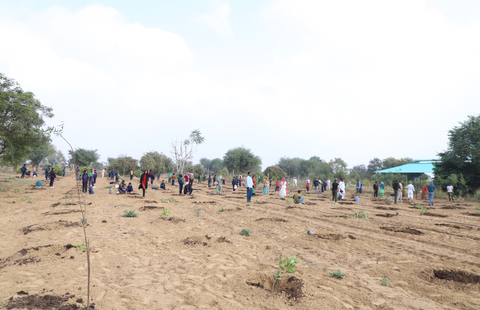 A Guide to CSR Through Tree Plantation and 80G Benefits
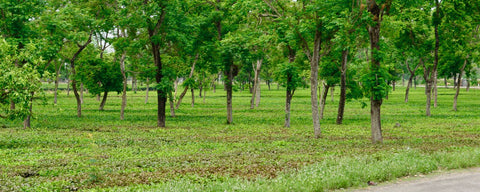 Community agroforestry and CSR around mines


Leave a comment