
Compensatory Afforestation and CAMPA Explained for Project Developers

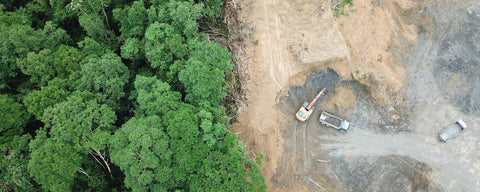
When forest land is diverted for a road, mine, plant or other non-forest use, the project must pay for compensatory afforestation (CA) and the Net Present Value (NPV) of the lost forest. The money goes into the Compensatory Afforestation Fund, managed by CAMPA. Newer options, such as accredited compensatory afforestation and Green Credits, let land and plantations be prepared in advance.
Every year, infrastructure, mining and industrial projects in India need forest land. The law allows this only with central approval and only if the lost forest is compensated. For project developers, compensatory afforestation is often one of the longest items on the approval checklist. This guide explains how it works today.
The law in brief
- The Van (Sanrakshan Evam Samvardhan) Adhiniyam, 1980 (the Forest (Conservation) Act, 1980, renamed and amended in 2023) requires prior approval of the central government before forest land is used for non-forest purposes.
- The Van (Sanrakshan Evam Samvardhan) Rules, 2023 set out the approval process, run through the PARIVESH portal, and the conditions attached to approvals.
- The Compensatory Afforestation Fund Act, 2016 created the funds into which compensatory payments are made, managed by the National and State Compensatory Afforestation Fund Management and Planning Authorities (CAMPA).
What a project has to pay for
| Item | What it is |
|---|---|
| Compensatory afforestation (CA) | Afforestation done in place of the forest land diverted. Usually raised on non-forest land provided by the user agency; in specified cases, on degraded forest land. |
| Net Present Value (NPV) | A payment for the loss of the forest's ecological services, based on the type and density of the forest diverted. |
| Other conditions | Site-specific conditions, such as catchment treatment, wildlife plans or safety zone plantation. |
The money is deposited into the Compensatory Afforestation Fund. The actual plantation is carried out by the State Forest Department, using the State CAMPA's annual plan.
Newer ways to meet CA obligations
Land banks
The 2023 Rules provide for land banks: pools of land identified in advance for compensatory afforestation, so projects are not held up looking for suitable land.
Accredited compensatory afforestation (ACA)
Under ACA, an entity can raise plantation in advance on land it holds, in patches of at least 10 hectares. Once the plantation is at least five years old and meets the prescribed canopy density, it can be offered to meet the CA obligation of a project. This turns CA from a delayed obligation into a ready asset.
Green Credits
Green Credits earned under the Green Credit Programme, for restoring degraded forest land, can be exchanged once towards compensatory afforestation. See our Green Credit Programme guide.
Practical tips for project developers
- Start early. CA land identification and plantation timelines often take longer than the rest of the forest clearance.
- Prefer native species and real survival. Approvals, ACA and Green Credits all look at what survives, not what was planted.
- Keep a clean evidence trail. Maps, KML boundaries, plantation journals and survival counts make inspections and later audits easier.
- Do not confuse CA with CSR. Statutory CA is a condition of your approval. Voluntary plantation you fund through CSR is separate, unless it is done through a route the rules recognise, such as Green Credits.
Where private plantation partners fit
Statutory compensatory afforestation on forest land is carried out by forest departments. Companies often also have plantation commitments outside forest land: green belts, safety zones, community lands, farmers' fields and city sites. These need the same discipline of planning, survival and reporting. See how we support plantation mandates, or read Green credits vs carbon credits vs CSR vs BRSR.
Sources: Consolidated guidelines under the Van (Sanrakshan Evam Samvardhan) Adhiniyam (PARIVESH) · National CAMPA · MoEFCC. Last updated: October 2026. Rules change; check the latest notification before you rely on any detail.
Further reading: Green Credit Programme 2026: How Tree Plantation Green Credits Work · CSR Tree Plantation Under Schedule VII: A Compliance Checklist for 2026
Frequently Asked Questions
What is compensatory afforestation?
It is afforestation done in place of forest land that is diverted for a non-forest purpose, such as a road, mine or industrial project, as a condition of the approval.
What is CAMPA?
The Compensatory Afforestation Fund Management and Planning Authority. National and State CAMPAs manage the Compensatory Afforestation Fund, set up under the Compensatory Afforestation Fund Act, 2016, into which project payments are made.
What is Net Present Value (NPV) in forest clearance?
NPV is a payment for the loss of the ecological services of the forest land being diverted. It is separate from the cost of compensatory afforestation.
What is accredited compensatory afforestation?
A system in which plantation is raised in advance, in patches of at least 10 hectares. Once at least five years old and meeting the prescribed canopy density, it can be used to meet a project's compensatory afforestation obligation.
Can Green Credits be used for compensatory afforestation?
Yes. Green Credits earned for restoring degraded forest land under the Green Credit Programme can be exchanged once towards compensatory afforestation obligations.
Keep reading
 Green Credit Programme 2026: How Tree Plantation Green Credits Work
 CSR Tree Plantation Under Schedule VII: A Compliance Checklist for 2026
 Nagar Van Yojana: How Companies Can Partner on Urban Forests
 Jairam Ramesh: Green Policy Champion Planting Seeds for India's Future
 Green Credits vs Carbon Credits vs CSR vs BRSR: Which Applies to Your Company?
 Tree Transplantation vs Replacement Planting for Project Developers


Leave a comment