


India's Carbon Market (CCTS): Can Tree and Mangrove Projects Earn Carbon Credits?
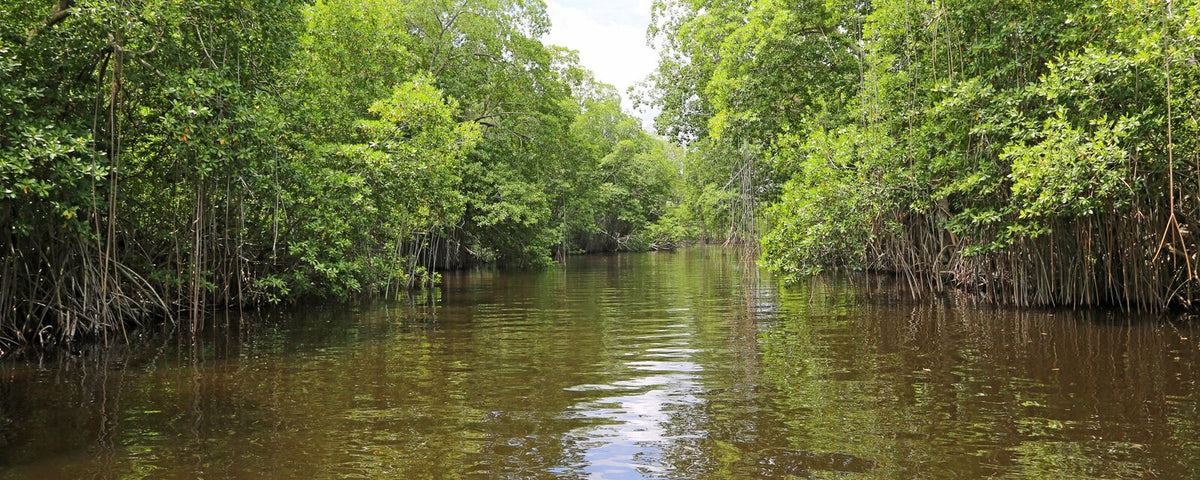
India's Carbon Credit Trading Scheme (CCTS) issues Carbon Credit Certificates, each equal to one tonne of CO2 equivalent. Obligated industries trade them to meet emission-intensity targets, and an offset mechanism lets other entities earn them from approved project types. Mangrove afforestation and reforestation is an approved methodology; other tree planting qualifies only if it fits an approved methodology.
India is building its own carbon market. For companies that already fund tree plantation or mangrove restoration, the obvious question is whether that work can earn Indian carbon credits. The answer is: sometimes, under specific rules. This guide explains how the scheme works and where nature projects fit.
What the Carbon Credit Trading Scheme is
The Carbon Credit Trading Scheme, 2023 was notified under the Energy Conservation Act, 2001, as amended in 2022. It creates a unit called the Carbon Credit Certificate (CCC); one CCC represents one tonne of carbon dioxide equivalent (tCO2e) reduced, avoided or removed.
Key institutions:
- Bureau of Energy Efficiency (BEE) administers the scheme and approves methodologies.
- Grid Controller of India (Grid-India) runs the registry where certificates are held.
- Trading happens on power exchanges, regulated by the Central Electricity Regulatory Commission.
Two parts: compliance and offsets
The compliance mechanism sets greenhouse gas emission-intensity targets for energy-intensive sectors, such as aluminium, cement, pulp and paper, chlor-alkali, iron and steel, and petrochemicals. Plants that beat their targets earn certificates; plants that miss them must buy certificates to cover the gap.
The offset mechanism, added by an amendment in December 2023, is for everyone else. A non-obligated entity can register a project under an approved methodology, have it validated and verified, and receive certificates for the reductions or removals it achieves. Those certificates can then be sold, including to obligated entities.
Where tree and mangrove projects fit
In March 2025, BEE approved the first set of offset methodologies. Alongside renewable energy, green hydrogen, industrial energy efficiency, landfill methane and compressed biogas, it included afforestation and reforestation of degraded mangrove habitats. BEE has continued to add methodologies, including for agriculture, so check BEE's current list before planning a project.
In practice this means:
- Mangrove restoration can earn CCCs if it follows the approved methodology and its monitoring rules.
- Other tree planting, such as urban forests, agroforestry or roadside planting, can earn CCCs only if an approved methodology covers it. Funding trees does not by itself create carbon credits.
- All projects need validation, registration, monitoring over many years and independent verification before any certificate is issued.
What makes a nature project credit-ready
- Additionality: the project would not have happened without carbon finance.
- Baseline and boundaries: clear maps of the land and what it was like before.
- Permanence: plans to protect the trees or mangroves for the full crediting period.
- Measurement: survival counts, growth data and biomass estimates, done regularly.
- Community and land rights: clear consent and benefit-sharing with the people who live there.
CCTS, voluntary carbon markets and Green Credits
Indian companies may also come across international voluntary standards and the Green Credit Programme. They are not the same:
- CCTS certificates are India's compliance-grade unit, tracked in the national registry.
- International voluntary credits are issued by private standards bodies and are used mainly for voluntary claims.
- Green Credits from MoEFCC reward restoration of degraded forest land, are counted per surviving tree, and cannot be sold. See our Green Credit Programme guide.
For a side-by-side view, read Green credits vs carbon credits vs CSR vs BRSR.
What this means for your company
If you are an obligated entity, you will mostly deal with the compliance market. If you fund nature projects, the offset mechanism is worth watching, especially for mangroves. Either way, avoid counting the same trees twice: credits sold to someone else cannot also be claimed against your own emissions.
We run mangrove restoration and other plantation programmes with geo-tagged, survival-checked reporting, the kind of evidence carbon methodologies depend on. Read about our carbon credit support or plan a programme with our team.
Sources: Bureau of Energy Efficiency · Offset methodologies approved (Energetica India) · CCTS overview. Last updated: October 2026. Rules change; check the latest notification before you rely on any detail.
Further reading: Green Credits vs Carbon Credits vs CSR vs BRSR: Which Applies to Your Company? · What are Carbon Credits? Complete Guide to Climate Finance
Frequently Asked Questions
What is a Carbon Credit Certificate?
It is the unit of India's Carbon Credit Trading Scheme. One certificate represents one tonne of carbon dioxide equivalent reduced, avoided or removed, and is held in the national registry run by Grid-India.
Can tree plantation earn carbon credits in India?
Only if the project follows a methodology approved by the Bureau of Energy Efficiency and passes validation, monitoring and verification. Mangrove afforestation and reforestation is an approved methodology; check BEE's current list for other types.
Who can use the offset mechanism?
Non-obligated entities, such as companies outside the compliance sectors, project developers, farmer groups and others, can register eligible projects under the offset mechanism.
Are carbon credits the same as Green Credits?
No. Carbon Credit Certificates are tradable units for tonnes of CO2e under the Energy Conservation Act. Green Credits are issued by MoEFCC for restoring degraded forest land and cannot be sold outside a group of companies.
Keep reading
 Green Credits vs Carbon Credits vs CSR vs BRSR: Which Applies to Your Company?
 What are Carbon Credits? Complete Guide to Climate Finance
 Green Credit Programme 2026: How Tree Plantation Green Credits Work
 CSR Tree Plantation Under Schedule VII: A Compliance Checklist for 2026
 Tree Felling Rules on Farmland: What Farmers and Companies Need to Know


Leave a comment