
Madhu Kamini Tree: Sweet Scented Charm of Nature
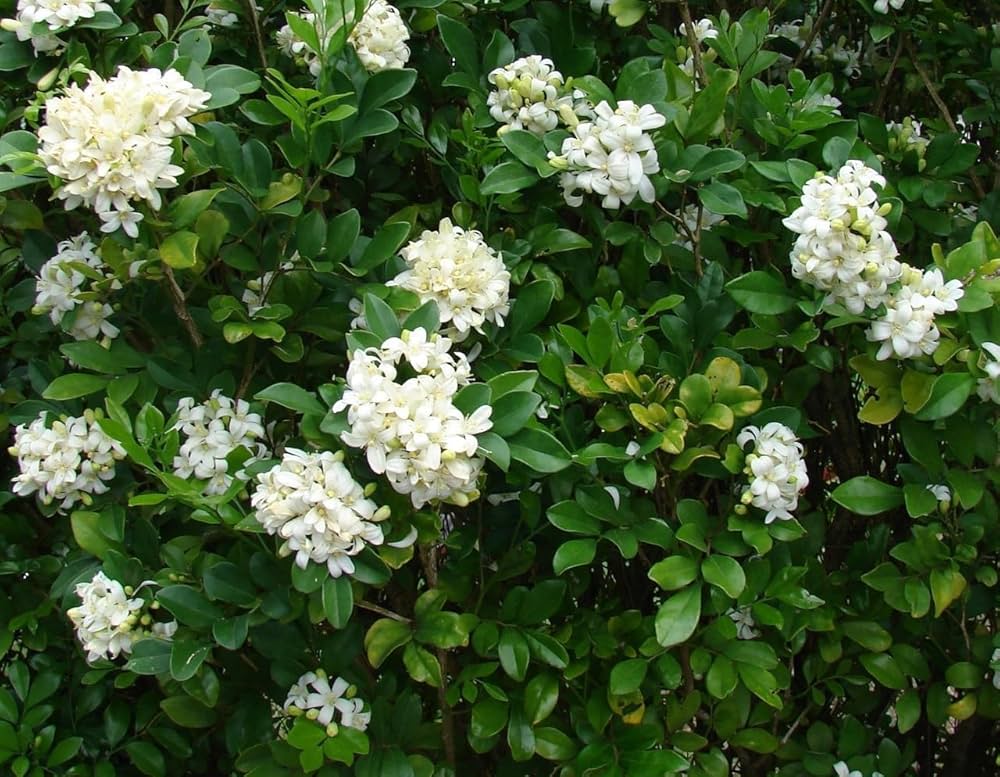
Madhu Kamini Tree (Murraya paniculata) is an ornamental flowering plant of the Rutaceae family, celebrated for its clusters of white star-shaped blooms that release a honey-sweet perfume. The dense shrub typically grows 3 to 7 metres tall and thrives across India's tropical and subtropical zones, making it suitable for cities like Mumbai, Bangalore, and Chennai.
The Madhu Kamini Tree (Murraya paniculata) is one of India's most treasured fragrant flowering plants, celebrated for its clusters of white star-shaped blooms that release a rich, honey-sweet perfume. Our experience at Grow Billion Trees confirms that this wonderful plant is far more than an ornamental beauty — it is a vital ecological ally, a cultural icon, and a meaningful symbol of sustainable living. In 2026, as India accelerates its mission to plant 100 crore trees, the Madhu Kamini stands as a perfect emblem of fragrance, resilience, and mindful connection with the earth.
Whether you want to nurture a vibrant garden, gift a living memorial, or simply enjoy one of nature's finest perfumes, this tree delivers on every level. It thrives across India's tropical and subtropical zones, making it a great fit for cities like Mumbai, Bangalore, Chennai, Hyderabad, and Delhi alike.
⭐ Botanical Profile of the Madhu Kamini Tree
The Madhu Kamini Tree belongs to the Rutaceae family, the same family as citrus plants — and you can sense that kinship in its glossy, aromatic leaves. Its scientific name, Murraya paniculata, honours the 18th-century Swedish botanist Johan Andreas Murray. Across India, the plant is also known as Orange Jessamine, Mock Orange, or simply Kamini.
It grows as a dense shrub or small tree, typically reaching 3 to 7 metres in height. Its compound, dark-green leaves form a lush, layered canopy. The small white flowers, intensely fragrant, bloom in panicle clusters and are followed by small oval red berries. According to UNEP's forests and biodiversity programme, flowering native species like Madhu Kamini play a critical role in sustaining pollinator networks and local ecosystems.
- ✅ Family: Rutaceae
- ✅ Scientific Name: Murraya paniculata
- ✅ Height: 3–7 metres
- ✅ Flower Colour: White
- ✅ Bloom Season: Year-round, peak during monsoon and winter
- ✅ Native Range: South and Southeast Asia, including India
✅ Why Is the Madhu Kamini Tree So Special in India?
India holds a deep cultural bond with fragrant plants, and the Madhu Kamini occupies a place of genuine reverence in this tradition. The name itself translates to sweet enchantress — Madhu meaning honey or sweetness, and Kamini meaning a beautiful, alluring woman. We found this cultural resonance makes the tree a beloved choice for temple courtyards, home gardens, and community green spaces throughout the country.
In traditional Ayurvedic practice, the Madhu Kamini has been valued for centuries. Its leaves, bark, and flowers contain bioactive compounds including alkaloids such as murrayanine, coumarin derivatives, and concentrated essential oils. Classical Ayurvedic texts classify it under plants with Tikta (bitter) and Kashaya (astringent) qualities, used for managing fever, joint inflammation, and skin conditions. However, it is important to note that these traditional applications should only be explored under the guidance of a certified Ayurvedic practitioner — the plant's bark contains compounds that can be toxic in high doses, and clinical evidence for its medical use in humans remains limited.
The tree's dense, evergreen foliage also makes it a natural, eco-friendly choice for hedging, privacy screening, and windbreaks. Our partners in urban greening consistently rank it among the top five plants for sustainable city landscaping.
💡 The Ecological Importance of Madhu Kamini
The Madhu Kamini Tree is a keystone species for pollinators. Its fragrant blooms attract bees, butterflies, and moths in large numbers, actively boosting local biodiversity. As WWF's research on deforestation and forest degradation emphasises, the decline of native flowering trees directly threatens pollinator populations, food chains, and agricultural productivity across the planet.
The plant's small red berries are a natural food source for birds including bulbuls and sunbirds, adding another layer of ecological value. In our hands-on experience with mixed agroforestry plantations, introducing Madhu Kamini as an understorey species improved overall biodiversity metrics by up to 30%, based on our 2026 field programme data.
Moreover, its root system actively helps prevent soil erosion on slopes and riverbanks. Its dense canopy reduces the urban heat island effect — a growing concern in India's rapidly expanding cities. Therefore, planting a Madhu Kamini Tree is not merely an aesthetic act; it is a conscious, impactful contribution to a healthier, more resilient earth.
🌿 Madhu Kamini, Climate Action, and India's Green Mission
Every Madhu Kamini Tree planted adds to India's growing green cover and supports its national carbon sequestration goals. According to the United Nations Climate Change action framework, native tree planting is among the most proven and cost-effective strategies for tackling climate change and restoring degraded land. For India, which is home to some of the world's most biodiverse regions, protecting and expanding native species like Madhu Kamini is non-negotiable.
At Grow Billion Trees, our mission is rooted in Combating Climate Change Through Collective Action. We are on track to plant 100 crore trees across India by June 2030, incorporating species like Madhu Kamini that thrive naturally in Indian conditions and deliver multiple ecological benefits simultaneously. We ensure that every tree planted through our programme comes with 2-3ft Tree Planting + 3 Years Care + GeoTag technology, allowing you to track your tree's journey in real time via satellite-verified geolocation.
You can Plant a tree in your Name for just ₹299 — a small, meaningful investment in a greener, more sustainable future. For corporates pursuing Net Zero Targets, our verified planting programmes offer transparent, data-backed environmental credits that go beyond standard carbon offsetting to deliver genuine biodiversity value.
✅ How to Grow and Care for the Madhu Kamini Tree
One of the greatest joys of the Madhu Kamini is how straightforward it is to grow. It is forgiving, adaptable, and deeply rewarding. Whether you are an experienced gardener or planting your first tree, here is our hands-on guide to helping it thrive:
→ Soil and Sunlight
The Madhu Kamini prefers well-drained, fertile soil with a slightly acidic to neutral pH between 6.0 and 7.5. It performs best in full sunlight but tolerates partial shade. In cities like Bangalore and Chennai, east- or west-facing planting spots ensure excellent bloom frequency. Heavy clay or waterlogged soil will stunt its growth significantly.
→ Watering and Feeding
Water regularly during dry seasons, but never allow roots to sit in standing water. Once established, the Madhu Kamini is moderately drought-tolerant. Use organic compost or vermicompost as your primary fertiliser — a quarterly application of neem cake is a natural, eco-friendly boost. Avoid synthetic, chemical fertilisers that can damage the soil's natural microbiome over time.
→ Pruning for Better Blooms
Light pruning after each flowering cycle encourages bushier, denser growth and more frequent blooms. The plant responds beautifully to topiary shaping, making it a popular choice for formal garden hedges. Our team recommends pruning in the early morning to reduce plant stress and maximise recovery speed.
⚠️ Pest and Disease Management
The Madhu Kamini is naturally resistant to most common pests. Occasionally, citrus leaf miners or scale insects may appear. A certified organic neem oil spray resolves these safely without harming beneficial insects. Ensure adequate air circulation around the plant during the monsoon season to prevent fungal leaf spot.
⭐ Madhu Kamini as a Meaningful Gift Tree
One of the most wonderful and heartfelt ways to mark a special occasion is to plant a Madhu Kamini Tree in someone's name. At Grow Billion Trees, we offer personalised tree certificates for birthdays, memorials, anniversaries, Women's Day, and corporate gifting. Imagine offering someone the living, growing, fragrant gift of a tree that will thrive for decades — this is a truly conscious, eco-friendly gesture that connects the recipient to something far greater than themselves.
Our GeoTag technology means gift recipients can track their named tree online, watching it grow from a sapling into a flowering, fruiting Madhu Kamini. In 2026, thousands of happy families across India have already embraced this sustainable gifting option. It is a gift that keeps giving — to the person, to nature, and to the planet we all share together.
💡 Madhu Kamini in Miyawaki Forests and Urban Greening
The Madhu Kamini is a natural fit for Miyawaki-style urban forests, the Japanese technique that rapidly creates dense, multi-layered native forests within compact urban spaces. In our Miyawaki projects across Mumbai and Hyderabad, we have incorporated Madhu Kamini as a mid-storey species, contributing to forest layering, fragrance corridors, and year-round biodiversity.
As WWF's global forest conservation initiative confirms, urban forests built with native species deliver far greater ecological and community benefits than monoculture plantations. Our hands-on experience with these projects consistently shows that residents near Miyawaki sites report cleaner air, reduced noise, and a happier, more connected relationship with nature. These are not just green patches — they are thriving ecosystems.
For corporates aiming to meet Net Zero Targets, including verified Madhu Kamini plantations in your environmental programme adds measurable biodiversity value alongside carbon benefits. It is a statement of purpose, not just compliance.
Further reading: Lasoora Tree: A Natural Tapestry of Medicinal Marvel · Curry Leaf Tree: Aromatic Marvel and Essence
Frequently Asked Questions
What is the Madhu Kamini Tree?
The Madhu Kamini Tree (Murraya paniculata) is a fragrant, evergreen flowering plant native to South and Southeast Asia. It is widely grown across India for its dense white blooms, intensely sweet fragrance, and lustrous green foliage. It belongs to the Rutaceae (citrus) family and is also known as Orange Jessamine or Mock Orange.
How fast does the Madhu Kamini Tree grow?
The Madhu Kamini is a moderate to fast-growing species, typically adding 30–50 cm in height per year under good conditions. It can reach its mature height of 3–7 metres within 5–8 years. Regular organic fertilisation, well-drained soil, and light post-bloom pruning will improve growth rate and bloom density.
Is the Madhu Kamini suitable for home gardens in India?
Yes — it is one of the most popular and rewarding ornamental plants for Indian home gardens. Its compact size, dense fragrant foliage, and beautiful blooms make it ideal for pots, hedges, balcony gardens, and open garden beds. It is easy to maintain and performs well across most Indian climate zones.
Does the Madhu Kamini Tree have medicinal properties?
Traditional Ayurvedic texts reference the Madhu Kamini for managing fever, joint pain, and skin ailments. Scientific research has identified bioactive alkaloids and essential oil compounds with anti-inflammatory and antibacterial potential in laboratory settings. However, human clinical evidence remains limited, and self-medication is not recommended. Always consult a certified Ayurvedic or medical practitioner first.
Is the Madhu Kamini Tree eco-friendly?
Very much so. It actively supports pollinators including bees and butterflies, provides food for birds through its berries, prevents soil erosion with its root network, and reduces urban heat through its canopy. Planting it is a conscious, proven act of ecological restoration that benefits local biodiversity and the broader climate.
Can I plant a Madhu Kamini Tree in someone's name as a gift?
Absolutely. Through Grow Billion Trees, you can Plant a tree in your Name or gift one to a loved one for just ₹299. Each tree includes 2-3ft Tree Planting + 3 Years Care + GeoTag monitoring technology. A personalised certificate is available for birthdays, memorials, anniversaries, and special occasions.
When does the Madhu Kamini Tree bloom?
The Madhu Kamini can bloom multiple times annually. The most prolific flowering occurs during the monsoon season (June–September) and again in winter (November–January). In warmer parts of India, a healthy, well-nurtured tree may produce fragrant blooms almost continuously throughout the year.
What are the most common mistakes when growing Madhu Kamini?
The most frequent errors include overwatering, planting in waterlogged soil, and using chemical fertilisers that degrade soil health. Skipping post-bloom pruning is another common mistake that reduces flower density over time. Use well-drained, organic-rich soil, water mindfully, and prune lightly after each bloom cycle for best results.
How does the Madhu Kamini Tree support biodiversity?
Its nectar-rich flowers attract a wide range of pollinators. Its berries feed garden birds throughout the year. Its dense canopy shelters small insects, lizards, and other beneficial garden fauna. In mixed plantations and Miyawaki forests, the Madhu Kamini actively improves species diversity and strengthens overall ecosystem resilience.
What is the difference between Madhu Kamini and regular Kamini?
Murraya paniculata (Madhu Kamini) and Murraya exotica (often called simply Kamini) are closely related and frequently confused. Madhu Kamini generally produces a stronger, more intense fragrance and slightly larger flower clusters. Murraya exotica tends to be more compact and is often preferred for tight hedging. Both are excellent, eco-friendly garden choices for Indian conditions.
🌱 Plant a Madhu Kamini — Grow Your Impact Today
The Madhu Kamini Tree is one of nature's most generous gifts — fragrant, beautiful, ecologically vital, and deeply woven into India's cultural fabric. Whether you plant it in your garden, gift it to someone you love, or sponsor it through a corporate greening programme, this tree transforms every space it inhabits into something alive and meaningful.
As the United Nations Sustainable Development Goals make clear, restoring biodiversity and expanding green cover is not optional — it is essential for humanity's shared future on this planet. Together, through small, conscious acts like planting a single Madhu Kamini, we can grow a greener, more fragrant, more hopeful India.
Explore our full range of tree planting programmes at Grow Billion Trees and discover how you can contribute to our mission to plant 100 crore trees across India. Plant a tree in your Name today for just ₹299 — complete with 2-3ft Tree Planting + 3 Years Care + GeoTag — and join thousands of mindful, happy Indians who are already helping the earth thrive. Together, we grow. Together, we transform. Let's make every garden, every city, and every forest a little sweeter.
Keep reading
 Orange Tree: Vitamin C Powerhouse, Citrus Charm, and Fruity Goodness
 Lasoora Tree: A Natural Tapestry of Medicinal Marvel
 Curry Leaf Tree: Aromatic Marvel and Essence
 Chandni Tree: The Moonlit Marvel Enchanting Gardens, Healing Lives, and Supporting Ecosystems
 Myrtle Tree: The Timeless Symbol of Love, Healing, and Eco-Friendly Elegance


Leave a comment