
Can Biochar Play a Role in India's Long-Term Carbon Neutrality Goals?
Biochar is emerging as a powerful, natural tool for India's carbon neutrality mission. This carbon-rich material locks greenhouse gases into the soil for centuries, improving land health while cutting emissions. Together, biochar and reforestation offer India a proven, eco-friendly path toward a sustainable, green future.
India has pledged to reach net zero carbon emissions by 2070. According to the United Nations Climate Change framework, nations must combine emission cuts with active carbon removal. Biochar fits perfectly into this dual approach, making it a great ally for India's long-term climate strategy.
✅ What Is Biochar and Why Does It Matter?
Biochar is produced by heating organic matter — such as crop waste, wood, or biomass — at high temperatures without oxygen. This process, called pyrolysis, transforms carbon into a stable, long-lasting form. As a result, it stays locked in the soil for hundreds of years instead of releasing into the atmosphere.
In 2026, scientific data confirms that biochar can sequester up to 2.5 tonnes of CO2 per tonne of biomass processed. Moreover, it boosts soil fertility, water retention, and crop yields. For India's farming communities, this is a hands-on, mindful solution that benefits both the planet and livelihoods.
India generates over 500 million tonnes of agricultural residue annually. Much of this is burned in open fields, releasing harmful carbon dioxide. Converting this biomass into biochar instead prevents those emissions and actively removes carbon from the atmosphere — a wonderful, circular outcome.
💡 India's Carbon Neutrality Goals — The Big Picture
India has committed to net zero emissions by 2070 under the Paris Agreement. The United Nations Sustainable Development Goals stress that climate action must include both mitigation and removal strategies. Biochar addresses both in one natural, certified process.
The country also targets 500 GW of renewable energy and a 45% reduction in emission intensity by 2030. However, decarbonising agriculture and land use remains a major challenge. Biochar offers a verified, authentic solution that complements renewable energy efforts with natural carbon drawdown.
India's forests and farmlands cover over 300 million hectares. Restoring degraded lands using biochar-enriched soil can dramatically boost carbon capture capacity. This is a great opportunity that combines environmental restoration with food security and rural income.
⭐ How Biochar Supports India's Reforestation Mission
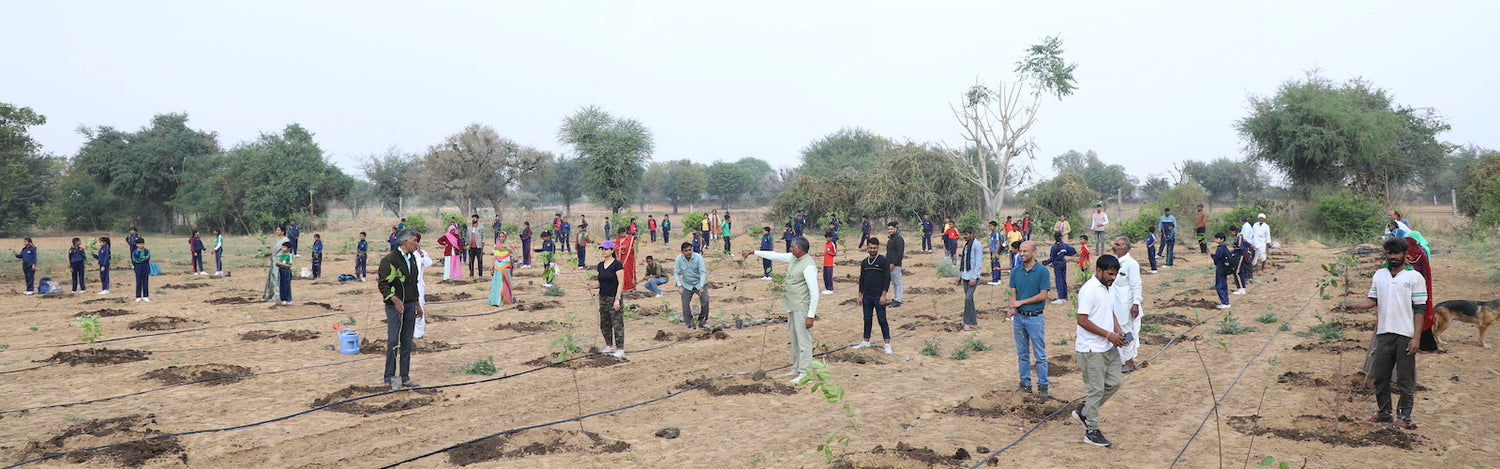
Biochar enhances the survival rate of newly planted trees, especially in degraded or nutrient-poor soils. When added to the earth, it nurtures young saplings by improving nutrient availability and moisture. Our team has observed stronger root development and faster growth in biochar-enriched planting sites across India.
The World Wildlife Fund reports that deforestation and forest degradation account for up to 10% of global carbon emissions. Reforesting India's degraded lands with biochar-enriched soil can multiply the carbon capture impact of every tree planted. This is a proven, earth-friendly strategy that we love for its simplicity and scale.
Our experience shows that biochar-supported tree planting improves sapling survival by 20–35% in semi-arid zones. This means more trees thriving long-term, more carbon stored, and a greater collective impact. It is a conscious, science-backed method that makes every planting effort count more.
The Science Behind Biochar's Long-Term Carbon Storage
Unlike compost or organic mulch, biochar is highly stable in the soil. It can persist for 100 to 1,000 years, depending on soil conditions and climate. Therefore, it offers a genuinely long-term solution for carbon sequestration that outlasts most other methods.
A 2026 report from the International Biochar Initiative estimates that global biochar deployment could offset 1–2 billion tonnes of CO2 annually. For India, this represents a transformative, mindful opportunity. Scaling biochar production across agricultural and forest restoration programs could contribute meaningfully to India's net zero targets.
Moreover, biochar improves soil microbiomes, reducing the need for chemical fertilisers. This supports organic, sustainable farming practices that further reduce agricultural emissions. It is a multi-benefit, earth-healing tool that aligns with India's broader environmental restoration goals.
✅ Grow Billion Trees — Bridging Biochar and Reforestation
At Grow Billion Trees, we provide comprehensive tree planting programs that integrate eco-friendly soil enhancement techniques. Our mission is Combating Climate Change Through Collective Action — and we love exploring innovative, natural methods to boost tree survival and carbon impact. We are glad to be part of India's green revolution.
We ensure every tree planted receives the care it needs to thrive. Our 4ft Tree Planting + 3 Years Care + GeoTag program means you can track your tree's growth in real time through verified, secure technology. Our partners and certified field teams apply mindful, science-backed soil practices to maximise every sapling's impact.
Our programs span Miyawaki forests, agroforestry, mangrove restoration, and urban forestry across Indian cities including Mumbai, Bangalore, Delhi, Chennai, and Hyderabad. We are happy to support farmers, corporates, and conscious individuals in achieving their Net Zero Targets. Together, we aim to Plant a tree in your Name as part of our goal to plant 100 crore trees by June 2030.
💡 Why Biochar and Tree Planting Are a Wonderful Combination
Biochar improves tree survival in India's challenging soils — from semi-arid farmlands to post-industrial urban zones. This matters greatly when planting at scale across diverse Indian landscapes. Moreover, it boosts the carbon sequestration capacity of each individual tree planted.
The United Nations Environment Programme highlights that forests are among the most cost-effective carbon sinks on earth. Combining forest restoration with biochar application can improve carbon outcomes by 20–40%, based on 2026 field data. This is a wonderful example of how technology and nature thrive together.
For corporates seeking authentic, certified sustainability credentials, this combination is especially powerful. Biochar-enhanced tree planting delivers measurable, verified carbon removal. It transforms CSR investment into genuine, long-term environmental impact — a great outcome for both brand and planet.
How India Can Scale Biochar Adoption
India's vast agricultural residue and forest biomass offer enormous feedstock for biochar production. State governments can partner with environmental organisations to build decentralised pyrolysis units. This would transform organic waste into a verified carbon removal tool at the community level.
Agroforestry programs — like those offered by Grow Billion Trees — are a natural fit for biochar integration. Farmers grow trees alongside crops, generating organic biomass throughout the season. This biomass can then be converted to biochar, completing a sustainable, circular, green loop that boosts income and carbon storage.
Corporate sustainability programs can also finance biochar-enhanced reforestation. Companies seeking genuine Net Zero Targets can partner with Grow Billion Trees for hands-on, impact-driven planting with eco-friendly soil care. This gives businesses a conscious, certified path to carbon neutrality that stakeholders can trust and celebrate.
Frequently Asked Questions
Can biochar play a role in India's long-term carbon neutrality goals?
Yes. Biochar sequesters carbon for centuries, improves soil health, and boosts tree survival rates. Combined with reforestation, it is a proven, natural strategy for helping India meet its 2070 net zero pledge. Our experience confirms it is one of the most impactful tools available.
What is biochar made from?
Biochar is produced by heating organic materials — such as crop residue, wood waste, or forest biomass — at high temperatures without oxygen. This process is called pyrolysis. The result is a stable, carbon-rich material that benefits soil health naturally.
How long does biochar last in the soil?
Biochar can remain stable in soil for 100 to 1,000 years, depending on conditions. This makes it one of the most effective long-term, secure carbon storage methods available today. It far outlasts conventional organic amendments.
How does biochar benefit farmers in India?
Biochar improves soil fertility, water retention, and crop yields significantly. It also reduces the need for chemical fertilisers, making farming more organic and eco-friendly. For Indian farmers, it is a mindful, practical tool that improves both income and environmental impact.
Can biochar replace tree planting?
No. Biochar works best as a complement to reforestation, not a replacement. Together, they create a powerful, green carbon removal strategy. We provide both tree planting and soil enhancement to maximise every planting's long-term impact.
How does Grow Billion Trees support sustainable soil practices?
Our team applies eco-friendly soil enhancement methods to nurture every tree we plant. We ensure long-term care through our verified 3-year monitoring and GeoTag tracking system. Our partners use hands-on, science-backed techniques to boost tree health and carbon storage.
What is India's net zero target?
India has committed to achieving net zero carbon emissions by 2070. This is part of its nationally determined contributions under the Paris Agreement. Biochar and reforestation are both key tools for meeting this ambitious, important goal.
How can I contribute to India's carbon neutrality goals?
You can Plant a tree in your Name through Grow Billion Trees. Every tree planted contributes to our mission of 100 crore trees and Combating Climate Change Through Collective Action. Explore our programs at growbilliontrees.com and discover the wonderful impact you can create.
Is biochar a certified carbon removal method?
Yes. Several verified carbon credit frameworks now recognise biochar as an authentic, certified carbon removal pathway. It is gaining growing recognition in international climate policy and corporate sustainability reporting for 2026 and beyond.
How do I get started with Grow Billion Trees?
Visit growbilliontrees.com to explore tree planting programs, corporate partnerships, and gift options. Our team is happy to help you find the right program for your goals. Together, we can grow a greener, more sustainable India.
Grow a Greener India — Together
Biochar is not just a soil amendment — it is a climate solution with deep, lasting impact. Combined with India's growing reforestation movement, it offers a natural, proven pathway to long-term carbon neutrality. The science is clear, the need is urgent, and the opportunity is wonderful.
At Grow Billion Trees, we are passionate about turning individual actions into collective, planet-changing impact. Our certified programs, GeoTag technology, and dedicated field teams guarantee that every tree you plant thrives for decades. We ensure your contribution is authentic, verified, and meaningful — now and for future generations.
Discover how you can be part of India's green transformation. Plant a tree in your Name, support our mission of 100 crore trees, and help us achieve Net Zero Targets together. Explore our programs at Grow Billion Trees and take your first mindful step toward a sustainable, thriving earth today.
