

Agroforestry
Trees that earn for farmers
Digital forest · Mangroves
Incanova's mangrove tree plantation initiative reflects its commitment to creating a healthier future beyond the bedroom. While designing scientifically engineered mattresses that promote better sleep, the company also recognizes the environmental impact of plastic...
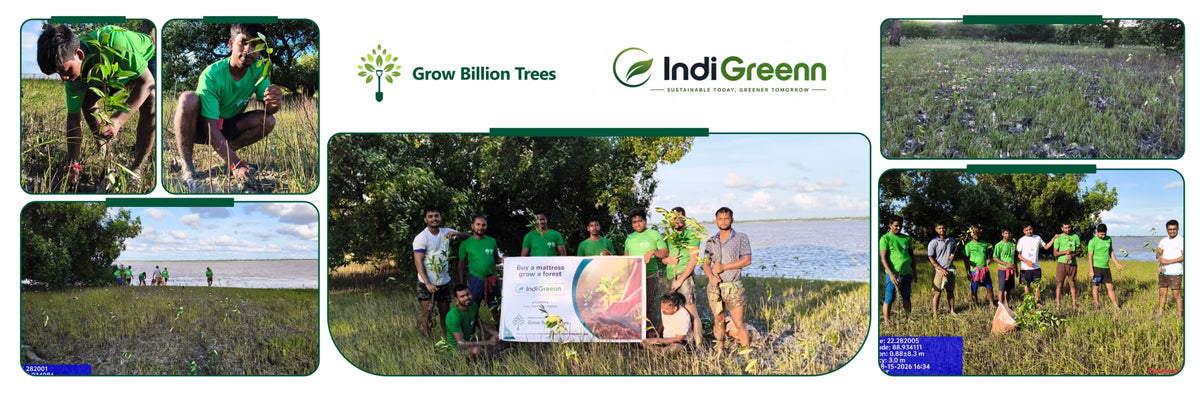
Incanova's mangrove tree plantation initiative reflects its commitment to creating a healthier future beyond the bedroom. While designing scientifically engineered mattresses that promote better sleep, the company also recognizes the environmental impact of plastic packaging used with orthopedic mattresses. To address this, Incanova plants a mangrove tree for every customer, helping offset plastic waste while restoring vital coastal ecosystems. Mangrove forests absorb significant amounts of carbon, protect shorelines from erosion, and support rich biodiversity, making them a powerful nature-based solution for climate action. Implemented in partnership with Grow Billion Trees, the initiative offers transparent and trackable plantations, allowing customers to see the positive environmental impact of their purchase. By transforming every mattress purchase into a meaningful act of sustainability, Incanova seamlessly combines quality sleep with environmental responsibility, ensuring that healthier living extends from every home to the planet.
No of Trees: 200 Trees
Plantation Location: Manipur, Sandeshkhali, North 24 Parganas, West Bengal, PIN - 743446 (SUNDARBANS)
Plantation Date: 30th July 2026
Name of Species: Avicennia marina (Baen)
For this project, Avicennia marina (Baen) has been carefully selected as a suitable native coastal species for mangrove restoration. This species is well adapted to saline environments and regular tidal fluctuations, making it ideal for strengthening and restoring coastal ecosystems. Avicennia marina develops an extensive root system along with specialized breathing roots called pneumatophores, which help bind and stabilize sediments, reduce coastal erosion, and strengthen shorelines. It also acts as a natural buffer against cyclones, storm surges, and tidal impacts while providing important nursery and shelter habitats for fish, crustaceans, birds, and other coastal species. The species further contributes to carbon sequestration, biodiversity conservation, soil stabilization, and climate resilience, supporting long-term ecological restoration and sustainable coastal development.
Target Population: Local community members residing in and around the Sundarbans region, including coastal and riverine communities dependent on natural ecosystems for their livelihoods.
Age Group: Inclusive of all age groups, encouraging participation from youth, adults, and elderly community members to promote long-term stewardship of mangrove ecosystems.
Gender: Inclusive of all genders, with equal opportunities for participation in plantation, awareness, and conservation activities.
Social & Economic Status: Open to people from all social and economic backgrounds, with special focus on supporting vulnerable and climate-affected communities to build resilience, improve livelihoods, and encourage community ownership of the mangrove plantation.
Mangrove Plantation: Incanova’s mangrove plantation initiative reflects its commitment to extending the promise of healthier living beyond quality sleep and into environmental stewardship. By planting native, salt-tolerant mangrove species in carefully selected coastal and estuarine regions, the initiative helps restore fragile ecosystems, strengthen natural coastal defenses, and capture significant amounts of carbon. Launched to offset the environmental impact of plastic packaging used with orthopedic mattresses, the initiative ensures that every customer purchase contributes to meaningful climate action. In partnership with Grow Billion Trees, each plantation is transparent and trackable, enabling customers to witness the positive impact of their purchase. Through this initiative, Incanova combines scientific innovation, customer care, and sustainability to create lasting benefits for people, the planet, and future generations.
Advantages of Mangrove Plantation
Coastal Protection and Erosion Control: Dense mangrove roots bind the soil and prevent shoreline erosion, while their canopies act as natural barriers against storms, tidal surges, and cyclones, reducing the risk of flooding in vulnerable coastal areas.
Blue Carbon Sequestration: Mangroves are among the most efficient carbon sinks on Earth, storing up to four times more carbon than terrestrial forests, making them critical allies in global climate change mitigation.
Biodiversity Habitat Creation: The plantation nurtures a rich nursery ground for fish, crabs, mollusks, and migratory birds, enhancing marine biodiversity and ensuring food security for coastal communities dependent on fisheries.
Water Quality Improvement: Mangroves filter pollutants and trap sediments, preventing salinity intrusion into freshwater sources while maintaining healthy estuarine ecosystems essential for marine life.
Livelihood and Community Empowerment: By supporting sustainable fishing, honey collection, shell crafts, and eco-tourism, mangrove plantations directly uplift the economic well-being of coastal families, linking conservation with livelihood generation.
Climate Resilience and Disaster Mitigation: Acting as living bio-shields, mangroves reduce the impact of cyclones, tsunamis, and tidal waves, protecting both ecosystems and human settlements from extreme weather events.
Low Maintenance and Natural Regeneration: Once established, mangroves require minimal maintenance as they self-seed and naturally expand, ensuring long-term sustainability and ecosystem resilience.
Cultural and Ecological Value: Mangroves hold deep cultural ties in coastal communities, providing food, medicine, and traditional knowledge while reconnecting people with nature’s protective power.
| Parameters | Values | References |
| No. of Trees Planted | 200 | |
| Green Cover (Acres) | 0.044 | |
| Carbon Sequestration Potential (KG) | 15 |
Mangrove species can sequester 20–35 kg CO₂ per tree annually depending on age and density. https://blueskymodel.org/mangroves-carbon-storage |
| Carbon Sequestration by 200 mature trees ( Tonnes/year) | 3 | |
| Carbon Credit Equivalent | 3 | One carbon credit is equivalent to one tonne of carbon dioxide or the equivalent amount of another greenhouse gas. |
| Carbon Footprint of an avg Indian Citizen (Tonnes/Year) | 1.8 | https://www.iea.org/countries/india/emissions |
| Offsets Annual Carbon Footprint of (Adults) | 1.7 | Carbon offset by 200 mature trees per year / Carbon Footprint of an avg Indian Citizen per year |
*This impact analysis is forward-looking (A Mangrove forest project matures in 3-5 years)*
Enhanced Coastal Livelihoods: Mangrove plantations provide sustainable sources of income through fishing, crab and prawn farming, honey collection, and eco-tourism, directly improving the economic stability of coastal families.
Community Participation and Ownership: Local communities, including youth and fisherfolk, actively engage in planting and protecting mangroves, fostering a shared sense of stewardship and pride in conserving their coastal heritage.
Natural Resource Security: By restoring mangroves, communities gain access to sustainable natural resources such as fuelwood, medicinal plants, and materials for traditional crafts, reducing dependency on external supplies.
Cultural and Educational Value: Mangrove zones become outdoor classrooms where children and villagers learn about marine ecosystems, conservation, and climate resilience, strengthening ecological awareness across generations.
Strengthened Social Fabric: Collective involvement in protecting mangroves encourages cooperation and solidarity among community members, while providing common spaces for eco-tourism initiatives and gatherings.
Resilience Against Disasters: By acting as protective shields during cyclones and tidal surges, mangroves safeguard homes, farms, and lives, instilling a deeper sense of security and long-term well-being in coastal populations.
Carbon Sequestration Powerhouse: Mangroves are among the most effective ecosystems at absorbing and storing carbon, making them critical in mitigating global warming and enhancing coastal climate resilience.
Shoreline Stabilization and Erosion Control: The dense root systems of mangroves anchor the soil, prevent coastal erosion, and buffer the impact of waves, protecting vulnerable coastal landscapes.
Marine Biodiversity Habitat: Mangrove plantations serve as nurseries for fish, crabs, shrimp, and mollusks, while also providing shelter for migratory birds, enriching the entire coastal biodiversity web.
Water Filtration and Quality Enhancement: Mangrove roots trap sediments, filter pollutants, and reduce salinity intrusion, leading to healthier estuaries and better water quality for both marine life and human use.
Disaster Risk Reduction: Mangroves reduce the destructive impact of cyclones, storm surges, and tsunamis by absorbing wave energy, offering natural disaster resilience unmatched by artificial infrastructure.
Natural Regeneration and Self-Sustainability: Once established, mangrove ecosystems naturally regenerate and expand, ensuring long-term ecological health with minimal human intervention.
Microclimate Regulation: By moderating coastal temperatures, increasing humidity, and reducing harsh winds, mangroves create a more stable and comfortable environment for both people and agriculture.
SDG 1: No Poverty – Incanova’s mangrove plantation initiative creates sustainable livelihood opportunities for coastal communities through nursery development, plantation activities, site maintenance, and allied livelihoods, enabling long-term income security and economic resilience.
SDG 2: Zero Hunger – By restoring mangrove ecosystems, Incanova supports fisheries and aquaculture as mangroves serve as critical breeding and nursery grounds for fish, crabs, and shellfish, strengthening food security and nutrition for coastal populations.
SDG 3: Good Health and Well-Being – Incanova contributes to healthier coastal environments by strengthening natural protection against cyclones and storm surges, reducing disaster-related risks. Improved air quality and ecosystem health support overall community well-being, aligning with Incanova’s vision of inclusive and responsible progress.
SDG 5: Gender Equality – Incanova’s initiative actively encourages women’s participation in mangrove nurseries, plantations, and conservation efforts, fostering skill development, economic empowerment, and leadership within coastal communities.
SDG 6: Clean Water and Sanitation – Mangrove root systems naturally filter pollutants and sediments, improving coastal water quality and preventing salinity intrusion into freshwater sources—an outcome supported through Incanova’s ecosystem restoration efforts.
SDG 8: Decent Work and Economic Growth – Through mangrove management, sustainable fishing, and eco-based livelihoods, Incanova promotes decent work opportunities while enabling inclusive economic growth in environmentally sensitive coastal regions.
SDG 10: Reduced Inequalities – Incanova prioritizes engagement with marginalized and climate-vulnerable coastal communities, ensuring equitable access to natural resources, environmental knowledge, and long-term benefits of restoration initiatives.
SDG 11: Sustainable Cities and Communities – By strengthening coastal green belts, Incanova enhances the safety, resilience, and sustainability of coastal settlements, protecting communities from erosion and extreme weather impacts.
SDG 12: Responsible Consumption and Production – Incanova’s mangrove plantation initiative promotes sustainable use of coastal resources, encouraging eco-friendly harvesting practices and responsible stewardship among local communities.
SDG 13: Climate Action – Mangroves act as powerful carbon sinks, and through mangrove restoration, Incanova actively supports carbon sequestration and climate adaptation, reinforcing its commitment to climate-resilient and future-ready development.
SDG 14: Life Below Water – Incanova helps protect marine biodiversity by restoring mangrove habitats that support fish nurseries, shellfish populations, and healthy coastal and marine ecosystems.
SDG 15: Life on Land – By stabilizing shorelines and preventing coastal erosion, Incanova’s mangrove plantations maintain ecological balance between land and sea, supporting long-term terrestrial and coastal sustainability.
SDG 17: Partnerships for the Goals – Incanova’s mangrove restoration initiative thrives on collaboration with implementation partners, local communities, and conservation organizations, demonstrating the power of partnerships in achieving scalable and lasting sustainable development outcomes.
Environmental Impact: Incanova’s mangrove plantation initiative focuses on restoring degraded coastal and estuarine ecosystems while strengthening nature-based solutions to climate change. By planting native, salt-tolerant mangrove species, the initiative improves water quality, stabilizes vulnerable shorelines, and enhances coastal biodiversity. Dense mangrove root systems prevent erosion, act as nurseries for marine life, and sequester large volumes of carbon, supporting long-term climate mitigation. Sustainable practices such as nursery-raised saplings, minimal chemical intervention, and site-specific species selection ensure ecological resilience. This environmental commitment reflects Incanova’s purpose of combining scientifically engineered sleep solutions with transparent, trackable environmental action.
Social Impact: Mangrove restoration supported by Incanova strengthens coastal communities by reducing exposure to cyclones and storm surges while enabling sustainable livelihoods through fishing, honey collection, crab farming, and eco-tourism. Active involvement of local communities, including women and youth, in nursery management, plantation, and conservation builds skills, generates income, and fosters long-term environmental stewardship. By linking community participation with ecosystem restoration, Incanova advances its vision of inclusive growth and shared prosperity, ensuring that environmental action delivers tangible social benefits.
Governance Impact: Incanova’s mangrove plantation initiative is implemented through transparent, inclusive, and community-centric governance frameworks. In collaboration with trusted implementation partners, local institutions, and grassroots organizations, the project emphasizes ethical land use, responsible resource management, and continuous monitoring. Community stakeholders participate in planning, execution, and maintenance, ensuring accountability and long-term impact. This governance approach reflects Incanova’s commitment to responsible innovation, ethical decision-making, and sustainability practices that meet global ESG standards while creating measurable environmental and social value.
One of the most impactful outcomes of Incanova’s Mangrove Plantation initiative has been its ability to unite coastal communities around a shared vision of sustainability and resilience. By restoring degraded shorelines, protecting marine ecosystems, and strengthening natural green barriers, the initiative delivers long-term benefits for both people and the planet. Through active participation of fisherfolk, women, youth, and local institutions, the initiative evolved into a collective journey of environmental restoration, livelihood resilience, and shared pride in building a more sustainable and inclusive future.
Empowering Communities: Through active participation in planting, nurturing, and protecting mangroves, community members became guardians of their coastal environment. Women, in particular, gained hands-on experience in sustainable mangrove management and resource harvesting, strengthening their role as environmental stewards and key decision-makers in both household and community initiatives.
Fostering Partnerships: The initiative built strong collaborations between Grow Billion Trees, village councils, local NGOs, and residents. This model demonstrated how coordinated efforts, grounded in trust and local knowledge, can regenerate ecosystems while uplifting livelihoods and enhancing resilience against climate hazards.
Creating a Ripple Effect: As the mangrove belts matured, they began to protect shorelines, support fisheries, and attract coastal wildlife, inspiring neighboring communities to adopt similar restoration practices. This growing interest has sparked a broader movement of coastal conservation and sustainable livelihood initiatives across the region.
The Mangrove Plantation initiative shows that environmental transformation starts with connected communities. It is not just about planting trees; it is about building resilience, protecting lives, and nurturing a sustainable and thriving coastal future.
Ensuring Tree Survivability: GBT prioritizes native species, continuous monitoring, and soil health improvement using organic fertilizers. These efforts ensure sustainable growth and benefit the farmers and communities.
Transparency & Accountability: GBT provides detailed reports on tree growth, survival rates, and carbon benefits, using geo-fencing and regular updates to maintain transparency and effectiveness.
Sustainable Plantation Efforts: GBT implements projects that balance environmental, social, and economic goals, addressing urban heat islands and degraded farmlands. These efforts promote ecological balance, livelihoods, and long-term climate resilience.
Enhancing Ecosystem Health: By selecting native species and creating diverse habitats, GBT enhances biodiversity and ecosystem resilience, ensuring long-term ecological health and supporting wildlife.
Long-Term Impact: GBT’s initiatives tackle environmental challenges, enhance rural livelihoods, foster climate resilience, and promote sustainable development while reducing carbon footprints.
We extend our heartfelt gratitude for the successful completion of the mangrove plantation initiative undertaken in collaboration with Incanova. This meaningful initiative reflects a strong commitment to environmental sustainability, responsible innovation, and long-term ecological restoration. Its success would not have been possible without the collective efforts of dedicated partners, field teams, and community members who worked together to transform vision into action and create lasting environmental impact.
To Incanova: We sincerely thank Incanova for its thoughtful commitment to creating a healthier future for both people and the planet. By launching a mangrove tree plantation initiative that offsets the environmental impact of plastic packaging used with its orthopedic mattresses, Incanova has transformed every customer purchase into a meaningful act of climate action. In partnership with Grow Billion Trees, this initiative supports the restoration of vital coastal ecosystems, strengthens natural shoreline protection, enhances biodiversity, and captures carbon to help combat climate change. Through transparent and trackable plantations, Incanova demonstrates that quality sleep and environmental responsibility can go hand in hand, setting an inspiring example of how businesses can create lasting value for customers, communities, and future generations.
To Our Ground Partners and Volunteers: Your dedication, expertise, and unwavering commitment to environmental conservation have been instrumental in the success of this initiative. Through collaborative planning, careful execution, and continuous monitoring, this mangrove plantation drive has translated shared intent into measurable ecological and social impact. We deeply appreciate your role in restoring coastal ecosystems and supporting community-led conservation efforts.
Through this collective endeavor, significant strides have been made toward revitalizing degraded coastlines, strengthening natural climate defenses, and fostering long-term environmental stewardship. This marks the beginning of a continued journey, and we look forward to deepening our partnership with Incanova in pursuit of a greener, more resilient, and more sustainable future for all.
Thank you for your continued trust, collaboration, and commitment.
The successful completion of the mangrove tree plantation initiative in collaboration with Incanova marks a meaningful milestone in the company's journey toward creating a healthier and more sustainable future. By planting a mangrove tree for every customer, Incanova has transformed an everyday mattress purchase into a purposeful environmental action, reinforcing its commitment to reducing the impact of plastic packaging while promoting ecological restoration.
By restoring coastal ecosystems, enhancing biodiversity, strengthening natural shoreline protection, and increasing carbon sequestration, this initiative demonstrates how businesses can integrate sustainability into their core operations. As these mangrove forests flourish, they will continue to protect vulnerable coastlines, support marine life, improve climate resilience, and deliver lasting environmental benefits for generations to come.
Implemented in partnership with Grow Billion Trees, this initiative reflects Incanova's belief that better living extends beyond better sleep. By combining scientifically engineered sleep solutions with transparent, trackable environmental action, Incanova empowers customers to become active participants in climate conservation. Together, this partnership showcases how innovation, responsibility, and sustainability can work hand in hand to create a healthier planet and a brighter future for all.
Photos from the site, from planting day onwards.
Every tree in this forest, with the name and message of the person or company who planted it.
Undisclosed contributors
The people and companies who planted this forest have chosen not to list their names.
Plan a forest for your company, school or family, with its own digital forest page.
Plan a forestAbout Grow Billion Trees
We plant, geo-tag and look after every tree for three years, for companies, NGOs and families.


Pick the programme that fits your land, goal and budget.
Every pin is a project with its own digital forest. Filter by programme or state, or search for a company.
Pins show the approximate area of each project, not exact plot locations. Updated 2026-10-22.
Trees for birthday celebration offer the most meaningful way to mark another year of life while nurturing our planet's future. Instead of tradition...
View full detailsDescription: Every day is Mother's Day, take a moment to celebrate and honor the Nurturing Mothers in your life who have guided, encouraged, and lo...
View full detailsTrees as a gift represent the most meaningful way to celebrate special occasions while combating climate change through collective action. Unlike t...
View full detailsDescription: Honoring the memory of a loved one with a tree planting can be a powerful and enduring way to pay tribute to their life. Trees offer c...
View full detailsWelcome to a wonderful way of celebrating Janmashtami by planting trees for Krishna! Our sacred tree planting service offers a divine gift for just...
View full detailsDescription: Let's take a moment on this Women's Day to appreciate and honor the exceptional women in our lives who have inspired, encouraged, and ...
View full detailsDescription: "Celebrating your wedding anniversary by planting trees can be a meaningful and environmentally friendly way to honor your commitment ...
View full detailsTrees for friendship create lasting memories while nurturing our planet. When you plant a tree with friends, you're not just growing roots in the e...
View full detailsDescription: Let's take a moment to honor and celebrate the wise and nurturing grandmothers in your life who have shared their love, experience, an...
View full detailsDescription: Take a moment to celebrate and honor your Grandfather who has supported, inspired, and loved you unconditionally. Show your appreciati...
View full details


