
Madhav Gadgil: Pioneering Eco-Conservation Champion
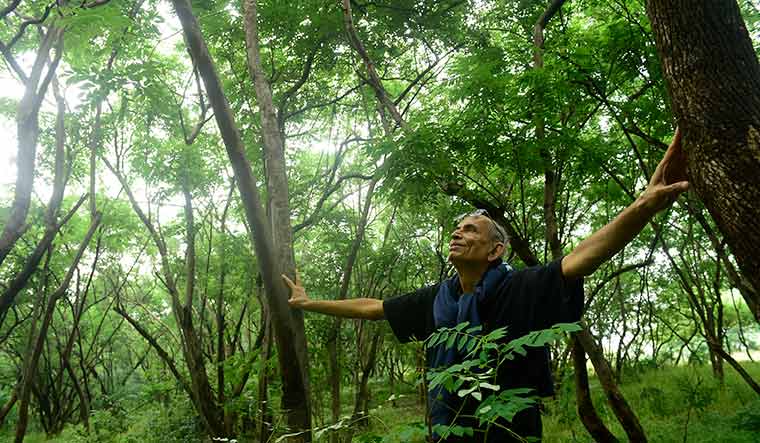
Madhav Gadgil is one of India's most influential ecologists and lead author of the Western Ghats Ecology Expert Panel Report. His conservation approach combines scientific research with community participation to restore ecosystems, promote sustainable development, and protect India's natural heritage.
Madhav Gadgil stands as one of India's most influential ecologists, whose groundbreaking work has shaped conservation strategies nationwide.
His visionary approach emphasizes the harmonious coexistence of humans and nature, ensuring that development never comes at the cost of ecological destruction. Through decades of research and policy advocacy, He has become synonymous with sustainable environmental solutions that benefit both communities and ecosystems.
Who is Madhav Gadgil? A Visionary in Environmental Conservation ✅
Madhav Gadgil is one of India's most respected ecologists and environmental thinkers. As the lead author of the Western Ghats Ecology Expert Panel Report, he provided an in-depth assessment of India's fragile ecosystems and the urgent need for their protection.
His work extends beyond research, focusing on action-driven conservation that includes:
- Restoring degraded ecosystems through afforestation and biodiversity revival
- Promoting eco-sensitive development that balances economic growth with environmental responsibility
- Encouraging community participation in conservation efforts
- Advocating for policies that protect India's rich natural heritage
By blending scientific research with grassroots involvement, Madhav Gadgil's approach ensures that conservation is not just a top-down directive but an inclusive movement that empowers local communities.
The Foundation of Sustainable Forest Management 🌱
Madhav Gadgil's contributions to forest conservation align perfectly with global sustainability goals. According to the United Nations Sustainable Development Goals, sustainable forest management is crucial for achieving climate action and biodiversity conservation.
His research demonstrates how proper forest stewardship can simultaneously address environmental protection and community development needs.
The pioneering work of Madhav Gadgil emphasizes that forests are not merely collections of trees but complex ecosystems that require careful management. His studies reveal how indigenous knowledge systems can complement modern conservation science to create more effective protection strategies.
Why Trees Are the Backbone of Biodiversity Conservation ⭐
Trees play a critical role in maintaining ecological balance, acting as carbon sinks, improving air quality, and providing habitats for countless species. Environmental studies show that forests absorb 2.6 billion tons of CO₂ annually and host over 80% of terrestrial biodiversity.
Key Benefits of Trees in Conservation:
- ✅ Absorb greenhouse gases, reducing the impact of climate change
- ✅ Prevent soil erosion and improve groundwater recharge
- ✅ Create natural habitats for birds, insects, and mammals
- ✅ Enhance local climate stability by providing shade and regulating temperature
- ✅ Support traditional medicinal plants and sustainable agriculture
Afforestation efforts inspired by Madhav Gadgil focus on planting native tree species to restore ecosystems naturally while supporting local communities. This approach ensures long-term sustainability and maximum ecological impact.
The Western Ghats: A Biodiversity Hotspot Under Threat 🌿
The Western Ghats, often referred to as the "Sahyadri Hills," represent one of the world's eight hottest biodiversity hotspots. Home to over 7,400 species of flora and fauna, many endemic to the region, this mountain range constitutes a natural treasure of global significance.
However, deforestation, mining, and urbanization continue to threaten this fragile ecosystem. The World Wildlife Fund highlights deforestation as one of the most pressing environmental challenges facing biodiversity hotspots worldwide.
Madhav Gadgil has been a strong advocate for Western Ghats conservation, emphasizing:
- Creation of eco-sensitive zones to regulate development
- Community-driven conservation rather than relying solely on government intervention
- Protection of traditional knowledge systems of indigenous communities
- Reforestation using native plant species to restore degraded landscapes
His recommendations highlight the need for a holistic approach that considers both environmental protection and local livelihoods, ensuring sustainable development that benefits all stakeholders.
Choosing the Right Trees: Native Species for Maximum Impact 💡
Reforestation success depends on planting the right trees in the right places. Many large-scale afforestation projects fail because they introduce non-native species that disrupt local ecosystems.
Madhav Gadgil's approach prioritizes native species that require minimal water and maintenance while providing maximum ecological benefits.
Native trees offer multiple advantages:
- Require minimal water and maintenance
- Provide food and shelter for local wildlife
- Enhance soil fertility and prevent erosion
- Support pollinators, improving agricultural yields
Some of the most ecologically beneficial native trees include Neem trees for air purification, Banyan trees for extensive shade and bird habitat, Jamun trees for soil stability, Mango trees for agroforestry income, and Tamarind trees for arid land restoration.
Integrating Technology into Conservation Efforts ⭐
Modern environmental initiatives use cutting-edge technology to accelerate and monitor conservation efforts. Inspired by Madhav Gadgil's work, many projects now incorporate advanced tools for better outcomes:
- → Drones for large-scale seed dispersal in inaccessible areas
- → AI-based monitoring to track tree survival and growth
- → GIS mapping to identify degraded lands for targeted reforestation
- → Smart irrigation systems for optimal water usage
- → Satellite imagery for real-time forest monitoring
Organizations like Grow Billion Trees utilize GeoTag technology to track planted trees, ensuring transparency and accountability in reforestation efforts. This technological integration helps achieve the ambitious goal of planting 100 crore trees across India by 2030.
Community-Driven Conservation: Madhav Gadgil's Legacy 🌍
One of Madhav Gadgil's most significant contributions lies in recognizing that successful conservation requires community participation. His research demonstrates how local communities, when properly engaged and incentivized, become the most effective guardians of natural resources.
The United Nations Environment Programme emphasizes that community-based forest management leads to better conservation outcomes and improved livelihoods. Madhav Gadgil's work validates this approach through numerous successful case studies across India.
Community-driven initiatives include:
- Training local farmers in sustainable agroforestry practices
- Establishing community seed banks for native species
- Creating eco-tourism opportunities that generate income
- Developing traditional craft industries using sustainable forest products
Climate Change Mitigation Through Reforestation ⚠️
Climate change represents one of humanity's greatest challenges, and Madhav Gadgil's work provides crucial insights into nature-based solutions. According to the United Nations Climate Change initiative, forests play a vital role in carbon sequestration and climate regulation.
Reforestation efforts contribute to climate change mitigation by:
- Sequestering atmospheric carbon dioxide
- Regulating local and regional climate patterns
- Reducing urban heat island effects
- Improving water cycle regulation
- Supporting climate-resilient agriculture
Organizations working toward Net Zero Targets increasingly recognize tree planting as an essential component of their climate action strategies. The concept of Plant a tree in your Name has gained popularity as individuals seek meaningful ways to contribute to climate solutions.
Sustainable Development Through Ecological Restoration 🌱
Madhav Gadgil's vision extends beyond simple conservation to encompass sustainable development that works in harmony with natural systems. His research demonstrates how ecological restoration can simultaneously address environmental degradation and socioeconomic challenges.
Key principles of sustainable ecological restoration include:
- Using native species adapted to local conditions
- Involving local communities in planning and implementation
- Integrating traditional knowledge with modern science
- Creating economic opportunities through restoration activities
- Monitoring and adaptive management for long-term success
This holistic approach ensures that restoration efforts contribute to both environmental health and human wellbeing, creating lasting positive impact for future generations.
The Role of Agroforestry in Sustainable Agriculture 💡
Madhav Gadgil has long advocated for agroforestry as a sustainable land-use system that combines agriculture with tree cultivation. This approach offers multiple benefits for farmers while supporting broader conservation goals.
Agroforestry systems provide:
- ✅ Additional income streams through tree products
- ✅ Improved soil fertility and water retention
- ✅ Natural pest control and pollinator habitat
- ✅ Climate resilience for agricultural systems
- ✅ Carbon sequestration opportunities
The integration of trees into agricultural landscapes represents a practical application of Madhav Gadgil's principles, demonstrating how conservation and production can coexist beneficially.
Modern Conservation Initiatives Inspired by Madhav Gadgil
Contemporary conservation organizations draw inspiration from Madhav Gadgil's pioneering work, implementing large-scale initiatives that reflect his principles.
Combating Climate Change Through Collective Action requires coordinated efforts across multiple sectors and stakeholders.
Modern initiatives include comprehensive programs offering 2-3ft Tree Planting + 3 Years Care + GeoTag tracking to ensure tree survival and growth. These programs combine scientific planning with community engagement, technology integration, and long-term monitoring.
Such initiatives demonstrate the practical application of Madhav Gadgil's vision, scaling up conservation efforts while maintaining focus on ecological integrity and community benefit.
Further reading: Rajesh Gopal: Champion of Green Innovation & Environmental Sustainability · S. P. Godrej: Pioneering Green Innovation and Environmental Legacy
Frequently Asked Questions
Who is Madhav Gadgil and why is he important for environmental conservation?
Madhav Gadgil is a renowned Indian ecologist and the lead author of the Western Ghats Ecology Expert Panel Report. He is important because his research and advocacy have shaped conservation policies across India, emphasizing community-driven conservation and sustainable development that balances ecological protection with human needs.
What are Madhav Gadgil's main contributions to forest conservation?
His main contributions include developing the Western Ghats conservation framework, advocating for eco-sensitive zones, promoting community-based forest management, emphasizing native species restoration, and integrating traditional knowledge with modern conservation science.
How does Madhav Gadgil's approach differ from traditional conservation methods?
Unlike top-down conservation approaches, Madhav Gadgil emphasizes community participation, traditional knowledge integration, and holistic ecosystem management. His methods focus on sustainable development that benefits both nature and local communities rather than excluding human activities entirely.
What role do native trees play in Madhav Gadgil's conservation philosophy?
Native trees are central to his approach because they require less maintenance, support local biodiversity, enhance soil health, and provide sustainable resources for communities. He advocates for native species over exotic plantations to restore natural ecosystem functions.
How can individuals contribute to conservation efforts inspired by Madhav Gadgil?
Individuals can plant native trees, support community-based conservation projects, practice sustainable living, advocate for eco-sensitive policies, and participate in reforestation initiatives that follow scientific principles and include long-term care and monitoring.
What is the significance of the Western Ghats in Madhav Gadgil's work?
The Western Ghats represent a biodiversity hotspot that Madhav Gadgil extensively studied and advocated for protecting. His Western Ghats Ecology Expert Panel Report highlighted the region's ecological importance and recommended conservation measures that balance development with environmental protection.
How does technology support modern conservation efforts based on Madhav Gadgil's principles?
Technology enhances conservation through GIS mapping for restoration planning, drone seeding for inaccessible areas, satellite monitoring for forest health, AI-based growth tracking, and mobile apps for community engagement, making conservation more efficient and transparent.
What is agroforestry and how does it relate to Madhav Gadgil's vision?
Agroforestry combines agriculture with tree cultivation, providing farmers additional income while supporting conservation goals. This approach aligns with Madhav Gadgil's vision of sustainable development that integrates human needs with ecological restoration.
Taking Action: Your Role in Environmental Conservation 🌍
Madhav Gadgil's legacy demonstrates that meaningful environmental change requires both scientific understanding and collective action.
His work continues to inspire new generations of conservationists, researchers, and environmental advocates who recognize that protecting our planet's biodiversity is essential for human survival and prosperity.
Today, organizations worldwide implement conservation strategies based on his principles, creating opportunities for everyone to contribute to environmental restoration.
Whether through individual tree planting, supporting community conservation projects, or advocating for sustainable policies, each person can play a vital role in continuing Madhav Gadgil's important work.
By choosing to Plant a tree in your Name or supporting larger reforestation initiatives, you become part of a global movement working toward a more sustainable future. Discover how you can contribute to planting 100 crore trees and join the effort to create lasting environmental impact for generations to come.
Keep reading
 Rajesh Gopal: Champion of Green Innovation & Environmental Sustainability
 S. P. Godrej: Pioneering Green Innovation and Environmental Legacy
 Norman Myers: The Visionary Who Mapped Biodiversity Hotspots
 P. V. Satheesh: Sowing Seeds of Sustainability and Green Innovation
 Seeds of Progress: How Technology Revolutionizes Tree Plantation
 Suprabha Seshan: Forest Guardian Transforming India's Ecosystems


Leave a comment