
Community agroforestry and CSR around mines
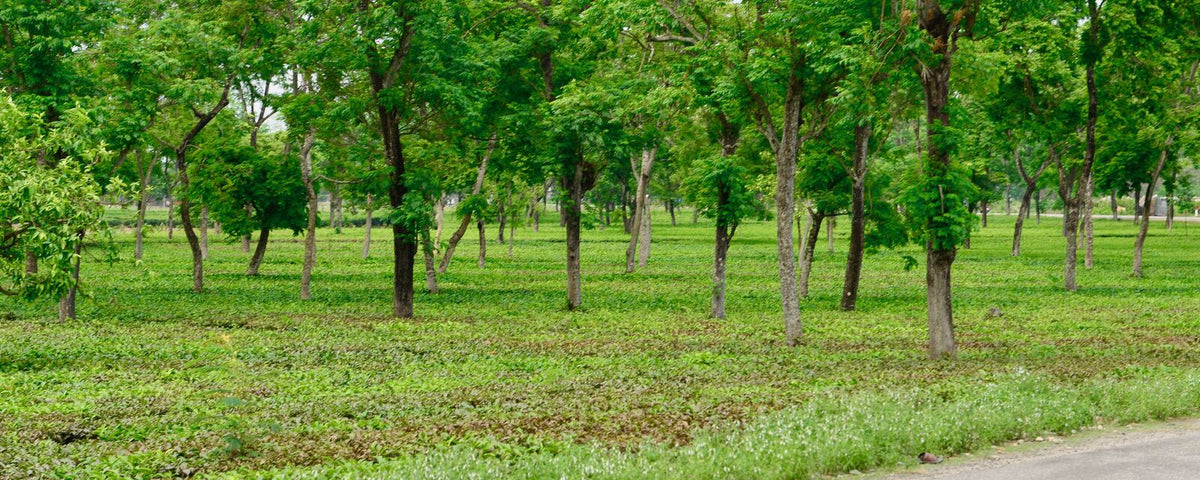
Community agroforestry puts fruit and timber trees on farmers' own land around a mine, with the company funding saplings, planting and three years of care. Farmers keep the fruit and timber income. The revised PMKKKY guidelines (2024) list agroforestry, horticulture and plantation among high-priority uses of District Mineral Foundation funds.
Mines change the land and the livelihoods around them. Village relations often decide whether a mine runs smoothly.
Trees on farms are one of the few CSR projects that keep paying back for years. This guide covers what the rules support, how to design a programme and how to keep it honest.
What do the rules say about mining-area development?
Mining districts have District Mineral Foundations (DMFs) under the MMDR Act. The Pradhan Mantri Khanij Kshetra Kalyan Yojana (PMKKKY) sets how DMF money is used.
The 2024 revised PMKKKY guidelines say at least 70% of funds go to high-priority sectors. These include environment preservation, skill development and livelihoods, and agriculture.
| PMKKKY 2024 category | What it covers that is relevant to trees |
|---|---|
| High priority: Agriculture | Activities related to agriculture, horticulture and agroforestry; support to farmer producer organisations; plantation; processing of medicinal herbs |
| High priority: Skill development and livelihood | Income generation, self-help groups, collection and processing of minor forest produce |
| High priority: Environment preservation | Control of air and dust pollution from mining and dumps, and measures for working or abandoned mines |
| Other priority: Energy and watershed | Development of orchards, integrated farming and agroforestry, and restoration of catchments |
The guidelines also say at least 70% of DMF funds must be spent in directly affected areas. DMF money is spent by the DMF, not by the company.
Company CSR is separate. It follows the Companies Act and Schedule VII; our Schedule VII checklist covers the compliance points. A CSR agroforestry project near the mine can complement DMF plans in the same villages.
Why agroforestry instead of a block plantation?
- It uses farmers' land, not company land. No land acquisition, and the trees stay with the people who look after them.
- It creates income. Fruit gives cash in a few years; timber adds a long-term asset.
- It builds goodwill. Families see a direct, lasting benefit from the mine's CSR.
- It adds tree cover in the buffer zone. Trees on farm boundaries and fields help with dust, soil and shade.
How should a mining-area agroforestry programme be designed?
Pick the right villages and farmers
Start with villages in the directly affected area. Work through the gram panchayat and local farmer groups.
Enrol farmers who own or securely hold their land and want trees. Written consent matters; the company takes no right over the land or the trees.
Choose species with farmers, not for them
Mix fruit trees for early income with timber trees for long-term value. Choices depend on rainfall, soil, water and local markets.
Boundary and bund planting suits small farms, because crops continue in the middle. Wider spacing lets farmers keep ploughing.
Plan water and care for three years
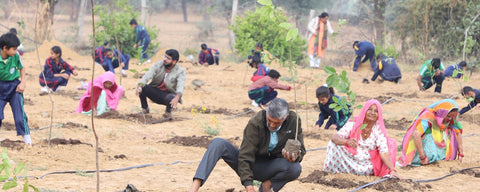
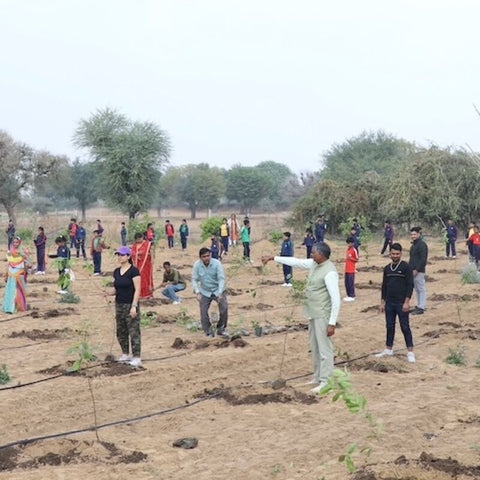
Most saplings die in the first two summers. Drip lines, mulching, protection from grazing and replacement of failed plants make the difference.
We train farmers on pruning and pest care, so the trees are in good hands when the three years end.
Link to markets
Fruit is only income if it sells. Linking farmers to producer organisations or buyers is part of a good programme, and the PMKKKY guidelines support such forward linkages.
What should companies avoid?
- Promising farmers carbon payments. Farmers keep fruit and timber income; we do not sell carbon credits from these plantations.
- Distributing saplings without care. Free saplings with no follow-up rarely survive.
- Choosing one species for every farm. Markets and soils differ.
- Reporting saplings distributed instead of trees alive.
How do you report it?
Agroforestry fits CSR reports and BRSR disclosures. Our BRSR Principle 6 guide shows where tree planting and biodiversity go.
Keep geo-tagged tree records, farmer lists, survival counts and photos. Carbon figures, if any, are estimates for your own voluntary reporting, never a farmer payment.
How Grow Billion Trees helps
We run farmer agroforestry programmes as CSR: farmer enrolment, species planning, planting, three years of care and geo-tagged reporting on GreenTrack. Our farm model aims for up to 3× farm income compared with conventional two-crop farming, and farmers keep all fruit and timber income. A ₹299 tree is a 2-3 ft sapling, planted, cared for three years and geo-tagged. See CSR tree plantation or the coal mining hub.
Further reading: Plantation and community programmes around solar and wind parks · Coal mine closure plans and eco-restoration: a practical guide
Frequently Asked Questions
Can DMF funds pay for agroforestry?
The 2024 revised PMKKKY guidelines list agriculture, horticulture and agroforestry, and plantation, as high-priority activities. DMF decisions are made by the DMF, not the mining company.
Is farmer agroforestry an eligible CSR activity?
Environmental sustainability and agroforestry are generally covered under Schedule VII. Check the details in our CSR Schedule VII checklist.
Who owns the trees on farmers' land?
The farmer. The company funds saplings, planting and care, but takes no right over the land, the fruit or the timber.
Do farmers get carbon payments?
No. Farmers keep the fruit and timber income. We do not sell carbon credits from these plantations.
How much more can farmers earn?
Our agroforestry model aims for up to 3× farm income compared with conventional two-crop farming. Results depend on species, water and markets.
How much does a farm tree cost?
A ₹299 tree is a 2-3 ft sapling, planted, cared for three years and geo-tagged.
Sources: Ministry of Mines: Revised PMKKKY guidelines, 2024 (copy on Goa DMG site) · Ministry of Coal: Greening initiatives. Last updated: October 2026. Rules change; check the latest notification before you rely on any detail.
Keep reading
 Plantation and community programmes around solar and wind parks
 Coal mine closure plans and eco-restoration: a practical guide
 Monitoring mine reclamation: satellite, geo-tagging and reporting
 CSR Tree Plantation Under Schedule VII: A Compliance Checklist for 2026
 Mine reclamation under MCDR: progressive mine closure plans


Leave a comment