
Green Belt at Cement Plants: Dust, Dry Sites and Compliance
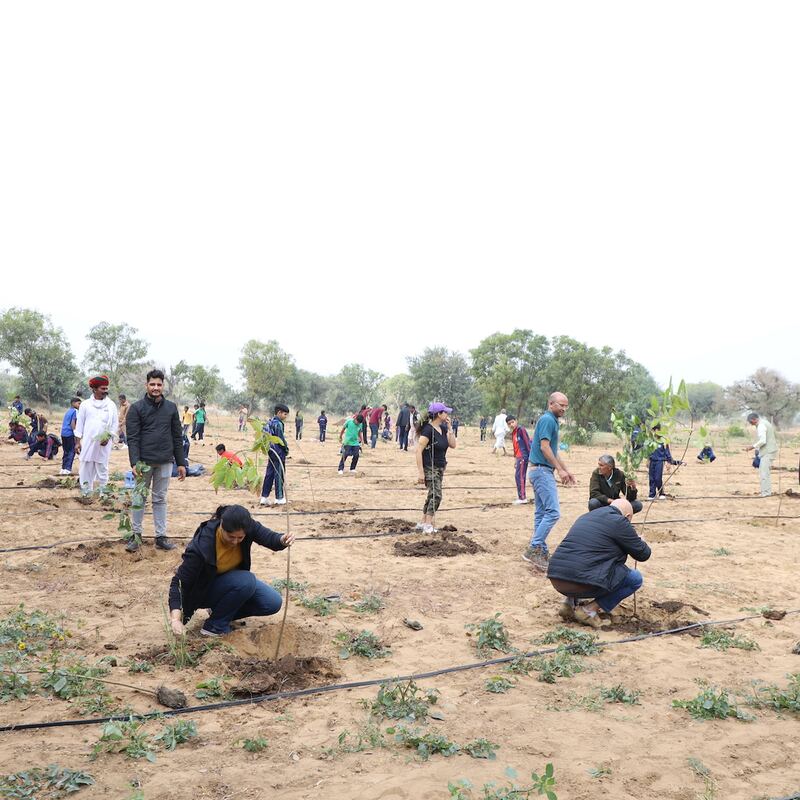
Many cement plant clearances ask for a three-tier green belt on 33% of the project area, at 2,500 trees per hectare. They often add a six-row shelter belt towards nearby homes. New clearances follow category-based minimums set by MoEFCC in October 2025. Dust, dry weather and poor soils are the real hurdles. Species, water and replacement planting decide whether the belt survives.
What does a recent cement plant clearance ask?
We read a MoEFCC clearance issued in September 2024 for an integrated cement plant in Rajasthan. Its green belt conditions are typical of new cement projects.
- A three-tier green belt on at least 33% of the project area, about 70 hectares in this case.
- Tree density of not less than 2,500 per hectare, with survival monitored and dead plants replaced.
- A shelter belt of six rows at 2 m x 2 m, with tall broad-leaved trees and a windshield, towards sensitive areas.
- Planning in consultation with AFRI and CAZRI, two arid-zone research institutes in Jodhpur.
- Implementing the Ek Ped Maa Ke Naam campaign, as per a Ministry memorandum of 24 July 2024.
- Strengthening the green belt around the plant to reduce dust near local habitations.
The same EC asks for "greening and paving" to stop dust from bare soil. It also asks for a GHG inventory that includes carbon sequestration by trees.
For the general rules on tiers, species and records, see our green belt guide for industries. This page covers what is different at a cement plant.
What changed for new cement projects in October 2025?
A MoEFCC memorandum of 29 October 2025 replaced the flat 33% figure for new EC applications. It sets minimums by pollution category instead.
- Standalone red-category units: 25% in predominantly air-polluting sectors, 20% in others.
- Standalone orange-category units: 20% and 15%.
- Red and orange units in critically or severely polluted areas: at least 40%.
- Expansions of existing plants: decided case by case by the expert committee.
Plants with older ECs must still meet the conditions written in them. Units may also plant beyond the minimum off-site, with at least five years of watering and protection.
The memorandum also asks for native, pollution-tolerant species, belts set across the main wind, and half-yearly green belt reports to the SPCB.
Where does dust come from at a cement plant?
A cement plant has many dust points, and most of them sit near the ground. A green belt works best when it is placed between those points and people.
| Area | Dust risk | Green belt approach |
|---|---|---|
| Limestone crusher and stockpiles | Fine dust in dry, windy months | Dense multi-row belt on the downwind side, with shrubs at the base. |
| Conveyors and transfer points | Spillage and wind-blown fines | Narrow two- or three-row strips along the route. |
| Fly ash and slag storage | Light, easily lifted particles | Tall, broad-leaved rows around the yard. |
| Packing plant and truck yard | Road dust and spilled cement | Avenue trees with a shrub layer, plus paving. |
| Boundary facing villages | All of the above | The six-row shelter belt the EC describes. |
The cement EC also asks for covered transport, wheel washing at gates and controls on fly ash storage. Trees support those controls; they do not replace them.
Which species suit dry sites and limestone soils?
Many cement plants sit on limestone belts with thin, alkaline and often dry soils. Choose trees that are native to the zone and tolerate drought, dust and high pH.
- Arid and semi-arid zones: khejri, rohida, desi babool, kumat, ber and neem are common native choices.
- Drier central and southern plateaus: neem, karanj, amaltas, siris, bael and sitaphal often do well.
- Wetter zones: add arjun, jamun, kadamb and native bamboo where water allows.
These are starting points, not a prescription. The EC we read sends the company to AFRI and CAZRI for a reason; local experts know which species survive on that soil.
Field studies reported by Mongabay India also help. One near a thermal power station in Jharkhand found the blackboard tree, banyan, Ashoka and mango best suited to dusty conditions.
How do you keep a cement plant green belt alive?
Water is usually the limiting factor. The cement EC requires zero liquid discharge and rainwater harvesting, so plan green belt water from the start.
- Use drip irrigation, with treated water from the plant's sewage treatment plant where its quality allows.
- Build small basins or trenches around saplings to hold monsoon rain.
- Improve pits with soil, compost and, where useful, biochar to hold water.
- Mulch heavily and weed often in the first two years.
- Count survival after each monsoon and fill gaps in the next planting window.
Dust on leaves also slows growth. Where water allows, a light wash of boundary rows in the driest months can help.
What should the compliance file contain?
The EC asks for green belt compliance status to go to the MoEFCC Regional Office. Inspectors look for evidence, not intent.
- A map of each green belt block, its area and its share of the project area.
- Sapling counts by species and planting date, matched to the tier design.
- Yearly survival counts and replacement planting.
- Geo-tagged photos from fixed points, taken each season.
- Spend against the green belt budget in the environment management plan.
The same records can support your BRSR disclosures. See BRSR Principle 6 and tree plantation.
Does a cement plant green belt help with CCTS?
No. A green belt meets EC conditions and helps air quality, but it does not reduce the plant's emission intensity under the carbon market. Our guide to CCTS targets for cement explains what does.
How Grow Billion Trees helps
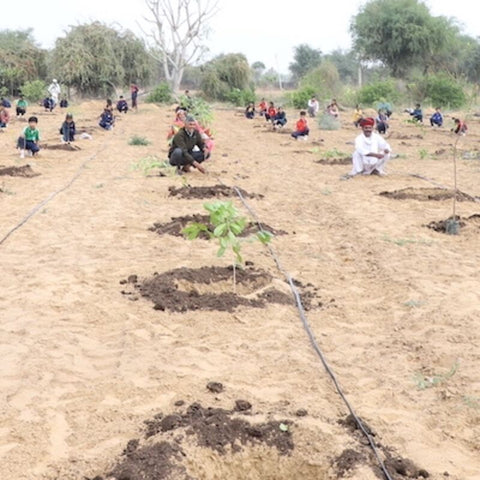
We survey the site, map dust sources and propose a tiered native species plan matched to your EC. We plant, care for every tree for three years, and geo-tag it, with 85% survival across our programmes. Progress is visible on GreenTrack, and green belt work is priced per project after a site survey; see our cement industry page.
Further reading: Green Belt Development for Industries: Rules, Species and Maintenance · Green Belt and Miyawaki Forests at Integrated Steel Plants
Frequently Asked Questions
How much of a cement plant must be green belt?
Many existing ECs say at least 33%. For new applications, the October 2025 memorandum sets category-based minimums, such as 25% for standalone red-category units in air-polluting sectors. Check your own EC.
What tree density do cement ECs ask for?
The 2024 cement EC we reviewed says tree density shall not be less than 2,500 per hectare.
What is a shelter belt in a cement EC?
A dense band of six rows planted at 2 m x 2 m, with tall broad-leaved trees, facing villages or other sensitive areas.
Which trees grow on dry limestone soils?
Native drought-tolerant species such as neem, khejri, desi babool and karanj are common starting points. Confirm the list with your State Forest Department or a regional institute.
Can we use treated wastewater for the green belt?
Often yes, if the treated water meets the quality your consent allows. It also helps with the zero liquid discharge condition.
Does the green belt reduce our CCTS emission intensity?
No. It helps with EC compliance, dust and biodiversity, but it is not part of the plant's emission intensity under the CCTS.
Sources: MoEFCC environmental clearance, integrated cement plant, Rajasthan (30 Sep 2024) · MoEFCC office memorandum of 29 Oct 2025 on green belt norms (enclosed with Kerala SPCB circular, 18 Dec 2025) · Mongabay India: Greening with pollution-gobbling trees doubles benefits (Nov 2018). Last updated: October 2026. Rules change; check the latest notification before you rely on any detail.




Leave a comment