
Green Belt and Water Restoration for Chemical and Textile Clusters
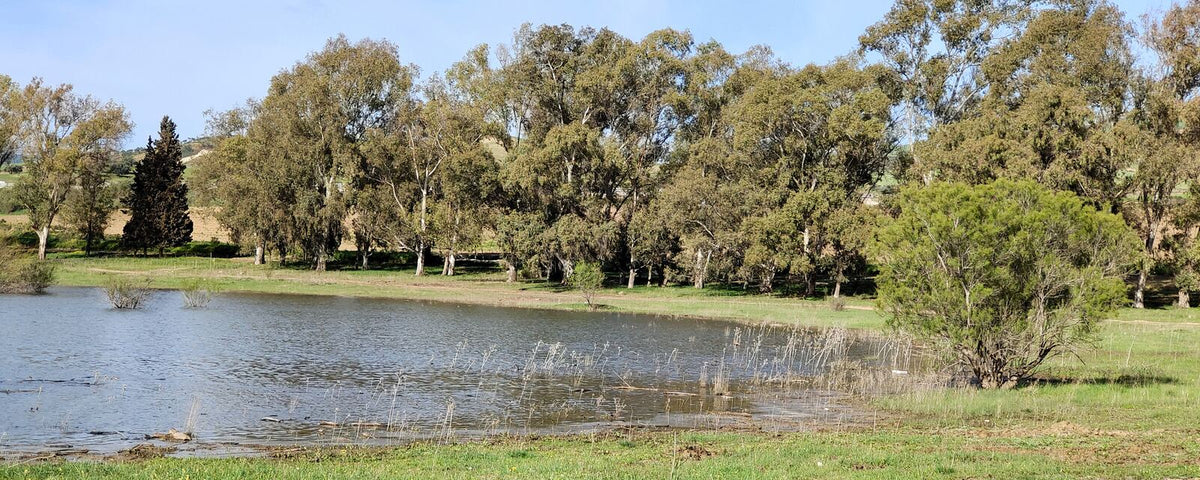
On 29 October 2025, MoEFCC replaced the flat 33% green belt norm for new clearances with minimums by pollution category. Red and orange units in critically or severely polluted areas need 40%. Chemical and textile clusters can meet these duties and go further with off-site planting and pond or lake restoration. The new rules say off-site plantation must be watered, protected and maintained for at least five years.
What changed in green belt rules in 2025?
Many older environmental clearances carry a condition of green belt on at least 33% of the area. A MoEFCC office memorandum of 29 October 2025 replaced that uniform figure for new clearances with category-based minimums.
The memorandum (No. IA3-22/14/2025-IA.III) was summarised by CHEMEXCIL, the chemicals export promotion council, in a circular to its members.
| Location and category | Minimum green belt (new rules) |
|---|---|
| New industrial estate or park: red | 15% |
| New industrial estate or park: orange | 10% |
| New industrial estate or park: green, white | Optional |
| Standalone unit: red | 25% (predominantly air-polluting) / 20% (other) |
| Standalone unit: orange | 20% (predominantly air-polluting) / 15% (other) |
| Standalone unit: green | 10% (high-pollution green only); otherwise optional |
| Red or orange unit in a critically or severely polluted area | 40% |
The circular says the new criteria apply to new environmental clearance applications and those under review. For brownfield expansions, the Expert Appraisal Committee decides the minimum case by case. Your existing clearance conditions still apply until changed.
What makes a green belt work?
The same circular lists directions for effective green belts. They match good field practice.
- Prefer native, pollution-tolerant species that trap dust and absorb gases and noise.
- Mix evergreen and deciduous species so the belt works all year.
- Plant in tiers: tall trees, shrubs and ground cover.
- Set width and density by site pollution intensity.
- Place the belt close to the pollution source and across the prevailing wind.
Our green belt guide covers species and maintenance in detail.
Off-site planting is now recognised
Beyond the minimum, project proponents may plant ex-situ with State Forest Departments, urban local bodies or other agencies, the circular says. It names initiatives such as Nagar Van and compensatory afforestation.
The condition is clear: ensure watering, protection and maintenance for at least five years. Plan the budget and the partner for that period.
Separately, the Green Credit Programme lets companies restore degraded forest land; credits come after five years and 40% canopy density. See our Green Credit Programme guide.
Why water restoration belongs in the plan
Chemical and textile clusters depend on water and often sit near stressed ponds, tanks and streams. Restoring them helps the plant's neighbours and its licence to operate.
| Work | What it involves | Who benefits |
|---|---|---|
| Pond desilting | Remove silt, repair bunds and inlets | Villages, livestock, groundwater |
| Lake and tank restoration | Clean inflows, stabilise banks with native trees | Town residents, biodiversity |
| Catchment planting | Trees and grasses on slopes above the water body | Less silt, slower run-off |
| Shoreline green buffer | Native trees and shrubs around the water edge | Birds, shade, bank stability |
Water restoration must not be a way to dilute or hide effluent. Treat effluent to consent standards first. Restoration is for community water bodies, not discharge points.
How to fit it into compliance and CSR
- Statutory: the green belt in your clearance is a legal duty. Keep its records separate.
- CSR: voluntary pond, lake and village planting can fit Schedule VII. See our checklist.
- BRSR: report green belt area, survival and water bodies restored under Principle 6.
- CCTS: none of this changes emission intensity under the carbon market.
Planning a cluster programme in five steps
- Read your clearance. Note the green belt percentage, location and any CPA or SPA status.
- Map the land. Mark on-site belt, gaps and dead patches, and nearby water bodies.
- Split duties from voluntary work. The statutory belt first; CSR water and village planting second.
- Choose partners. Forest department or local body for ex-situ land; a restoration partner for work and care.
- Set reporting. Geo-tagged survival and area for the clearance compliance report and BRSR.
Gaps in old green belts
Many older belts have dead patches, single-species rows or trees too young to screen anything. Infill with native species in tiers.
Replace losses each monsoon and record the survivors. A belt that exists only on the site plan will not satisfy an inspector.
How Grow Billion Trees helps
We plan and maintain green belts, pond restoration and lake restoration for industrial clusters. Every site gets three years of care and geo-tagged records on GreenTrack. Work is priced per project after a site survey. Start on our chemicals, paper and textiles page.
Frequently Asked Questions
Is the 33% green belt rule still in force?
For new clearances, a MoEFCC memorandum of 29 October 2025 replaced the flat 33% with category-based minimums. Existing clearance conditions stay until they are changed.
What green belt does a red-category chemical unit need now?
Outside an industrial estate: 25% if predominantly air-polluting, 20% otherwise. In a critically or severely polluted area: 40%.
Can we plant outside our premises?
Yes, beyond the minimum. The rules allow ex-situ planting with forest departments or local bodies, maintained for at least five years.
What species work in a chemical-plant green belt?
Native, pollution-tolerant species in tiers of trees, shrubs and ground cover, with a mix of evergreen and deciduous plants.
Can pond restoration count as CSR?
Voluntary restoration of community water bodies can fit Schedule VII. It cannot be CSR if it is a clearance condition.
Does a green belt reduce our CCTS emission intensity?
No. Green belts help with clearance conditions and reporting, not with the carbon market target.
Sources: CHEMEXCIL circular on MoEFCC OM of 29 Oct 2025 (green belt criteria) · IndiaCorpLaw: Relaxed environmental norms (Sep 2026) · PIB: Green Credit Programme, Parliament question (16 Mar 2026). Last updated: October 2026. Rules change; check the latest notification before you rely on any detail.
Keep reading
 Green Belt Development for Industries: Rules, Species and Maintenance
 Green Belt at Cement Plants: Dust, Dry Sites and Compliance
 Green Belt and Miyawaki Forests at Integrated Steel Plants
 Water and Land Restoration Around Steel Plants
 Green belt at refineries and petrochemical complexes
 Green belt at thermal power plants: rules and design


Leave a comment