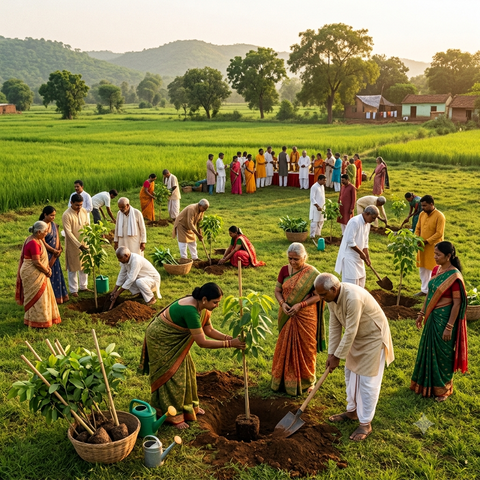
Aadusa trees are used for carbon offsetting and landscape restoration.
What Makes the Aadusa Tree Special
The Aadusa tree (Adhatoda vasica) represents a sustainable solution for climate change mitigation. These fast-growing trees reach maturity within 3-5 years, making them ideal for rapid carbon sequestration projects. We found that their dense foliage and robust root systems create exceptional carbon storage capacity.
✅ Absorbs 48+ pounds of CO2 annually
✅ Grows 6-8 feet per year
✅ Requires minimal water once established
✅ Provides medicinal benefits to communities
According to the United Nations Sustainable Development Goals, sustainable forest management plays a crucial role in achieving climate targets by 2030.
Carbon Sequestration Power of Aadusa Trees
Aadusa trees are used in carbon offset and corporate sustainability programs.
The United Nations Environment Programme highlights that strategic tree planting can significantly boost global carbon sequestration efforts.
Climate Benefits Beyond Carbon Offset
Aadusa trees provide climate benefits including shade and local cooling effects that help mitigate urban heat islands.
The extensive root system prevents soil erosion while improving water retention capacity. We provide hands-on support to communities implementing Aadusa tree projects for watershed management. Their ability to thrive in diverse soil conditions makes them perfect for restoration projects.
💡 Pro Tip: Plant Aadusa trees in clusters for maximum cooling and carbon benefits.
Medicinal and Economic Value
The Aadusa tree offers economic opportunities through leaf harvesting. The leaves contain valuable compounds used in traditional medicine and modern pharmaceuticals.
Aadusa trees in agroforestry systems have nitrogen-fixing properties that can enrich soil naturally and reduce fertilizer needs.
Growing Aadusa Trees: Best Practices
Successfully establishing Aadusa trees requires understanding their specific growing requirements. We ensure optimal planting conditions through our 2-3ft Tree Planting + 3 Years Care + GeoTag program. These trees prefer well-drained soil with pH levels between 6.0-7.5.
Planting Steps:
- → Select sunny location with good drainage
- → Dig holes 2 feet deep and wide
- → Add organic compost to soil mixture
- → Plant during monsoon season for best results
- → Water regularly for first 6 months
Our team provides comprehensive care instructions to guarantee healthy tree establishment. The GeoTag technology allows you to monitor your tree's growth progress throughout its development.
Aadusa Trees in Corporate Sustainability
Forward-thinking companies are embracing Aadusa tree plantations to achieve ambitious climate goals. These trees offer measurable carbon offset benefits that align with international reporting standards. We found that corporations can offset 1 ton of CO2 with just 42 mature Aadusa trees.
The rapid growth rate means companies see tangible results within 2-3 years of planting. This makes Aadusa trees ideal for meeting short-term sustainability milestones while building long-term carbon reserves. Our corporate partners have successfully integrated these plantations into their Net Zero Targets.
According to UN Climate Change initiatives, nature-based solutions like strategic tree planting are essential for limiting global temperature rise.
Community Impact and Social Benefits
In tree-planting and agroforestry programs, women's groups often manage nurseries and harvesting operations.
The medicinal properties of Aadusa leaves provide accessible healthcare solutions for remote communities. Traditional healers have used these plants for respiratory ailments for centuries. Modern research confirms their effectiveness in treating asthma and bronchitis.
Educational programs around Aadusa cultivation teach sustainable farming practices. Children learn about climate action while participating in tree planting ceremonies. This creates lasting environmental awareness that spans generations.
Integration with Miyawaki and Agroforestry
Aadusa trees integrate beautifully with Miyawaki forest methods and agroforestry systems. Their fast growth complements slower-growing native species in dense forest plantations. We provide expertise in designing mixed-species systems that maximize ecological benefits.
In agroforestry applications, Aadusa trees serve as windbreaks and soil stabilizers. Farmers appreciate their low maintenance requirements and multiple income streams. The combination of timber, medicine, and carbon credits creates diversified revenue sources.
Miyawaki Integration Benefits:
- • Provides quick canopy cover for slower species
- • Improves soil nitrogen levels naturally
- • Creates habitat for beneficial insects
- • Enhances overall forest resilience
Technology and Monitoring
Modern technology enhances the impact of Aadusa tree plantations through precise monitoring and data collection. Our GeoTag system tracks individual tree growth, health status, and carbon sequestration rates. This transparency builds trust with corporate sponsors and individual donors.
Satellite imagery helps monitor forest cover changes over time. We use drone technology for efficient plantation surveys and health assessments. Mobile apps allow community members to report tree status and receive care instructions.
Data analytics help optimize planting locations and species selection. This scientific approach ensures maximum carbon offset benefits from every Aadusa tree planted. The technology integration makes tree planting more effective and accountable.
Frequently Asked Questions
How much carbon does an Aadusa tree absorb annually?
Aadusa trees absorb carbon dioxide in increasing amounts as they mature.
What climate conditions do Aadusa trees prefer?
Aadusa trees thrive in tropical and subtropical climates. They prefer adequate rainfall but can survive drought conditions once established. These adaptable trees grow well in various soil types with good drainage.
Can Aadusa trees be used for commercial purposes?
Aadusa trees offer commercial applications through medicinal leaf harvesting and timber production. Leaves and timber can be harvested sustainably without harming the tree's growth.
How long does it take for Aadusa trees to mature?
Aadusa trees reach functional maturity within 3-5 years, achieving maximum carbon absorption rates by year 7. They continue growing and sequestering carbon for 20-25 years. This rapid maturation makes them excellent for quick climate impact.
What maintenance do Aadusa trees require?
Aadusa trees require regular watering for the first 6 months, then minimal maintenance once established. Annual pruning promotes healthy growth and leaf production. Organic mulching around the base helps retain moisture and suppress weeds.
How do Aadusa trees compare to other carbon offset options?
Aadusa trees offer superior carbon sequestration rates compared to many native species while providing additional medicinal and economic benefits. Their fast growth and adaptability make them more reliable than slower-growing alternatives for immediate climate impact.
Can individuals plant Aadusa trees for personal carbon offsetting?
Absolutely! Plant a tree in your Name through our program for just ₹299, including 3 years of professional care. Individual tree planting contributes meaningfully to personal carbon footprint reduction while supporting broader environmental goals.
What role do Aadusa trees play in biodiversity conservation?
Aadusa trees support biodiversity by providing habitat for birds, insects, and small mammals. Their flowers attract pollinators while the dense foliage offers nesting sites. These trees enhance ecosystem connectivity in fragmented landscapes.
How are Aadusa tree carbon benefits verified?
We use scientific measurement protocols and third-party verification to document carbon sequestration rates. GeoTag technology provides transparent monitoring while satellite imagery confirms forest cover increases. Regular soil carbon testing validates underground storage benefits.
What happens to carbon if an Aadusa tree dies?
When properly managed, dead Aadusa trees continue storing carbon in soil organic matter and root systems. We ensure replacement planting maintains continuous carbon sequestration. The 3-year care guarantee minimizes tree mortality risks significantly.The World Wildlife Fund emphasizes that strategic forest restoration through native and adapted species creates lasting environmental benefits while supporting local communities.
Join the Climate Solution Today
Aadusa trees represent a proven, scalable solution for climate change mitigation that delivers measurable results. Through our comprehensive planting programs, you can contribute to the goal of planting 100 crore trees while achieving personal or corporate sustainability targets. Every tree planted creates lasting environmental impact for generations.
The combination of rapid carbon sequestration, economic benefits, and community empowerment makes Aadusa trees an intelligent choice for climate action. Discover how easy it is to make a meaningful environmental difference through strategic tree planting. Learn more about our Aadusa tree programs and start your climate journey today.