
CCTS targets for refineries and petrochemicals: where trees fit

India notified final greenhouse gas emission intensity targets for petroleum refining and petrochemicals in January 2026, for compliance years 2025-26 and 2026-27 against a 2023-24 baseline. These targets are met by cutting emissions per unit of product, or by buying Carbon Credit Certificates. Tree plantation does not reduce a unit's emission intensity and does not count toward its target.
What did the government notify in January 2026?
In January 2026 the government notified final greenhouse gas emission intensity (GEI) targets for four more sectors. These are petroleum refining, petrochemicals, textiles and secondary aluminium.
Together these notifications cover 208 entities. They sit under India's Carbon Credit Trading Scheme (CCTS), the compliance side of the Indian carbon market.
The first batch came on 8 October 2025. It covered aluminium, cement, chlor-alkali and pulp and paper, with 282 entities. Targets for iron and steel and fertiliser were proposed in June 2025.
How do the targets work?
Each obligated entity gets a target for tonnes of CO2-equivalent per unit of output. The baseline year is 2023-24. The compliance years are 2025-26 and 2026-27.
- Beat the target: the entity can be issued Carbon Credit Certificates (CCCs) for the difference.
- Miss the target: the entity must buy and surrender CCCs, or pay environmental compensation.
- Measure it: intensity is calculated on the plant's own emissions and production, verified under the scheme.
ICAP notes that entities that fail to meet targets "will be required to purchase and surrender an equivalent number of CCCs". A separate offset mechanism lets non-covered entities register projects, but that is a different route.
Why doesn't tree plantation count toward a refinery's target?
A GEI target measures emissions released per unit of product inside the plant boundary. Trees planted on the site or elsewhere do not change the fuel burned, the process emissions or the throughput.
So a green belt, a Miyawaki forest or a mangrove project will not lower the reported intensity number. It cannot be netted off the plant's emissions to meet the target.
We say this plainly because the confusion is common. Plantation is valuable, but not as a CCTS compliance tool for a refinery or petrochemical unit.
| Question | Plantation's role |
|---|---|
| Does it lower the unit's GEI? | No. Intensity is based on plant emissions and output. |
| Can it replace buying CCCs on a shortfall? | No. Shortfalls are settled with CCCs or environmental compensation. |
| Does GBT sell CCTS credits from plantations? | No. We do not sell carbon credits from these plantations. |
| Does it help with other duties? | Yes: green belt conditions, compensatory afforestation, CSR and BRSR disclosure. |
What actually moves a refinery's intensity number?
The levers are inside the fence. Energy efficiency in furnaces and heaters, heat recovery, fuel switching, cleaner hydrogen and better process control are the usual places to look.
Your process and energy teams own this work. Plantation teams should not be asked to "close the gap" on a CCTS target.
Where does plantation still help a refinery or petrochemical complex?
Plantation answers several other obligations and expectations that sit next to CCTS:
- Green belt: environmental clearance conditions usually set a green belt share of the site. See our guide on green belt at refineries.
- Compensatory afforestation: pipelines and expansions that use forest land must fund or raise compensatory planting. Our pipeline CA guide covers the details.
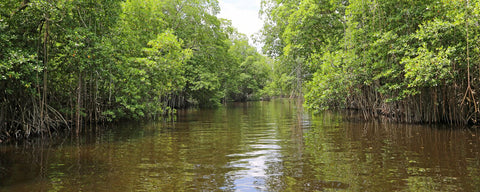
- Coastal sites: mangrove restoration for terminals and ports, under CRZ conditions.
- CSR: environmental sustainability projects under Schedule VII. Use our CSR compliance checklist.
- BRSR: biodiversity and land disclosures under Principle 6. See where plantation goes in BRSR.
Can a refinery use plantation in a net-zero claim?
Only as a supplement to cutting its own emissions, never as a substitute. Any carbon figures from trees are estimates and should be reported separately from the emissions inventory.
Our guide on net-zero claims with nature-based projects covers what holds up under SBTi guidance and Indian greenwashing rules.
What should the sustainability team do now?
- Confirm which of your units are obligated entities and note their notified targets.
- Keep CCTS compliance with the energy and process teams. Track CCC purchase options if a shortfall is likely.
- Map plantation work to the duties it really serves: green belt, compensatory afforestation, CSR and BRSR.
- Keep plantation carbon estimates out of CCTS reporting, and label them as estimates elsewhere.
For the wider picture, read whether tree and mangrove projects qualify under CCTS.
How Grow Billion Trees helps
We help refining and petrochemical companies with green belts, mangrove restoration, compensatory afforestation support and CSR plantation. We do not sell CCTS carbon credits, and we keep plantation out of your GEI story. See our oil and gas page. We geo-tag every tree, report on GreenTrack, and hold to 85% survival across our programmes. Projects are priced per project after a site survey; you can plan a programme with our team.
Further reading: CCTS for Chlor-Alkali, Paper and Textiles: What Plantation Can Do · Aluminium smelters and CCTS: what plantation can and cannot do
Frequently Asked Questions
Are refineries covered under the CCTS?
Yes. Final GEI targets for petroleum refining and petrochemicals were notified in January 2026, along with textiles and secondary aluminium. The four sectors together cover 208 entities.
What are the compliance years?
The targets apply to 2025-26 and 2026-27, with 2023-24 as the baseline year.
What happens if a refinery misses its target?
It must buy and surrender Carbon Credit Certificates for the shortfall, or pay environmental compensation.
Can planting trees reduce a refinery's emission intensity?
No. Emission intensity is calculated on the plant's own emissions per unit of output. Trees do not change that number and do not count toward the target.
Does Grow Billion Trees sell CCTS carbon credits?
No. We do not sell CCTS carbon credits from our plantations. Any carbon figures we share are estimates.
So why should a refinery plant trees at all?
For green belt conditions, compensatory afforestation, coastal protection, CSR projects and BRSR disclosures. These are real duties, separate from CCTS.
Sources: ICAP: India notifies emission intensity targets for nine sectors · The Statesman: GHG intensity targets for 208 more industries. Last updated: October 2026. Rules change; check the latest notification before you rely on any detail.
Keep reading
 CCTS for Chlor-Alkali, Paper and Textiles: What Plantation Can Do
 Aluminium smelters and CCTS: what plantation can and cannot do
 CCTS Targets for Cement Plants: What They Mean and Where Trees Fit
 CCTS Targets for Iron and Steel Plants: What the Draft Means
 India's Carbon Market (CCTS): Can Tree and Mangrove Projects Earn Carbon Credits?


Leave a comment