
Tree Transplantation vs Replacement Planting for Project Developers
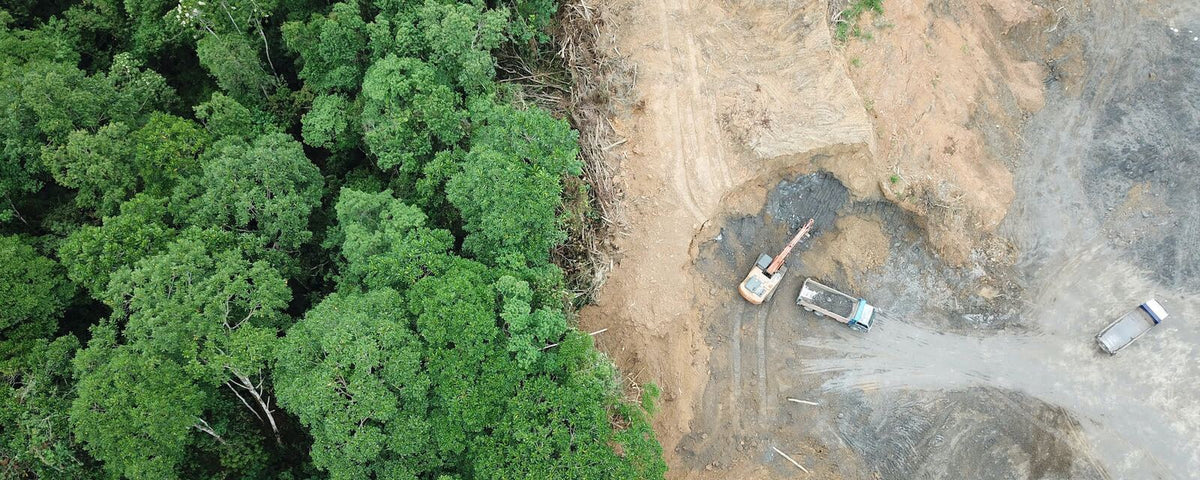
Transplanting moves an existing tree; replacement planting adds new saplings for each tree felled. Rules on both are set by states and cities, not by one national law, so the numbers change from place to place. Delhi asks agencies to transplant most affected trees, yet official data later showed only about a third survived.
Why this decision matters for project developers
Roads, metro lines, airports and ports often need trees cleared from the alignment. The permit you get will usually come with a condition.
That condition may ask you to transplant trees, plant new ones, or both. Getting it wrong delays the project and draws public criticism.
Rules vary by state and city
There is no single national rule for trees on non-forest land. Each state or city tree law sets its own process and ratios. The examples below are from sources we opened; they are not a complete list.
| Place | What the rule says | Source |
|---|---|---|
| Delhi (transplantation) | Tree Transplantation Policy notified in December 2020: transplant at least 80% of affected trees; 80% survival benchmark after one year; payment after one year | Outlook |
| Delhi (replacement) | Felling permission under the Delhi Preservation of Trees Act, 1994: 10 saplings per tree felled, maintained for 5-7 years | Delhi Forest Dept circular, 2023 |
| Maharashtra (urban areas) | Trees aged 50 years or more classed as heritage trees after a 2021 amendment; a State Tree Authority set up | The Tribune |
| Maharashtra (large proposals) | Proposals to fell more than 200 trees go to the State Tree Authority | The Hitavada |
| National Highways | NHAI says it emphasises transplanting trees that must be removed for highway projects | PIB |
If your project is in another state, ask the local Tree Officer or forest division for the current rule before you design the plan.
What does the evidence say about transplant survival?
Outlook reported Delhi Forest Department data for three years. Only about one-third of 16,461 transplanted trees survived.
The figures were 36.5% in 2019-20, 28.6% in 2020-21 and 37.1% in 2021-22. The policy benchmark is 80% at one year.
This does not mean transplanting never works. It means transplanting needs the right tree, the right season and long aftercare.
When to transplant and when to replace
| Factor | Leans towards transplanting | Leans towards replacement planting |
|---|---|---|
| Tree age and size | Young to middle-aged trees with a manageable root ball | Very large or old trees that are hard to lift |
| Species | Species known to recover after root pruning | Species that rarely survive root loss |
| Tree health | Healthy, upright, no heart rot | Diseased, hollow or leaning trees |
| Receiving site | Nearby land with soil, space and water | No suitable land close by |
| Time | Weeks available for root pruning before the lift | Tight construction schedule |
| Aftercare | Water, staking and monitoring budgeted for years | No one to look after the moved tree |
Many projects use both. They transplant the trees most likely to survive and plant replacements for the rest, as the permit allows.
Good practice for a transplant
- Survey every tree: species, girth, height, health and a geo-tagged photo.
- Root-prune in stages before the lift, where time allows.
- Move in the cooler or wetter season for your region.
- Prepare the receiving pit, soil and water supply before the tree arrives.
- Stake, mulch and water on a fixed schedule; record new leaf growth.
- Report survival at fixed intervals and replace losses as the permit requires.
Good practice for replacement planting
- Confirm the ratio, sapling size and maintenance period in the permit.
- Secure land in writing; lack of land often stalls compensatory planting.
- Use native species suited to the site, not only fast-growing fillers.
- Geo-tag each sapling and keep records for the full maintenance period.
Felling on forest land follows a different law and fund. See our compensatory afforestation and CAMPA guide. Our Green Credit Programme guide covers restored land that can be exchanged towards it.
What to ask a transplant or planting partner
Many contracts fail because the scope is vague. Put these points in the tender.
- The species and girth range they have moved before, with survival records.
- Their root-pruning, lifting and transport method.
- Who prepares the receiving site and supplies water.
- The maintenance period and replacement terms.
- How survival is counted, photographed and reported.
- How payment is linked to survival, as Delhi's policy does.
How to report results honestly
Report the number of trees affected, retained, transplanted, felled and replaced. Then report survival at fixed dates.
Do not report saplings planted as if they equal mature trees lost. A sapling takes years to give the same shade and habitat.
Clear, dated records help with the tree authority, with public questions, and with your BRSR disclosure.
How Grow Billion Trees helps
We take on replacement and compensatory planting on land you or the authority identify. Each tree gets three years of care and geo-tagged records on GreenTrack. Our survival methodology explains how we count survivors. Work is priced per project after a site survey; start with our infrastructure page or mandate checker.
Further reading: Tree-Felling Permission and Replacement Planting in Indian Cities · Compensatory Afforestation and CAMPA Explained for Project Developers
Frequently Asked Questions
Is there a national rule on transplanting trees?
Not for trees on non-forest land. States and cities set their own rules, so check with the local Tree Officer before you plan.
What survival rate does Delhi expect for transplanted trees?
Delhi's 2020 policy sets an 80% survival benchmark one year after transplanting, with payment released after that year.
How many saplings does Delhi require per tree felled?
A Delhi Forest Department circular of June 2023 says permissions carry a condition of 10 saplings per tree felled, maintained for 5-7 years.
Do transplanted trees usually survive?
Results vary widely. Delhi data reported by Outlook showed about one-third survival over three years, well below the policy benchmark.
Who decides large felling proposals in Maharashtra?
The Hitavada reported that proposals to fell more than 200 trees go to the Maharashtra State Tree Authority.
Can replacement planting count as CSR?
Usually not, if it is a legal condition of your permit. Statutory duties are generally kept apart from CSR spend. See our Schedule VII checklist.
Sources: Outlook: Just 37% of transplanted trees survived in Delhi · Delhi Forest Department circular on DPTA 1994 tree felling (2 Jun 2023) · The Tribune: Maharashtra heritage tag for 50-year-old urban trees (11 Jun 2021) · The Hitavada: State Tree Authority asks NMC to reassess tree age (2 Sep 2022) · PIB: NHAI launches Harit Path app (21 Aug 2020). Last updated: October 2026. Rules change; check the latest notification before you rely on any detail.
Keep reading
 Tree-Felling Permission and Replacement Planting in Indian Cities
 Compensatory Afforestation and CAMPA Explained for Project Developers
 Compensatory afforestation for mining leases: what is different
 Compensatory afforestation for pipelines and linear projects
 Tree Felling Rules on Farmland: What Farmers and Companies Need to Know


Leave a comment