
How the CCTS offset mechanism works: from registration to retirement
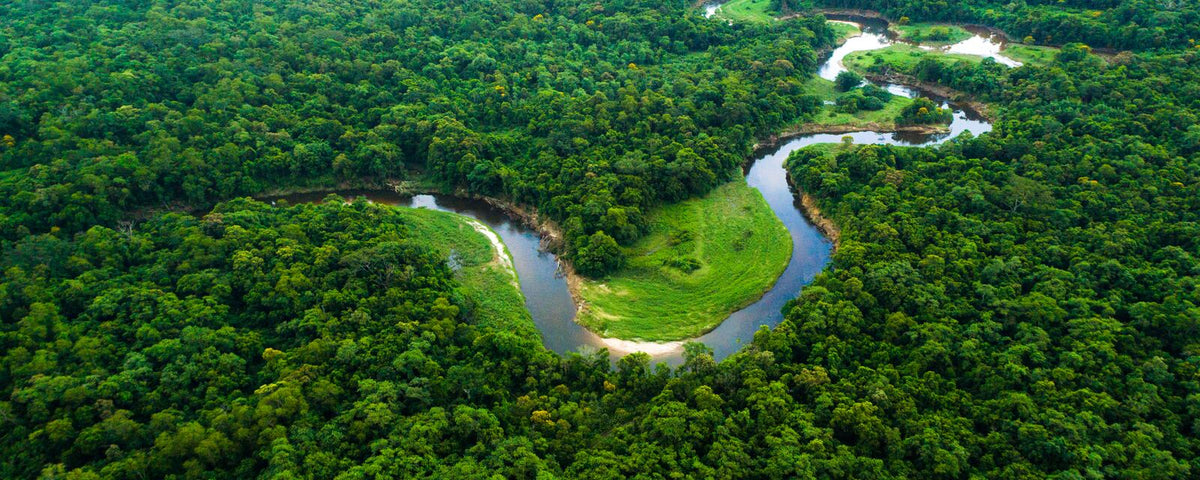
The CCTS offset mechanism lets non-obligated Indian entities register projects that reduce, avoid or remove greenhouse gases, and receive Carbon Credit Certificates (CCCs). Each project passes seven steps, with two different accredited verifiers and approval by Bureau of Energy Efficiency committees before issuance. Certificates sit in the Grid Controller of India registry and trade on power exchanges under CERC rules.
What is the offset mechanism?
The Carbon Credit Trading Scheme (CCTS) was notified on 28 June 2023 as S.O. 2825(E). An amendment on 19 December 2023, S.O. 5369(E), added the offset mechanism.
The scheme now has two parts. Under the compliance mechanism, notified industrial units must meet emission-intensity targets. Under the offset mechanism, other entities can register projects and earn CCCs for verified reductions or removals.
The Bureau of Energy Efficiency (BEE) is the administrator. Its Detailed Procedure for Offset Mechanism, version 1.0, took effect on 27 March 2025. For a plain overview of the scheme, see our Carbon Market (CCTS) page.
Who can take part?
The procedure says any entity can register on the Indian Carbon Market (ICM) portal as a non-obligated entity. That account is needed to submit projects or to buy and sell CCCs.
Project registration is limited to Indian firms. The project must fall within one of ten sectors, including energy, industries, waste, agriculture and forestry.
According to ICAP, offsets cannot be used to meet compliance targets. So an obligated cement or aluminium unit cannot cover its own shortfall with offset projects.
The seven steps from idea to certificate
| Step | Who acts | What happens |
|---|---|---|
| 1. Account registration | Non-obligated entity | Registers on the ICM portal and receives an account ID. |
| 2. Project design document (PDD) | Non-obligated entity | Draft PDD is published for 30 calendar days of public comment. |
| 3. Validation | Accredited Carbon Verification Agency (ACVA) | Independent check of design, baseline, additionality and comments. |
| 4. Registration | BEE and Technical Committee | Expert review; the committee meets in the last week of each month. |
| 5. Monitoring | Non-obligated entity | Data collected under the registered monitoring plan. |
| 6. Verification | A different ACVA | Checks the monitoring report and the quantity claimed. |
| 7. Issuance | BEE, Technical Committee, NSC-ICM | CCCs issued only after the National Steering Committee recommends it. |
The same ACVA cannot validate and verify one project. This keeps the two checks independent.
What makes a project eligible?
The procedure sets a few gates that apply to every sector. Missing any one of them stops a project early.
- Start date: 1 January 2025 or later. No retrospective projects are considered.
- Approved methodology: the project must apply one published by BEE.
- Additionality: it must show it would not happen without the CCC incentive.
- Regulatory surplus: activities mandated by law are not eligible.
- Exclusivity: no parallel registration in another carbon market. The Green Credit Programme is the only stated exception.
- CSR rules: a project funded as CSR must still follow Section 135 of the Companies Act.
BEE's methodology page, last updated on 7 July 2026, lists 12 approved methodologies. Two are forestry: mangrove afforestation and reforestation, and afforestation and reforestation of non-wetland land.
How long do credits run?
A project chooses a fixed crediting period of ten years. Or it can choose a renewable period of five years, renewable twice, for fifteen years in total.
Validation must finish within two years of the project start date. Issuance requests must be filed within two years after a crediting period ends, or those credits are lost.
Trading and retirement
CERC notified its Carbon Credit Certificate regulations on 27 February 2026, as Mondaq's analysis explains. The Grid Controller of India is named as the registry.
CCCs are to be dealt only on power exchanges unless CERC permits another mode. Trading is set monthly or at another frequency CERC approves, and BEE may categorise offset and compliance certificates separately.
Retirement is done by the holder through the ICM portal. A retired CCC is permanently removed and cannot be sold or used again.
What is still pending?
The ICM portal was launched on 21 March 2026. The Power Minister then said over 40 registered entities were submitting projects in biogas, hydrogen and forestry.
In February 2026, a BEE director told Business Standard, as reported by Outlook Business, that credits would be issued in October 2026. He expected trading from November to January.
We found no confirmed first exchange trade as of 8 October 2026. Check BEE and the exchanges before you plan around a date.
Where do trees fit?
Afforestation and mangrove projects can enter through the forestry methodologies. They still need registration, two ACVA checks and BEE approval before any CCC exists.
Trees never count towards an obligated unit's emission-intensity target. That target measures the plant's own emissions per tonne of product.
How Grow Billion Trees helps
We plan, plant, geo-tag and care for trees for three years, with records on GreenTrack. For mangrove sites, we design site work and monitoring data around the approved methodology.
Read our mangrove methodology guide, see mangrove restoration or plan a programme. We do not sell credits or promise them; that depends on registration, verification and BEE approval.
Further reading: CCTS sectors and timeline 2023-2027 · India's carbon market: can tree and mangrove projects earn carbon credits?
Frequently Asked Questions
Who can register an offset project under CCTS?
Any entity can open a non-obligated account on the ICM portal, but project registration is limited to Indian firms.
Who validates and verifies projects?
Accredited Carbon Verification Agencies (ACVAs) accredited by BEE. The verifying ACVA must be different from the one that validated the project.
Can a project that started in 2024 register?
No. The Detailed Procedure sets 1 January 2025 as the earliest start date and does not consider retrospective projects.
Can obligated companies use offset credits for compliance?
ICAP reports that offsets are not allowed for compliance under CCTS. Obligated units meet targets through their own performance or compliance CCCs.
Has CCC trading started?
CERC's trading regulations were notified in February 2026. We found no confirmed first trade as of 8 October 2026; BEE had indicated trading from November.
Does Grow Billion Trees sell CCTS credits?
No. We plant, care for and monitor projects. Any credit depends on registration, ACVA verification and BEE approval.
Sources: S.O. 2825(E), Carbon Credit Trading Scheme, 2023 · S.O. 5369(E), amendment adding the offset mechanism (19 Dec 2023) · BEE: Detailed Procedure for Offset Mechanism under CCTS, v1.0 · BEE: Methodologies and Tools under Offset Mechanism · Mondaq: CERC CCC Regulations, 2026 · ICAP: Indian Carbon Credit Trading Scheme · All India Radio: Prakriti 2026 and ICM portal launch · Outlook Business: India to launch first carbon trading programme. Last updated: October 2026. Rules change; check the latest BEE notice before you rely on any detail.
Keep reading
 India's Carbon Market (CCTS): Can Tree and Mangrove Projects Earn Carbon Credits?
 CCTS sectors and timeline 2023-2027: what is final and what is draft
 Mangrove restoration under the CCTS offset methodology
 Green Credits vs Carbon Credits vs CSR vs BRSR: Which Applies to Your Company?
 CCTS targets for refineries and petrochemicals: where trees fit


Leave a comment