
Mangrove restoration under the CCTS offset methodology
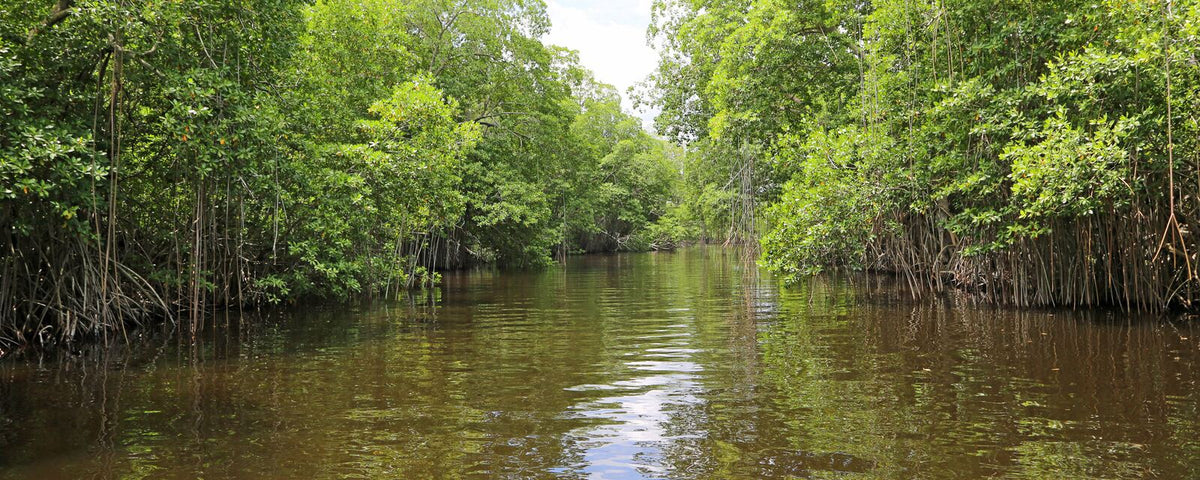
Under BEE methodology BM FR05.001, a credit-ready site is degraded mangrove habitat, over 90% planted with mangroves, with soil disturbance within 10%. It also needs a baseline and additionality test, forest-inventory monitoring, a reversal-risk plan, two independent verifier checks and BEE approval. Good planting alone does not create a credit.
Which methodology applies to mangroves?
BEE adopted BM FR05.001, "Afforestation and reforestation of degraded mangrove habitats", on 27 March 2025. It adapts the UN Clean Development Mechanism methodology AR-AM0014.
It is one of 12 approved methodologies on BEE's list, last updated 7 July 2026. Planting on non-wetland land uses a separate methodology, BM FR05.002, adopted on 8 September 2025.
The process around the methodology comes from BEE's Detailed Procedure for Offset Mechanism. Our offset mechanism guide walks through those steps.
Is the site eligible?
The methodology defines degraded mangrove habitat as wetland where mangroves can grow naturally. The soil or sediment is usually waterlogged with saline or brackish water, and forest cover has fallen through past impacts.
- Land: must be degraded mangrove habitat.
- Species: more than 90% of the project area planted with mangrove species. If over 10% is non-mangrove, the project must not alter hydrology of the site or connected wetlands.
- Soil disturbance: no more than 10% of the area. The document's example: 0.5 m pits at 3 m spacing cover 2.78%; continuous ploughing counts as 100%.
- Start date: 1 January 2025 or later, with no retrospective projects.
- Regulatory surplus: activities mandated by law are not eligible.
- Exclusivity: not registered in another carbon market; the Green Credit Programme is the stated exception.
The project must also show no significant harm to the environment. Where required, it must go through Environmental Impact Assessment under MoEFCC rules.
Baseline and additionality
The project owner identifies the baseline and shows additionality using tool BM-T-AR-001. Additionality means the project would not happen without the incentive from Carbon Credit Certificates (CCCs).
The baseline counts carbon stock changes that would occur anyway, in trees, shrubs and dead wood. Only removals above that baseline, minus leakage, can be credited.
Leakage here means emissions from displaced farming, estimated with tool BM-T-AR-005. If a site was grazed or farmed, plan how that activity is handled.
Which carbon pools count?
| Pool or source | Included? | Reason given in BM FR05.001 |
|---|---|---|
| Above-ground biomass | Yes | Main pool affected by the project |
| Below-ground biomass | Yes | Expected to increase |
| Litter | No | High turnover and tidal displacement |
| Dead wood and soil organic carbon | Optional | May increase with the project |
| Biomass burning (CH4, N2O) | Counted as emissions | Burning for site preparation is allowed |
Soil organic carbon uses a default rate in the methodology, for the first 20 years after planting. A different value needs transparent, verifiable data.
What must monitoring cover?
The monitoring plan must collect data to verify three things. These are the applicability conditions, carbon stock changes in the chosen pools, and project and leakage emissions.
- Inventory practice: record standard operating procedures and QA/QC for field data collection and data management.
- Stratification: divide the site by vegetation or planting plan; revise strata if fire or other events change biomass patterns.
- Precision: as set in tool BM-T-AR-004.
- Archiving: keep data for at least two years after the last crediting period ends.
- Location: the PDD needs geographic coordinates and maps of the project boundary.
How does the methodology handle permanence?
Mangroves can be lost to storms, cutting or changes in water flow. The methodology issues temporary CCCs (tCCCs) and long-term CCCs (lCCCs) for net removals.
If net removals fall between verifications, the negative lCCC result shows how many lCCCs must be replaced. The Detailed Procedure also asks the verifier to assess non-permanence risk and measures to address reversals.
A crediting period is ten years fixed, or five years renewable twice. That is far longer than any single planting contract, so long-term care and protection must be planned from day one.
Validation, verification and approval
The draft project design document goes on the Indian Carbon Market portal for 30 days of public comment. An Accredited Carbon Verification Agency (ACVA) then validates it, within two years of the project start date.
A different ACVA verifies each monitoring report. A site visit is mandatory at its first verification and when over three years have passed since the last visit.
BEE's Technical Committee reviews the request, and the National Steering Committee recommends issuance. Only then does BEE credit CCCs to the project owner's account.
How Grow Billion Trees helps
We offer credit-ready mangrove projects: site screening, nursery and planting, and three years of care. GreenTrack holds geo-tagged records, survival counts and photos, structured to support the monitoring plan. We achieve 85% survival across our programmes; see the survival methodology.
We do not promise or sell credits. The project owner, ACVAs and BEE decide eligibility, and care beyond year three must be planned with the owner. Start at mangrove restoration, read our Carbon Market (CCTS) page or plan a programme; projects are priced after a site survey.
Further reading: India's carbon market: can tree and mangrove projects earn carbon credits? · CCTS sectors and timeline 2023-2027
Frequently Asked Questions
Which BEE methodology covers mangrove planting?
BM FR05.001, "Afforestation and reforestation of degraded mangrove habitats", adopted on 27 March 2025.
Can we plant some non-mangrove species?
Yes, but over 90% of the area should be mangrove species. Above 10% non-mangrove, the project must not alter hydrology.
Can a mandated plantation earn CCCs?
No. The Detailed Procedure says activities mandated by law are not eligible under the offset mechanism.
How long is the crediting period?
Ten years fixed, or five years renewable twice for a total of fifteen years.
What happens if mangroves are lost after credits are issued?
The methodology requires long-term CCCs to be replaced when net removals fall between verifications.
Will Grow Billion Trees promise credits from our site?
No. We deliver planting, care and monitoring data. Credits depend on registration, ACVA verification and BEE approval.
Sources: BEE: BM FR05.001 Afforestation and reforestation of degraded mangrove habitats (v1.0) · BEE: BM FR05.002 Afforestation and reforestation of lands except wetlands · BEE: Detailed Procedure for Offset Mechanism under CCTS, v1.0 · BEE: Methodologies and Tools under Offset Mechanism. Last updated: October 2026. Methodologies are revised; check the latest BEE version before you rely on any detail.
Keep reading
 How the CCTS offset mechanism works: from registration to retirement
 India's Carbon Market (CCTS): Can Tree and Mangrove Projects Earn Carbon Credits?
 CCTS sectors and timeline 2023-2027: what is final and what is draft
 Mangrove restoration for coastal refineries, terminals and ports
 Mangroves and Coastal Infrastructure: Restoration for Ports


Leave a comment