
Debal Deb: Champion of Indigenous Seeds and Biodiversity Conservation
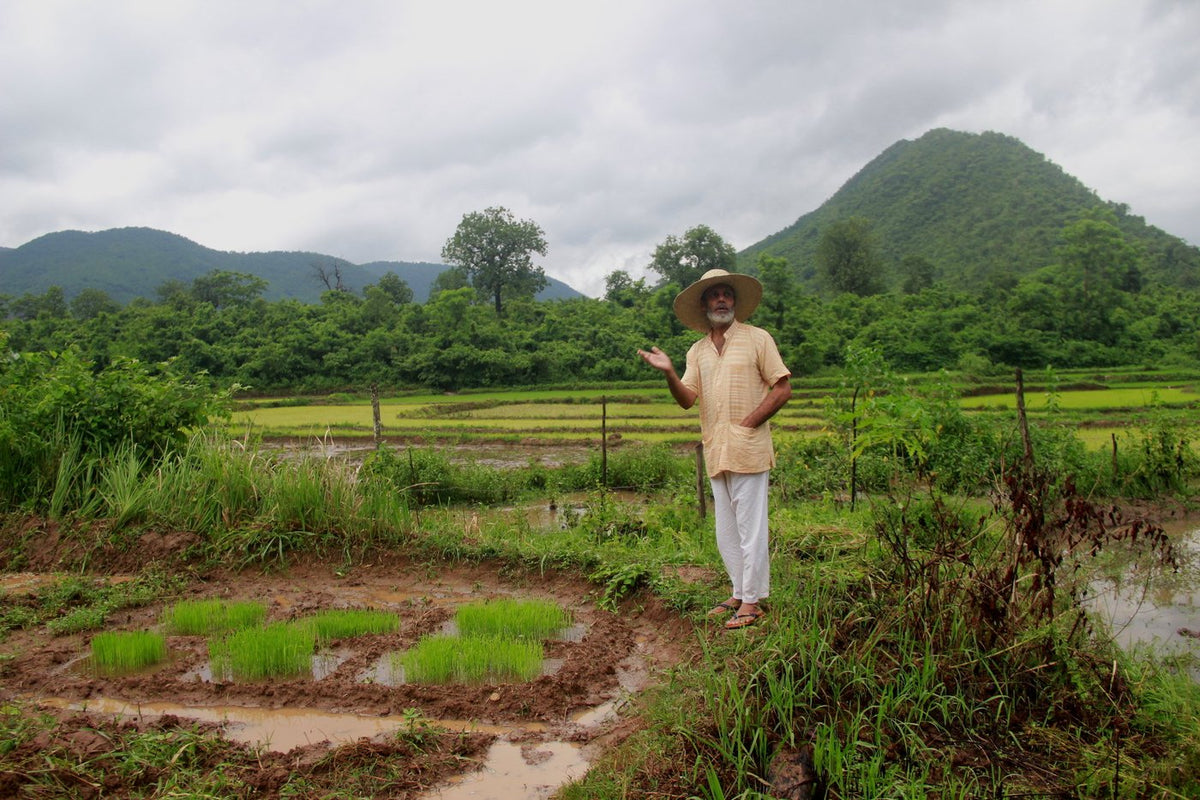
Debal Deb is an Indian ecologist and seed conservationist who has dedicated his life to preserving indigenous seeds and reviving traditional agriculture. Through his work at Basudha Farm, he has saved over 1,400 varieties of indigenous rice from extinction, creating a living seed bank of heirloom crops adapted to local conditions and resistant to climate stressors without chemical inputs.
In a world where monoculture farming, deforestation, and climate change threaten biodiversity, Debal Deb stands as a beacon of hope. This visionary ecologist and seed conservationist has dedicated his life to preserving indigenous seeds, reviving traditional agriculture, and protecting our planet's genetic heritage. His groundbreaking work at Basudha Farm has saved over 1,400 varieties of indigenous rice from extinction, proving that sustainable agriculture and biodiversity conservation are not just possible—they're essential for our survival.
Who Is Debal Deb? The Guardian of Indigenous Heritage
Dr. Debal Deb is more than an ecologist—he's a revolutionary fighting for the revival of indigenous knowledge and sustainable ecosystems. Unlike conventional agriculturalists who focus solely on yield, Debal Deb champions the preservation of heirloom varieties that have evolved over centuries to thrive in specific local conditions.
His mission began with a simple yet profound realization: losing native crop varieties is like erasing nature's library. Every extinct species reduces our ability to adapt to climate change and future food crises. Through his work at Basudha Farm, he has created a living seed bank that houses rice varieties capable of withstanding floods, droughts, and pests without chemical intervention.
What sets Debal Deb apart is his holistic approach to conservation. He doesn't just save seeds—he preserves entire ecosystems, traditional knowledge systems, and cultural practices that have sustained communities for generations. His work demonstrates that Combating Climate Change Through Collective Action requires honoring indigenous wisdom alongside modern conservation techniques.
The Critical Importance of Biodiversity in Agriculture
According to the United Nations Sustainable Development Goals, biodiversity loss threatens food security and ecosystem stability worldwide. Debal Deb's conservation efforts directly address this crisis by preserving genetic diversity that could prove crucial for future agricultural resilience.
Monoculture farming—where only one crop variety is grown—destroys biodiversity, depletes soil nutrients, and increases vulnerability to pests and diseases. In contrast, indigenous varieties offer natural solutions to environmental challenges:
- ✅ Climate Resilience: Indigenous seeds are naturally adapted to local climates, making them drought and flood-resistant
- ✅ Pollinator Support: Traditional farms provide food and shelter for bees, butterflies, and birds
- ✅ Water Conservation: Native species help maintain groundwater levels and prevent soil erosion
- ✅ Reduced Chemical Dependency: Indigenous plants thrive without excessive pesticides and fertilizers
The World Wildlife Fund reports that habitat destruction and agricultural intensification are primary drivers of biodiversity loss. Debal Deb's work offers a powerful alternative model that proves conservation and productivity can coexist.
Remarkable Discoveries: Indigenous Seeds That Defy Convention
Through his extensive research and conservation work, Debal Deb has uncovered extraordinary properties of indigenous rice varieties that challenge conventional agricultural wisdom. Some heirloom varieties he has preserved can grow in saltwater, making them invaluable for coastal regions facing rising sea levels due to climate change.
His collection includes aromatic varieties that require no artificial flavoring, nutritionally dense grains with higher protein content than modern hybrids, and drought-resistant types that can survive with minimal irrigation. These discoveries highlight the incredible genetic diversity that exists within traditional crop varieties.
Trees and medicinal plants preserved through his efforts include species like Neem and Peepal, which have been used in Ayurvedic medicine for thousands of years. The Western Ghats, where many of his conservation efforts take place, house over 7,400 plant species, with 40% found nowhere else on Earth.
Agroforestry: Debal Deb's Integrated Approach to Sustainability ⭐
One of Debal Deb's most innovative contributions is his promotion of agroforestry—a practice where trees and crops grow together in harmony. This approach mirrors traditional Indian farming systems and offers multiple environmental benefits that align perfectly with achieving Net Zero Targets.
The benefits of integrated tree-crop systems include:
- → Carbon Sequestration: A single mature tree can absorb 48 pounds of CO₂ per year
- → Soil Health: Tree roots prevent erosion and improve soil structure
- → Water Management: Trees help groundwater recharge and reduce irrigation needs
- → Biodiversity Enhancement: Mixed systems attract beneficial insects and wildlife
- → Economic Diversification: Multiple crops and tree products provide year-round income
This integrated approach demonstrates how we can Plant a tree in your Name while simultaneously supporting food security and environmental restoration. It's a model that Grow Billion Trees actively promotes through our agroforestry programs, recognizing that sustainable agriculture and forest conservation must work hand in hand.
Threats to Indigenous Agriculture and Biodiversity ⚠️
Despite its critical importance, biodiversity faces unprecedented threats that make Debal Deb's work more urgent than ever. The UN Climate Change initiative identifies agricultural practices and deforestation as major contributors to environmental degradation.
Key threats include:
- • Industrial Agriculture: Monoculture farming replaces diverse traditional systems with genetically uniform crops
- • Deforestation: Forest clearing for agriculture eliminates countless species and disrupts ecosystems
- • Chemical Contamination: Pesticides and fertilizers harm soil microbes, pollinators, and water systems
- • Climate Change: Rising temperatures and erratic weather patterns stress native species
- • Genetic Erosion: Traditional varieties disappear as farmers adopt commercial seeds
Debal Deb's conservation efforts represent a crucial defense against these destructive forces. His work proves that sustainability is achievable when we prioritize indigenous knowledge and biodiversity conservation over short-term profits.
Ancient Wisdom Meets Modern Conservation
For centuries, India's farmers followed traditional methods of seed saving, crop rotation, and mixed farming that naturally preserved biodiversity. Trees like Peepal and Banyan were considered sacred, and forests were protected as community resources. This ancient wisdom forms the foundation of Debal Deb's conservation philosophy.
Traditional Indian agriculture incorporated several biodiversity-preserving practices:
- ✅ Seed Saving: Farmers selected and saved the best seeds from each harvest
- ✅ Crop Rotation: Different crops were grown in sequence to maintain soil health
- ✅ Sacred Groves: Forest patches were preserved for spiritual and ecological reasons
- ✅ Mixed Farming: Multiple crops and trees were grown together
- ✅ Natural Pest Control: Beneficial insects and birds controlled agricultural pests
By reviving these practices and combining them with modern conservation techniques, Debal Deb demonstrates how traditional knowledge can address contemporary environmental challenges. His approach shows that the path to sustainability lies not in abandoning our heritage, but in rediscovering and adapting it for modern needs.
The Global Impact of Local Conservation
While Debal Deb's work focuses on indigenous Indian varieties, its implications extend far beyond national borders. Genetic diversity in crops is a global commons that benefits all humanity. Climate change, emerging diseases, and changing environmental conditions require access to the widest possible range of genetic traits.
International seed banks and conservation organizations recognize the value of Debal Deb's collection. His preserved varieties contribute to global food security by providing genetic resources that could prove crucial for developing climate-resilient crops worldwide.
The success of his conservation model has inspired similar initiatives across Asia and beyond. Farmers and researchers from multiple countries have visited Basudha Farm to learn techniques for preserving local varieties and establishing community seed banks.
This global relevance aligns with our mission to plant 100 crore trees across India while supporting international conservation efforts. Just as Debal Deb preserves crop diversity, we focus on tree diversity through our specialized programs including Miyawaki forests, mangrove restoration, and urban forestry.
Technology Meets Tradition in Conservation
💡 Pro Tip: Modern technology can enhance traditional conservation methods without replacing indigenous knowledge systems.
Debal Deb effectively combines traditional seed-saving techniques with modern documentation and research methods. He maintains detailed records of each variety's characteristics, growing conditions, and cultural significance. This systematic approach ensures that knowledge is preserved alongside genetic material.
Similarly, our 2-3ft Tree Planting + 3 Years Care + GeoTag technology allows supporters to track their environmental impact while supporting traditional reforestation methods. This integration of technology and tradition creates more effective and sustainable conservation outcomes.
Digital platforms help connect traditional farmers with researchers, enabling knowledge exchange and collaborative conservation efforts. Social media and online databases make information about indigenous varieties accessible to a global audience, increasing awareness and support for conservation initiatives.
Supporting the Next Generation of Conservationists
Education plays a crucial role in Debal Deb's conservation strategy. He regularly conducts workshops, publishes research papers, and mentors young researchers interested in biodiversity conservation. His educational efforts ensure that traditional knowledge and conservation techniques are passed to future generations.
Key educational initiatives include:
- • Training programs for farmers on seed saving and organic cultivation
- • Research collaborations with universities and conservation organizations
- • Publications documenting indigenous varieties and their properties
- • Workshops on traditional ecological knowledge
- • Mentorship programs for young conservationists
This educational focus creates a multiplier effect, where each person trained becomes an advocate for biodiversity conservation in their own community. The knowledge spreads organically, creating a network of conservation practitioners across the country.
Economic Benefits of Biodiversity Conservation
Beyond environmental benefits, Debal Deb's work demonstrates the economic value of biodiversity conservation. Indigenous varieties often command premium prices in specialty markets due to their unique flavors, nutritional properties, and cultural significance.
Farmers who grow traditional varieties can:
- → Access niche markets willing to pay higher prices
- → Reduce input costs by eliminating expensive chemicals
- → Improve soil health, leading to long-term productivity gains
- → Diversify income through multiple crop varieties
- → Build resilience against market fluctuations
This economic model proves that conservation can be profitable, making it more attractive to farmers and communities. When biodiversity conservation provides economic benefits, it becomes self-sustaining rather than dependent on external funding.
Further reading: The Race to Save our Planet's Rarest Species: Endangered Trees · Masanobu Fukuoka: Pioneer of Natural Farming Revolution
Frequently Asked Questions
What makes Debal Deb's conservation work unique?
Debal Deb combines scientific rigor with deep respect for traditional knowledge. Unlike conventional conservation that focuses solely on preservation, his approach integrates cultural practices, economic sustainability, and community participation. His living seed bank at Basudha Farm serves as both a research facility and a working farm that demonstrates practical applications of biodiversity conservation.
How many rice varieties has Debal Deb preserved?
Debal Deb has successfully preserved over 1,400 varieties of indigenous rice at Basudha Farm. Many of these varieties were on the brink of extinction when he began his conservation efforts. Each variety represents unique genetic traits adapted to specific environmental conditions and cultural preferences.
Why are indigenous seeds better than hybrid varieties?
Indigenous seeds offer several advantages including natural resistance to local pests and diseases, adaptation to local climate conditions, reduced dependency on chemical inputs, higher nutritional value in many cases, and the ability to save seeds for future planting. They also preserve genetic diversity that could prove crucial for future agricultural challenges.
How does Debal Deb's work relate to climate change?
Indigenous varieties preserved by Debal Deb often possess traits that help crops survive extreme weather conditions caused by climate change. Some varieties can withstand floods, others survive droughts, and some can even grow in saltwater. This genetic diversity provides options for adapting agriculture to changing environmental conditions.
Can modern farmers benefit from indigenous seeds?
Yes, modern farmers can significantly benefit from indigenous seeds through reduced input costs, improved soil health, access to premium markets, greater crop resilience, and the ability to save seeds for future planting. Many organic and sustainable farmers are already adopting indigenous varieties with excellent results.
How can individuals support biodiversity conservation?
Individuals can support biodiversity conservation by choosing organic and traditional varieties, supporting local farmers who grow indigenous crops, participating in seed swaps and conservation programs, creating home gardens with native plants, and spreading awareness about the importance of genetic diversity in agriculture.
What role do trees play in Debal Deb's conservation model?
Trees are integral to Debal Deb's agroforestry approach, providing multiple benefits including carbon sequestration, soil improvement, water conservation, and habitat for beneficial species. Native trees also preserve genetic diversity and cultural heritage while supporting sustainable agricultural systems.
How does traditional agriculture compare to industrial farming?
Traditional agriculture typically uses diverse crops, minimal external inputs, sustainable practices, and preserves genetic diversity. Industrial farming focuses on high yields of single crops, heavy chemical use, and genetic uniformity. While industrial farming may produce more food per hectare, traditional methods offer greater sustainability and resilience.
What is the future of biodiversity conservation in India?
The future depends on integrating traditional knowledge with modern conservation techniques, supporting community-based conservation initiatives, developing markets for indigenous varieties, educating younger generations about biodiversity importance, and creating policies that protect genetic resources while supporting farmer livelihoods.
How can tree planting support crop biodiversity?
Tree planting supports crop biodiversity by creating microclimates that benefit different crop varieties, providing habitat for beneficial insects and birds, improving soil health through leaf litter and root systems, conserving water resources, and creating integrated systems where trees and crops support each other naturally.
The Path Forward: Scaling Conservation Impact
Debal Deb's work provides a blueprint for scaling biodiversity conservation across India and beyond. His success demonstrates that individual dedication combined with community support can achieve remarkable results. The challenge now is to replicate and expand these efforts to address the global biodiversity crisis.
Key strategies for scaling impact include:
- ✅ Establishing regional seed banks and conservation centers
- ✅ Training more farmers and researchers in conservation techniques
- ✅ Developing market channels for indigenous varieties
- ✅ Integrating conservation into agricultural education programs
- ✅ Creating policy frameworks that support biodiversity conservation
Organizations like Grow Billion Trees are working to complement seed conservation with forest restoration, recognizing that comprehensive environmental protection requires multiple approaches. Our goal to plant 100 crore trees by June 2030 includes promoting native species and supporting agroforestry systems that benefit both agriculture and forest conservation.
The synergy between crop diversity and forest diversity creates more resilient ecosystems capable of withstanding environmental challenges. By supporting both initiatives, we can build a more sustainable and biodiverse future for India and the world.
Debal Deb's legacy reminds us that conservation is not just about preserving the past—it's about securing our future. His work proves that when we respect traditional knowledge, embrace biodiversity, and commit to sustainable practices, we can create solutions that benefit both people and planet. As we face mounting environmental challenges, his example shows us that hope lies not in abandoning our heritage, but in rediscovering and revitalizing the wisdom of our ancestors.
Join us in this mission by supporting biodiversity conservation, choosing sustainable products, and participating in reforestation efforts. Together, we can honor the legacy of pioneers like Debal Deb while building a greener, more sustainable future for generations to come. Explore our tree planting programs and discover how you can make a lasting impact on biodiversity conservation and climate action.
Keep reading
 The Race to Save our Planet's Rarest Species: Endangered Trees
 Masanobu Fukuoka: Pioneer of Natural Farming Revolution
 Vandana Shiva: Nurturing Eco-Justice and Sustainable Farming
 Vandana Shiva: Seed Sovereignty Warrior for Farmers' Rights
 Rooted Wisdom: Indigenous Knowledge and the Art of Tree Plantation


Leave a comment