
Masanobu Fukuoka: Pioneer of Natural Farming Revolution
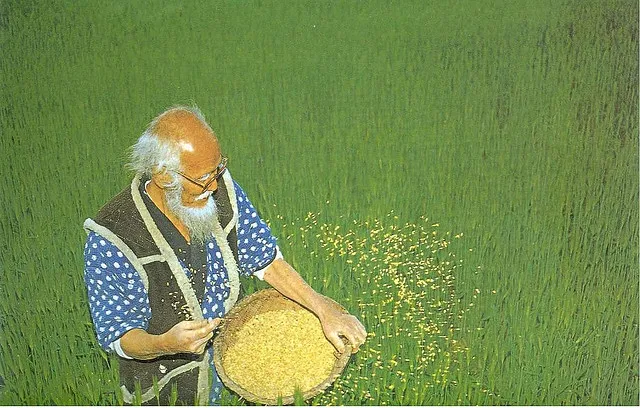
Masanobu Fukuoka was a Japanese farmer and philosopher who developed natural farming in the 1940s—a no-till, no-chemical approach that works with nature rather than against it. Originally trained as a microbiologist, he spent decades proving on his family farm in Japan that sustainable methods could match industrial agriculture's results while supporting environmental health.
Masanobu Fukuoka revolutionized agriculture by proving that working with nature, not against it, creates healthier ecosystems and more sustainable food systems. This Japanese farmer and philosopher developed natural farming methods in the 1940s that continue to inspire millions of environmentally conscious farmers worldwide, offering a powerful alternative to industrial agriculture that aligns with our mission of Combating Climate Change Through Collective Action.
Who is Masanobu Fukuoka? 🔍
Masanobu Fukuoka was a Japanese farmer, philosopher, and author whose revolutionary approach to agriculture transformed how the world views farming and sustainability. His philosophy of natural farming — a method that works with nature rather than against it — has inspired generations of farmers and environmentalists alike.
Originally trained as a microbiologist before becoming a farmer, Fukuoka challenged conventional agricultural wisdom through decades of experimentation on his family farm in Japan. His work demonstrates how sustainable practices can achieve the same goals as industrial farming while supporting broader environmental initiatives, much like how we Plant a tree in your Name to create lasting environmental impact.
The Birth of Natural Farming 🌱
Fukuoka developed the concept of natural farming in the 1940s, promoting a no-till, no-chemical, and no-weeding approach. His methods reject industrialized farming, relying on nature's wisdom to cultivate healthy crops while preserving ecosystems. This approach not only boosts soil health but also reduces carbon emissions and conserves water, supporting global efforts outlined in the United Nations Sustainable Development Goals.
Key Principles of Natural Farming:
- ✅ No Tillage: Let the soil regenerate naturally without plowing
- ✅ No Chemical Fertilizers: Use natural compost and cover crops to enrich soil
- ✅ No Herbicides or Pesticides: Allow nature to balance pests and weeds
- ✅ No Weeding: Weeds play a vital role in biodiversity and soil health
- ✅ No Dependency on Machinery: Embrace low-impact, hands-on techniques
The Environmental Impact of Natural Farming 🌎
Fukuoka's methods have proven that sustainable agriculture can combat climate change effectively. Studies show that no-till farming improves soil carbon storage, reduces water usage by up to 30%, and enhances biodiversity. Natural farming also prevents soil erosion, one of the largest contributors to land degradation worldwide, supporting initiatives highlighted by United Nations climate change action.
Scientific Benefits of Natural Farming:
- • Improved soil structure and fertility through natural processes
- • Higher resilience to drought and floods
- • Reduced greenhouse gas emissions by 40-60%
- • Increased crop yields over time without chemical inputs
- • Enhanced carbon sequestration in agricultural soils
These environmental benefits align perfectly with corporate Net Zero Targets and demonstrate how agricultural practices can contribute to global sustainability goals. Just as our 2-3ft Tree Planting + 3 Years Care + GeoTag program ensures long-term environmental impact, natural farming creates lasting ecological benefits.
Historical Context and Fukuoka's Legacy 📜
Fukuoka's ideas challenged post-war industrial farming practices in Japan during a time when chemical agriculture was rapidly expanding. His seminal book, "The One-Straw Revolution," published in 1975, became a cornerstone of the global permaculture movement. His philosophy has influenced countless farmers and environmental activists across the globe, including movements in India, Africa, and the United States.
The timing of Fukuoka's work was crucial, as it provided an alternative path during the Green Revolution when many farmers were adopting chemical-intensive methods. His approach demonstrated that productivity and environmental stewardship could coexist, much like how our goal to plant 100 crore trees shows that large-scale environmental action is both necessary and achievable.
Seed Balls: Nature's Tiny Miracle 🌾
One of Fukuoka's most famous innovations is the use of seed balls — small clay-covered bundles of seeds that protect seeds from birds and harsh weather, allowing nature to sow crops naturally. This method has been adopted worldwide for reforestation and farming projects, including initiatives supported by WWF forest conservation programs.
How Seed Balls Work:
- → Seeds are mixed with clay, compost, and water
- → Once dried, the balls are scattered across the land
- → Rain breaks down the clay, allowing seeds to germinate naturally
- → No tillage or planting equipment required
This innovative technique mirrors our approach to sustainable reforestation, where we ensure each planted tree receives proper care and monitoring through advanced GeoTag technology.
Global Influence and Modern Applications 🌐
Fukuoka's methods have spread across continents, inspiring projects in Africa, India, and the Americas. His influence can be seen in the growing popularity of permaculture, agroforestry, and no-till farming movements worldwide. Countries are increasingly recognizing natural farming as a viable solution for food security and environmental protection.
Countries Adopting Natural Farming:
- ⭐ India's Zero Budget Natural Farming (ZBNF) movement reaching millions of farmers
- ⭐ Regenerative agriculture projects across the United States
- ⭐ Agroforestry initiatives in Africa promoting food security
- ⭐ Community gardens in Europe emphasizing biodiversity
These global movements demonstrate how Fukuoka's principles scale from individual farms to national agricultural policies, creating widespread environmental and economic benefits.
Overcoming Challenges in Natural Farming 🚜
Despite its many benefits, natural farming faces challenges such as lack of awareness, initial lower yields, and resistance from industrial agriculture giants. However, research shows that farms transitioning to natural methods typically see yield improvements after 3-5 years, along with reduced input costs and improved soil health.
💡 Pro tip: Success in natural farming requires patience and observation. Farmers must learn to read natural cycles and work with seasonal patterns rather than forcing artificial timelines.
Common Transition Challenges:
- ⚠️ Initial yield reductions during soil recovery period
- ⚠️ Need for increased knowledge about natural systems
- ⚠️ Market pressure for consistent appearance and timing
- ⚠️ Limited access to natural farming education and support
How to Start Your Natural Farming Journey 🌾
Inspired by Fukuoka's vision? Here's how you can embrace natural farming principles, whether you're managing acres or a small garden. These methods complement broader environmental efforts, just as planting trees contributes to ecosystem restoration.
Getting Started Steps:
- → Start small with a home garden or small plot
- → Use compost instead of chemical fertilizers
- → Let weeds and wild plants coexist with your crops
- → Practice seed ball planting for direct seeding
- → Observe and learn from natural patterns in your area
- → Connect with local natural farming communities
We found that combining natural farming with tree planting creates synergistic benefits, as trees provide windbreaks, improve soil fertility, and create microclimates that support diverse crops.
Further reading: Combating Soil Erosion: 8 Proven Strategies for Resilient Agriculture · Vandana Shiva: Nurturing Eco-Justice and Sustainable Farming
Frequently Asked Questions
What is Masanobu Fukuoka's most famous book?
"The One-Straw Revolution" is Fukuoka's most influential work, published in 1975 and translated into over 25 languages. This book outlines his natural farming philosophy and practical methods that have inspired the global sustainable agriculture movement.
How does natural farming compare to organic farming?
While organic farming eliminates synthetic chemicals, natural farming goes further by eliminating tillage, weeding, and most human intervention. Fukuoka's approach relies entirely on natural processes, making it more sustainable and less labor-intensive than traditional organic methods.
Can natural farming feed the world's growing population?
Studies indicate that natural farming can achieve comparable yields to conventional agriculture while using fewer resources. Long-term trials show that natural farming systems often outperform chemical agriculture after the initial transition period, especially during drought conditions.
What crops work best with natural farming methods?
Natural farming works with diverse crops including rice, wheat, barley, vegetables, and fruit trees. Fukuoka successfully grew rice and winter grains together, demonstrating that polyculture systems can be more productive than monocultures.
How long does it take to transition to natural farming?
The transition typically takes 3-5 years for soil biology to recover and natural systems to establish. During this period, farmers may experience lower yields, but input costs also decrease significantly, often resulting in improved profitability.
What awards did Masanobu Fukuoka receive?
Fukuoka won the Ramon Magsaysay Award in 1988 for his contributions to environmental protection and sustainable agriculture. This prestigious award recognized his global influence on farming practices and environmental philosophy.
Are seed balls effective for reforestation?
Yes, seed balls have proven highly effective for reforestation projects worldwide. They protect seeds from predators and harsh weather while requiring no special equipment or techniques for distribution, making them ideal for large-scale restoration efforts.
How does natural farming help combat climate change?
Natural farming sequesters carbon in soil, reduces greenhouse gas emissions from machinery and chemicals, and improves water retention. These methods can reduce agriculture's carbon footprint by 40-60% while maintaining productivity.
Fukuoka's Vision for a Sustainable Future 🌍
Fukuoka believed that agriculture should be a harmonious partnership with nature, not a battle against it. His philosophy extends beyond farming, promoting a simpler, more connected way of life that respects the planet's delicate ecosystems. This vision aligns perfectly with our mission of environmental restoration through collective action.
Our experience working with farmers and environmental restoration projects has shown that Fukuoka's principles create lasting positive change. When we combine natural farming education with tree planting initiatives, we see communities develop greater environmental awareness and sustainable practices.
What We Can Learn from Fukuoka Today:
- ✅ Reduce reliance on chemicals in farming and gardening
- ✅ Support regenerative agriculture practices in our communities
- ✅ Choose locally grown, organic foods when possible
- ✅ Advocate for policies that protect soil health and biodiversity
- ✅ Integrate trees and perennial plants into agricultural systems
The Connection Between Natural Farming and Reforestation
Fukuoka's principles extend beautifully to reforestation efforts. His seed ball technique has been adapted for forest restoration projects worldwide, demonstrating how simple, nature-based solutions can address complex environmental challenges. This approach complements our tree planting programs, which use scientific methods to ensure high survival rates and ecosystem benefits.
By combining natural farming with strategic tree planting, we create food forests and agroforestry systems that provide multiple benefits: food production, carbon sequestration, biodiversity habitat, and soil improvement. These integrated approaches represent the future of sustainable land management.
Masanobu Fukuoka's legacy reminds us that the most effective environmental solutions often come from working with nature rather than against it. His natural farming philosophy offers a powerful blueprint for creating healthier ecosystems while meeting human needs. By adopting his methods and supporting broader environmental initiatives, we can cultivate a more sustainable future for generations to come.
Ready to join the natural farming movement while supporting large-scale environmental restoration? Discover how you can plant trees and support sustainable agriculture practices that create lasting positive impact for our planet. Together, we can build a future where farming and forestry work in harmony to heal the Earth.
Keep reading
 Combating Soil Erosion: 8 Proven Strategies for Resilient Agriculture
 Vandana Shiva: Nurturing Eco-Justice and Sustainable Farming
 Arne Naess: Deep Ecology Pioneer Who Transformed Environmental Philosophy
 Debal Deb: Champion of Indigenous Seeds and Biodiversity Conservation
 Paul Hawken: The Entrepreneur Leading Regenerative Business Revolution


Leave a comment