
Mangrove restoration for coastal refineries, terminals and ports
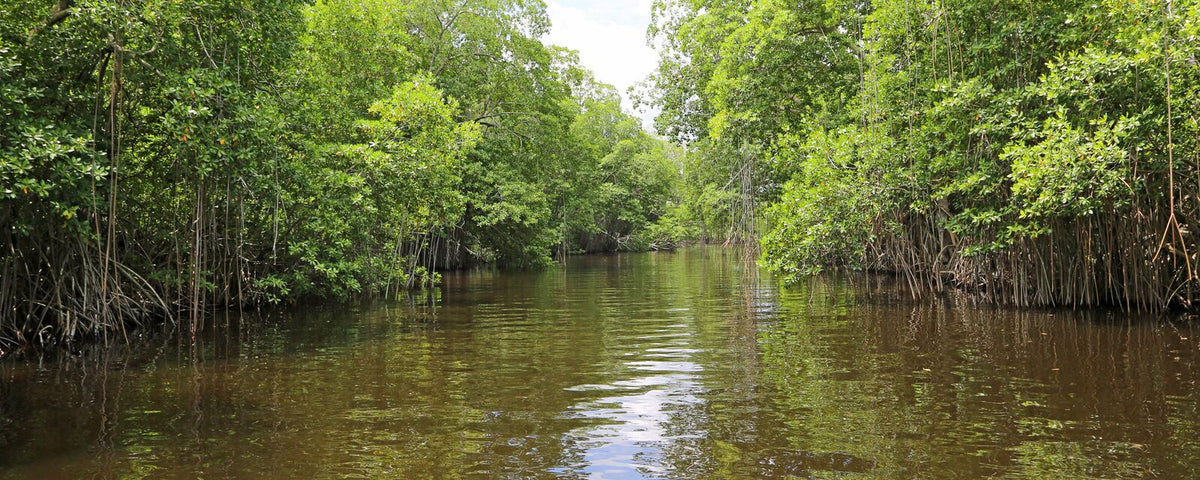
Mangroves are protected as Ecologically Sensitive Areas under the CRZ Notification, 2019, and if development affects them, compensatory replanting at a 3:1 ratio is required. For coastal refineries, terminals and ports, well-run mangrove restoration meets those duties, protects the shoreline and supports BRSR biodiversity disclosure. It does not reduce a refinery's CCTS emission intensity.
Why do coastal energy sites care about mangroves?
Refineries, crude and product terminals, LNG jetties and ports sit on the coast. Many are next to creeks, mudflats and mangrove fringes.
Mangroves slow waves, hold sediment and shelter fish nurseries. For a coastal plant, they are part of the shoreline it depends on.
What do India's coastal rules say about mangroves?
A PIB backgrounder from April 2025 sums up the main protections:
- The Coastal Regulation Zone (CRZ) Notification, 2019 treats mangroves as Ecologically Sensitive Areas.
- Activities are restricted in a 50-metre buffer where mangrove cover exceeds 1,000 sq m.
- If development affects mangroves, compensatory replantation at a 3:1 ratio is mandated.
- Mangroves also get protection under the Wildlife (Protection) Act, the Indian Forest Act and the Biological Diversity Act.
Your project's CRZ clearance will state the exact conditions. Read it alongside the notification before planning any work.
How much mangrove does India have?
According to the India State of Forest Report 2023, cited by PIB, India's mangrove cover is 4,991.68 sq km. That is 0.15% of the country's area.
Cover rose by 363.68 sq km between 2013 and 2023. Gujarat recorded an increase of 253.06 sq km between 2001 and 2023, which PIB credits to large-scale plantation, community participation and public-private partnerships.
What is MISHTI and does it matter to companies?
The Mangrove Initiative for Shoreline Habitats and Tangible Incomes (MISHTI) was launched on 5 June 2023. It aims to restore and afforest 540 sq km across 9 coastal states and 4 union territories.
MISHTI runs through convergence funding with CAMPA, the compensatory afforestation fund. Companies working in the same districts can align CSR or compensatory work with State Forest Department plans.
| Driver | What it asks | How mangrove work helps |
|---|---|---|
| CRZ Notification, 2019 | Protect mangrove buffers; replant 3:1 if mangroves are affected | Delivers the compensatory planting and its upkeep |
| Project CRZ or EC conditions | Site-specific mangrove or green belt duties | Meets conditions with records an inspector can check |
| CSR (Schedule VII) | Spend on environmental sustainability, if you choose this area | Coastal restoration with local communities |
| BRSR Principle 6 | Disclose biodiversity and land impacts | Area, species and survival data for the report |
| CCTS GEI target | Lower emissions per unit of product | No. Mangroves do not change plant intensity |
What makes mangrove restoration succeed?
Mangrove planting fails often when the basics are skipped. Most failures come from the wrong site, not the wrong sapling.
Get the hydrology right
Mangroves need regular tidal flushing. Check elevation, tidal range and creek connections before planting. Sometimes reopening a blocked channel matters more than planting.
Choose local species
Use species already found on that coast, raised in a local nursery. Match species to the zone, from the seaward edge to the landward fringe.
Involve the community
Fishing and farming families know the creeks and can protect plots from grazing and cutting. PIB credits community participation for the gains in Gujarat.
Monitor for years, not months
Track survival, gap-fill after the first monsoon and record changes with geo-tagged photos and drone imagery.
Questions to ask before you start
- Is the site within your CRZ clearance area, or outside it as a CSR project?
- Who owns the land, and has the Forest Department agreed to the plan?
- Does the site get regular tides, or does a channel need reopening first?
- Which local species grow on nearby healthy mangroves?
- Which community groups will protect the plots, and how will they be involved?
- How will survival be measured and reported each year?
Clear answers here prevent most failed plantings. They also give your CSR committee and auditors a clean record.
Can mangrove projects generate carbon credits for the refinery?
Do not plan on it. Mangroves do not lower a refinery's CCTS emission intensity, and we do not sell carbon credits from these projects. Any carbon figure is an estimate.
Read whether tree and mangrove projects qualify under CCTS for the wider picture, and BRSR Principle 6 for reporting.
How Grow Billion Trees helps
We run mangrove restoration with local nurseries and coastal communities, from site assessment to multi-year monitoring on GreenTrack. Projects are priced per project after a site survey. See our oil and gas page or plan a programme.
Further reading: Mangroves and Coastal Infrastructure: Restoration for Ports · CCTS targets for refineries and petrochemicals: where trees fit
Frequently Asked Questions
Are mangroves protected near coastal industrial sites?
Yes. The CRZ Notification, 2019 treats mangroves as Ecologically Sensitive Areas, with a 50-metre buffer where cover exceeds 1,000 sq m.
What happens if a project affects mangroves?
Compensatory replantation at a 3:1 ratio is mandated, along with any conditions in the project's clearance.
What is MISHTI?
A government initiative launched on 5 June 2023 to restore 540 sq km of mangroves across 9 coastal states and 4 union territories, with CAMPA convergence funding.
Can a refinery count mangroves toward its CCTS target?
No. Mangroves do not change a plant's emission intensity under the CCTS.
Can mangrove restoration be a CSR project?
Yes, environmental sustainability is a Schedule VII activity. Follow your CSR policy and check our CSR compliance checklist.
How long should mangrove sites be monitored?
For several years. Survival checks, gap-filling after the first monsoon and geo-tagged records are the minimum.
Sources: PIB backgrounder on India's mangroves (April 2025). Last updated: October 2026. Rules change; check the latest notification before you rely on any detail.
Keep reading
 Mangroves and Coastal Infrastructure: Restoration for Ports
 CCTS targets for refineries and petrochemicals: where trees fit
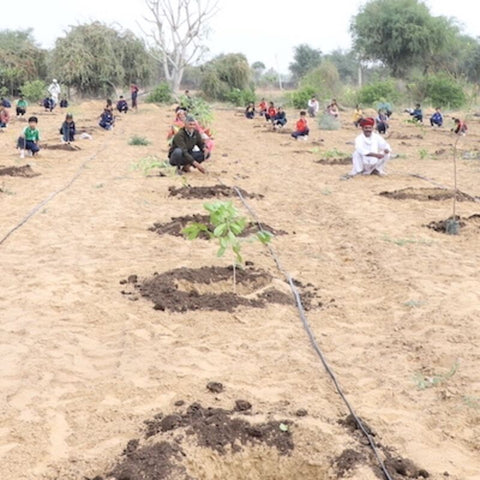 Green belt at refineries and petrochemical complexes
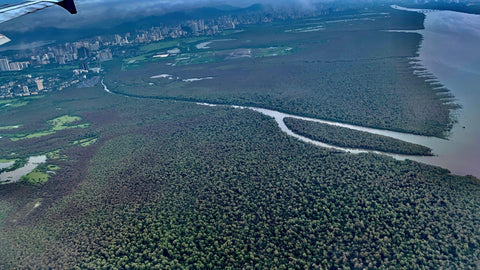 Mumbai Coastal Road Project: Balancing Infrastructure with Conservation
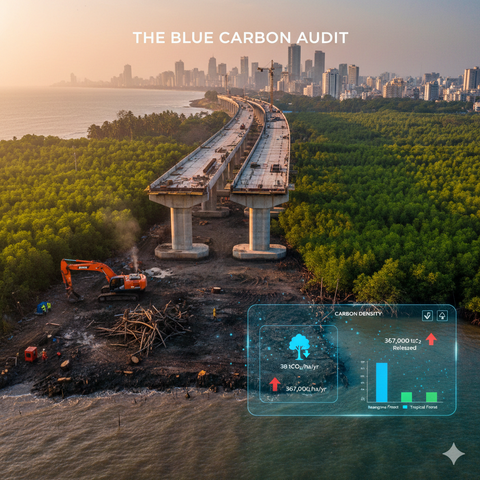 Mumbai Coastal Road Project's Impact on Mumbai's Mangroves Forest
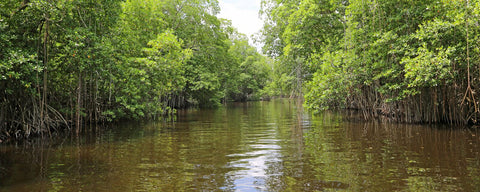 Mangrove restoration under the CCTS offset methodology


Leave a comment