
Water and Land Restoration Around Steel Plants
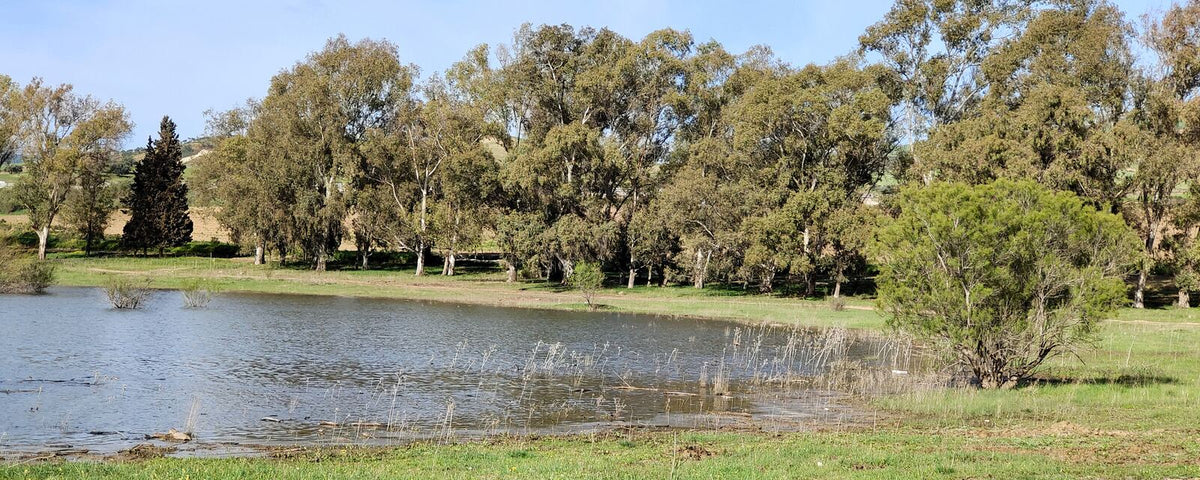
Steel plant clearances often protect nearby ponds and drainage, require rainwater harvesting and zero liquid discharge, and push for full reuse of slag. Restoring village ponds, building recharge structures and greening degraded land around the plant supports those conditions and local communities. None of it changes the plant's emission intensity under the carbon market.
What do steel plant clearances ask about water?
We read a MoEFCC clearance from February 2023 for an integrated steel plant in West Bengal. Several of its conditions deal with water around the site.
- Village ponds inside the site must not be disturbed, and an action plan to conserve two named ponds must be implemented.
- A drainage conservation scheme must protect natural drainage, with soil conservation and erosion control.
- No groundwater extraction is permitted; water comes from a reservoir under permission.
- The plant must be designed for zero liquid discharge.
- Rainwater harvesting must follow the plan in the EIA, to cut dependence on outside water.
- Stockyards need garland drains to trap runoff.
The same EC asks the company to adopt villages and develop them into model villages. Water work in those villages is a natural fit.
What do they ask about slag and waste land?
The 2023 EC sets clear rules for solid waste.
- Slag may be stored inside the plant for a maximum of 90 days.
- A slag crusher must turn steel slag into aggregate for construction and other uses.
- The plant must recycle or reuse 100% of the solid waste it generates.
Reuse routes are growing. CSIR-CRRI reports that processed steel slag replaced natural aggregate in all layers of a one-kilometre section of NH-66. It says the technology was developed with Ministry of Steel sponsorship.
As slag moves off site, land that held it can be restored. Plant on imported or improved soil, not directly on fresh slag.
Which water and land projects fit around a steel plant?
| Project | What it involves | Which condition or goal it supports |
|---|---|---|
| Village pond restoration | Desilting, repairing inlets and outlets, stabilising banks, planting native trees on bunds. | Pond conservation plans; village adoption; CSR. |
| Recharge structures | Recharge pits, trenches and check dams on drainage lines. | Rainwater harvesting; drainage conservation. |
| Drainage-line planting | Grasses, shrubs and trees along natural drains to slow runoff. | Soil conservation and erosion control. |
| Degraded land greening | Soil improvement and mixed native planting on cleared or idle land. | Green belt, biodiversity, BRSR. |
| Lake edge restoration | Native shoreline planting and catchment work with local bodies. | CSR, community and biodiversity goals. |
How should a village pond project be run?
- Agree with the panchayat first. Ponds are community assets; ownership and use must be clear.
- Survey the catchment. A pond fails if its inlets are blocked or its catchment is paved.
- Desilt with care. Remove silt without breaking the pond's natural seal, and reuse silt on farms where suitable.
- Stabilise the bunds. Plant grasses, then native shrubs and trees that do not shade the whole water surface.
- Hand over with a plan. Agree who keeps inlets clear and protects the planting.
See our pond restoration and lake restoration pages for how we approach this work.
What records should you keep?
- Before-and-after photos and maps of each pond, drain or land parcel.
- Volume of silt removed and works built, with dates.
- Species and counts planted on bunds and land, with survival checks.
- Community agreements and handover notes.
These records support six-monthly EC compliance reports, CSR reports and land and water disclosures in BRSR.
Does water or land restoration help with CCTS?
No. CCTS targets cover a plant's own scope 1 and scope 2 emissions per tonne of output. Restoration supports EC conditions, CSR and community trust, as our steel CCTS guide explains.
Where does waste management fit?
Villages around large plants often struggle with household and plastic waste. Waste dumped in drains and ponds undoes restoration work within a season.
We offer waste management through a partner, alongside pond and land work. Pairing the two keeps restored ponds clean and supports the EC's village development aims.
How do these projects help communities?
- Restored ponds can hold more water for cattle, washing and recharge.
- Native trees on bunds give shade and fodder, and attract birds.
- Greened land reduces dust blowing from bare ground.
- Village teams can be employed in desilting, planting and upkeep.
- Schools can use a restored pond and its trees for nature lessons and simple water monitoring.
Involve women's groups and youth early. Projects that people helped build are better protected after handover.
These projects also fit CSR rules for environmental work; see our Schedule VII checklist.
How long before results show?
Desilting and bund work show results in the first monsoon, when a pond fills. Planting on bunds and degraded land needs three years of care before it looks established.
Plan budgets and reports around that timeline. Promise visible water results early, and green cover results later.
Measure what matters to the village as well as to the EC. Water levels in summer, the number of households using a pond, and survival on the bunds tell a clearer story than spend alone.
How Grow Billion Trees helps
We plan pond and lake restoration, recharge works and native planting on degraded land around plants, with communities involved from the start. Trees are cared for three years, geo-tagged and tracked on GreenTrack. Work is priced per project after a site survey; see our steel industry page.
Further reading: Green Belt and Miyawaki Forests at Integrated Steel Plants · Green Belt and Water Restoration for Chemical and Textile Clusters
Frequently Asked Questions
Do steel plant ECs protect nearby ponds?
Some do. The 2023 steel EC we reviewed says water bodies shall not be disturbed and requires an action plan to conserve two named village ponds.
Is rainwater harvesting a common EC condition?
Yes, it appears in the steel and cement ECs we reviewed, along with zero liquid discharge.
Can we plant trees on slag dumps?
Not directly on fresh slag. Plant on improved or imported soil once slag is moved for reuse or the area is capped.
What happens to steel slag now?
The 2023 EC asks for 100% reuse of solid waste and a slag crusher to make aggregate. CSIR-CRRI reports slag aggregate used in all layers of an NH-66 section.
Who owns a restored village pond?
Usually the panchayat or another local body. Agree ownership, use and upkeep in writing before work starts.
Does pond restoration reduce our emission intensity?
No. It supports EC conditions, CSR and community goals, but it is outside the plant's CCTS emission boundary.
Sources: MoEFCC environmental clearance, integrated steel plant, West Bengal (28 Feb 2023) · CSIR-CRRI: India's first national highway steel slag road section on NH-66. Last updated: October 2026. Rules change; check the latest notification before you rely on any detail.
Keep reading
 Green Belt and Miyawaki Forests at Integrated Steel Plants
 Green Belt and Water Restoration for Chemical and Textile Clusters
 Green Belt Development for Industries: Rules, Species and Maintenance
 Green Belt at Cement Plants: Dust, Dry Sites and Compliance
 CCTS Targets for Iron and Steel Plants: What the Draft Means


Leave a comment