
Mumbai Coastal Road Project's Impact on Mumbai's Mangroves Forest
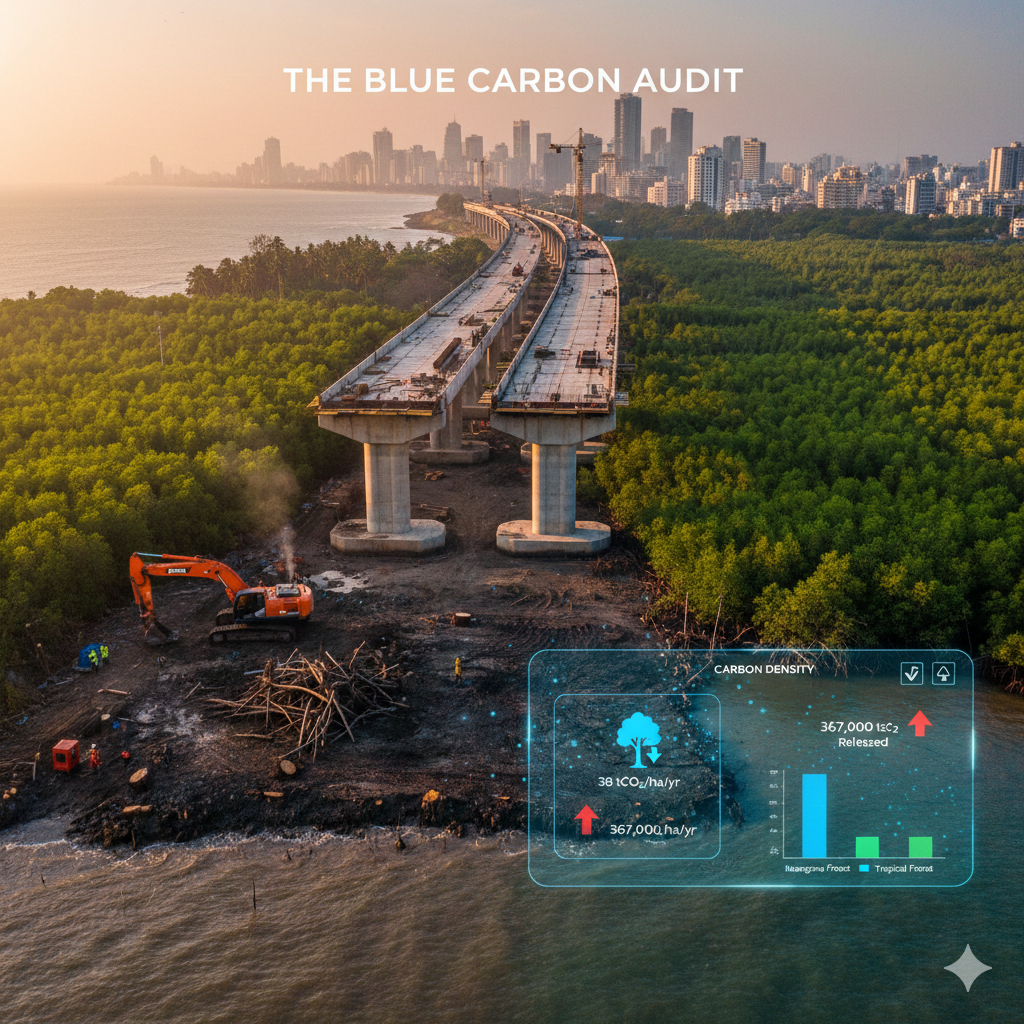
Mumbai's Coastal Road Project Phase 2 will clear 103 hectares of mangrove forest, releasing approximately 367,000 tonnes of CO₂ and eliminating 3,200 tonnes of annual carbon sequestration capacity. These ecosystems store 937 to 1,023 tonnes of carbon per hectare, predominantly in waterlogged soils where decomposition cannot occur.
The Mumbai Coastal Road Project's Impact on Mumbai's Mangroves Forest represents one of India's most significant environmental trade-offs in urban development. As Phase 2 of this infrastructure project advances, 103 hectares of mangroves face clearance, releasing approximately 367,000 tonnes of CO2 and eliminating 3,200 tonnes of annual carbon sequestration capacity. This massive environmental cost demands urgent attention as we work toward our collective goal of planting 100 crore trees across India.
✅ The Carbon Powerhouse: Why Mumbai's Mangroves Are Climate Champions
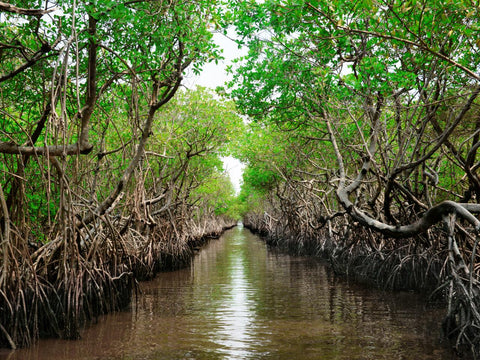
Mumbai's mangroves are not merely trees; they are complex carbon-capture systems that outperform most terrestrial forests. Unlike inland forests, mangroves function as "net sinks" that rarely reach saturation because they continuously bury carbon in deep, waterlogged soils where it cannot decompose.
According to the United Nations Environment Programme's forest conservation guidelines, mangroves store an average of 937 to 1,023 tonnes of carbon per hectare. This makes them among the most efficient natural climate solutions available for Combating Climate Change Through Collective Action.
The Mumbai Coastal Road Project's Impact on Mumbai's Mangroves Forest involves clearing these carbon powerhouses, which store approximately 80-90% of their carbon in sediment and soil rather than living biomass. This unique characteristic makes mangrove destruction particularly devastating for climate goals.
⚠️ Quantifying the Carbon Crisis: 103 Hectares of Loss
The detailed carbon impact of the Mumbai Coastal Road Project's Impact on Mumbai's Mangroves Forest can be measured across two critical categories that reveal the true environmental cost of this infrastructure development.
Immediate Carbon Stock Release
Clearing 103 hectares risks the oxidation of roughly 100,000 tonnes of stored carbon, equivalent to 367,000 tonnes of CO2. This immediate release represents decades of accumulated carbon storage that took centuries to develop in Mumbai's coastal ecosystem.
Annual Sequestration Capacity Loss
In tropical regions like Mumbai, mature mangroves sequester approximately 23.7 to 38.5 tonnes of CO2 per hectare per year. The total annual loss from removing 103 hectares eliminates the capacity to absorb approximately 3,200 tonnes of CO2 every year going forward.
This ongoing deficit means that even with compensatory afforestation efforts, the Mumbai Coastal Road Project's Impact on Mumbai's Mangroves Forest creates a permanent reduction in Mumbai's natural carbon sequestration capacity.
💡 Global Comparison: The Efficiency of Blue Carbon Ecosystems
To understand why the Mumbai Coastal Road Project's Impact on Mumbai's Mangroves Forest is so significant, we must compare mangrove sequestration rates to other major forest biomes. The World Wildlife Fund's forest conservation research demonstrates that mangroves are widely considered the most carbon-dense forests in the tropics.
- Mangrove Forest: 24.0-38.0 tCO2/ha/yr with ~1,000 tC/ha carbon stock density
- Tropical Rainforest: 11.0-20.0 tCO2/ha/yr with ~300 tC/ha carbon stock density
- Temperate Forest: 7.0-12.0 tCO2/ha/yr with ~150 tC/ha carbon stock density
- Boreal Forest: 1.5-4.0 tCO2/ha/yr with ~80 tC/ha carbon stock density
One hectare of Mumbai's mangroves provides the same annual climate benefit as roughly 2 to 3 hectares of a typical inland tropical forest, and nearly 10 hectares of boreal forest. This efficiency makes the Mumbai Coastal Road Project's Impact on Mumbai's Mangroves Forest particularly concerning for climate targets.
→ The Offset Challenge: From Saplings to Carbon Sinks
The government's primary strategy involves Compensatory Afforestation (CA)—planting 1.37 lakh saplings to replace the affected trees. However, the Mumbai Coastal Road Project's Impact on Mumbai's Mangroves Forest faces three critical "sequestration gaps" that traditional tree planting cannot immediately address.
The Maturity Gap Challenge
A young mangrove sapling has negligible sequestration rate for its first 3-5 years. It takes approximately 15 to 20 years for a plantation to reach the sequestration efficiency of the mature forest currently being removed. This creates a significant climate deficit during Mumbai's most critical years for achieving Net Zero Targets.
The Soil Carbon Vault Problem
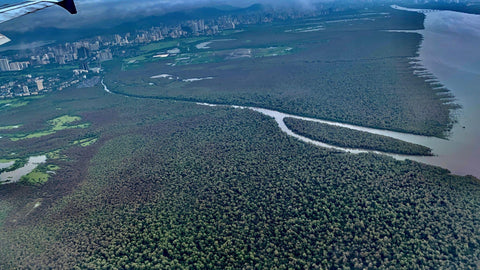
Simply planting a tree does not immediately restore the "Blue Carbon" soil pool. Soil carbon burial is a process of centuries, and excavating the Versova-Bhayandar mudflats destroys a carbon vault that new plantations cannot replace in the short term.
Shadow Effect on Remaining Trees
For the 36,675 trees remaining under the road's shadow, research suggests their sequestration rate may drop by 20-40% due to reduced photosynthetically active radiation (PAR). This compounds the Mumbai Coastal Road Project's Impact on Mumbai's Mangroves Forest beyond just the cleared areas.
⭐ Strategic Recommendations for Net-Zero Road Development
To address the Mumbai Coastal Road Project's Impact on Mumbai's Mangroves Forest, we recommend moving beyond a "tree count" metric toward a "carbon function" metric that aligns with global climate goals outlined by the United Nations Climate Change initiative.
Restoration of Abandoned Salt Pans
Rather than distant inland plantations, focus should shift to restoring abandoned salt pans in Mira-Bhayandar. Converting these hypersaline lands back to tidal wetlands offers the highest "Carbon Return on Investment" and directly addresses the Mumbai Coastal Road Project's Impact on Mumbai's Mangroves Forest.
Advanced Sediment Management
During construction, silt curtains and specialized "tidal windows" should preserve carbon-rich sediment in shadow zones. This approach maintains existing soil carbon stock while minimizing the Mumbai Coastal Road Project's Impact on Mumbai's Mangroves Forest.
Blue Carbon Monitoring Stations
Establishing 5 permanent carbon-flux towers along the Versova-Dahisar belt would measure actual CO2 absorption. This provides data needed to adjust mitigation strategies in real-time, similar to how our GeoTag technology tracks individual tree growth and carbon sequestration.
🌱 Grow Billion Trees: Alternative Solutions for Mumbai's Climate Goals
While addressing the Mumbai Coastal Road Project's Impact on Mumbai's Mangroves Forest, Mumbai can simultaneously pursue comprehensive reforestation through innovative programs. Our mission to plant 100 crore trees across India includes specialized urban forest solutions designed for coastal cities like Mumbai.
Through our 2-3ft Tree Planting + 3 Years Care + GeoTag program, citizens can Plant a tree in your Name for just ₹299, contributing to mangrove restoration efforts that directly offset infrastructure-related carbon losses. Our Miyawaki forest methodology can create dense urban forests that complement mangrove conservation efforts.
Learn more about our Mumbai mangrove restoration programs that support the city's climate resilience while addressing development challenges.
Further reading: Guardians of Carbon: How Earth's Ecosystems Protect Our Climate · How Tree Plantation Reduces Carbon Footprints | 2026 Guide
Frequently Asked Questions
What is the Mumbai Coastal Road Project's Impact on Mumbai's Mangroves Forest?
The project involves clearing 103 hectares of mangroves, releasing approximately 367,000 tonnes of CO2 and eliminating 3,200 tonnes of annual carbon sequestration capacity. This represents one of Mumbai's most significant environmental trade-offs for infrastructure development.
How do mangroves compare to other forests for carbon storage?
Mangroves store 937-1,023 tonnes of carbon per hectare, making them 3-4 times more carbon-dense than tropical rainforests. They sequester 24-38 tonnes of CO2 annually per hectare, compared to 11-20 tonnes for typical tropical forests.
Can compensatory afforestation offset the Mumbai Coastal Road Project's Impact on Mumbai's Mangroves Forest?
While 1.37 lakh saplings will be planted, it takes 15-20 years for new mangroves to reach mature sequestration rates. The soil carbon vault destroyed cannot be quickly replaced, creating a long-term climate deficit.
What are the shadow effects on remaining mangroves?
The 36,675 trees remaining under the road's shadow may experience 20-40% reduced sequestration rates due to decreased sunlight. This compounds the overall impact beyond just the cleared areas.
How can Mumbai achieve net-zero despite mangrove losses?
Strategies include restoring abandoned salt pans, implementing advanced sediment management, establishing carbon monitoring stations, and pursuing aggressive urban reforestation through programs like Miyawaki forests and coastal restoration.
What role can citizens play in addressing mangrove loss?
Citizens can support mangrove restoration by participating in tree planting programs, choosing sustainable urban development, and supporting policies that prioritize blue carbon ecosystems in city planning decisions.
How does mangrove loss affect Mumbai's climate resilience?
Beyond carbon impact, mangroves provide crucial storm protection, flood control, and biodiversity habitat. Their loss reduces Mumbai's natural defense against climate change impacts like sea-level rise and extreme weather events.
What monitoring systems track the project's environmental impact?
The project requires blue carbon monitoring stations, sediment tracking systems, and regular assessment of remaining forest health. GeoTag technology can help track compensatory plantation success rates and growth patterns.
Are there alternative development approaches that preserve mangroves?
Elevated construction methods, reduced footprint designs, and hybrid infrastructure-nature solutions could minimize mangrove clearing while still achieving transportation goals. These approaches require higher initial investment but provide long-term climate benefits.
How does this project align with India's climate commitments?
The Mumbai Coastal Road Project's Impact on Mumbai's Mangroves Forest challenges India's net-zero commitments and forest cover targets. Robust compensation and restoration programs are essential to maintain alignment with national climate goals.The Mumbai Coastal Road Project's Impact on Mumbai's Mangroves Forest represents a critical juncture in balancing urban development with climate action. While infrastructure development remains essential for Mumbai's growth, the environmental cost demands innovative solutions and comprehensive restoration efforts. Through strategic mangrove restoration, urban forest creation, and community engagement, Mumbai can work toward Combating Climate Change Through Collective Action while meeting its development needs. Discover how you can contribute to Mumbai's green future and help offset infrastructure impacts through our comprehensive tree planting and restoration programs.




Leave a comment