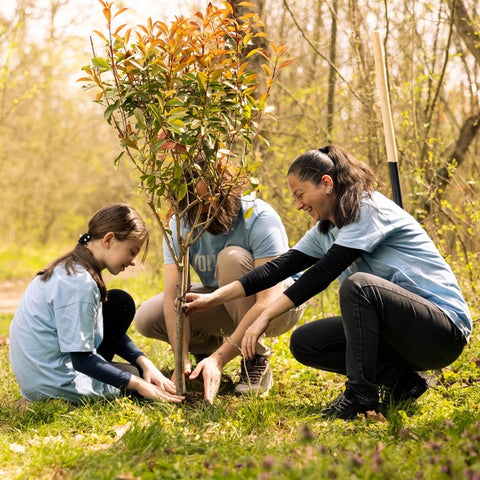
Tree plantation in Jammu involves local communities and corporations working together to restore the region's ecosystem.
The breathtaking landscapes of Jammu and Kashmir are experiencing a wonderful renaissance through strategic tree plantation programs. Our team has witnessed firsthand how these green initiatives are creating lasting impact on biodiversity and air quality. With the goal of planting 100 crore trees across India, Jammu represents a crucial frontier in this environmental mission.
The Environmental Impact of Tree Plantation in Jammu ✅
The Kashmir Valley faces unique environmental challenges that tree plantation addresses effectively. Climate change has significantly impacted the region's delicate ecosystem, making reforestation efforts more critical than ever. According to the United Nations Climate Change initiative, mountain regions like Kashmir are particularly vulnerable to environmental degradation.
Tree plantation in Jammu creates environmental benefits. The region's altitude and climate support diverse tree species. Each planted tree receives proper care for three years.
The environmental benefits include improved air quality, enhanced water retention, and increased biodiversity. Trees planted in the valley help regulate temperature and prevent soil erosion. These natural solutions are proving more effective than artificial interventions in maintaining ecological balance.
Popular Tree Species for Jammu's Climate 🌲
Selecting appropriate tree species is crucial for plantation in Jammu's varying altitudes. The region supports different vegetation from temperate forests to alpine species.
Chinar trees are iconic to Kashmir and represent the region's natural heritage. These majestic trees provide excellent shade and are deeply rooted in local culture. Deodar, another popular choice, thrives in the mountainous terrain and offers significant ecological benefits.
Pine species, including blue pine and chir pine, are well-adapted to the region's climate. These evergreen trees provide year-round greenery and help maintain forest cover during harsh winters. Walnut trees combine environmental benefits with economic value for local communities.
Apple trees represent both environmental restoration and agricultural prosperity. The region's famous apple orchards contribute to both carbon sequestration and local economy. Our agroforestry programs integrate fruit trees with traditional forest species for maximum benefit.
Major Corporate Tree Plantation Initiatives ⭐
Several leading corporations have partnered with environmental organizations to boost tree plantation in Jammu. These collaborations demonstrate how businesses can achieve net zero targets while contributing to regional development. We're glad to see corporate India embracing environmental responsibility through meaningful action.
Reliance Industries has launched extensive tree plantation drives across multiple districts in Jammu and Kashmir. Their initiatives focus on creating sustainable forest ecosystems that support local biodiversity. The company's commitment extends beyond planting to include long-term forest management and community engagement.
Tata Group companies have implemented comprehensive environmental programs in the region. Their approach combines tree plantation with skill development for local communities. These programs create employment opportunities while addressing environmental challenges.
Infosys has integrated technology with environmental conservation through smart tree monitoring systems. Their digital approach to forest management helps track growth patterns and survival rates. This innovative methodology ensures better outcomes for plantation efforts.
Mahindra Group focuses on creating urban forests within city limits of Jammu. Their projects demonstrate how corporate spaces can contribute to green cover expansion. These initiatives serve as models for other businesses looking to make environmental impact.
Government Initiatives and Forest Policies 💡
The Jammu and Kashmir government has implemented progressive policies supporting tree plantation initiatives. The state's forest department actively collaborates with private organizations to maximize reforestation impact. These partnerships ensure that plantation efforts align with broader environmental goals.
The Van Mahotsav program receives government support in the region. Annual plantation drives engage volunteers in tree planting.
Forest certification programs help maintain quality standards for plantation projects. The government provides technical guidance and monitoring support for large-scale initiatives. This systematic approach ensures that environmental investments deliver measurable results.
Land allocation policies facilitate corporate participation in reforestation efforts. Streamlined procedures make it easier for businesses to contribute to environmental restoration. These supportive policies have attracted numerous companies to invest in Jammu's green future.
Community Participation and Local Impact 🌱
Local communities play a vital role in successful tree plantation programs in Jammu. Our team works closely with village councils and community leaders to ensure project sustainability. We love seeing how residents embrace environmental stewardship and take ownership of planted forests.
Women's self-help groups have become powerful advocates for tree plantation initiatives. These groups often lead nursery development and seedling care activities. Their involvement ensures that environmental programs create economic opportunities for local families.
School participation programs introduce environmental consciousness among young people. Students actively participate in plantation drives and learn about ecological conservation. These educational initiatives create lasting awareness about environmental responsibility.
Farmer participation through agroforestry programs combines environmental benefits with agricultural productivity. Trees planted on farmland provide additional income while improving soil quality. This integrated approach makes environmental conservation economically viable for rural communities.
Technology Integration in Modern Plantation Programs 📱
Advanced technology is revolutionizing tree plantation efforts in Jammu and surrounding areas. GeoTag technology allows precise tracking of planted trees and monitoring their growth progress. We provide comprehensive digital documentation for every tree planted through our programs.
Drone technology assists in site selection and plantation monitoring across difficult terrain. These aerial surveys help identify optimal locations for different tree species. The technology also enables efficient monitoring of large plantation areas without disturbing natural ecosystems.
Mobile applications connect plantation participants with ongoing project updates. Tree sponsors can track their planted trees and receive regular growth reports. This transparency builds trust and encourages continued participation in environmental programs.
Satellite imagery helps assess the broader environmental impact of plantation efforts. These tools measure forest cover expansion and ecological improvements over time. Data-driven approaches ensure that resources are invested in the most effective conservation strategies.
Seasonal Considerations for Tree Plantation ⚠️
Timing is crucial for plantation in Jammu's climate. The region experiences extreme weather variations that affect seedling survival. Proper seasonal planning improves plantation success.
Spring plantation (March-May) offers optimal conditions for most tree species. Moderate temperatures and adequate moisture support healthy root development. This season provides the longest growing period before winter dormancy begins.
Monsoon planting (July-September) takes advantage of natural rainfall for irrigation. However, excessive moisture can sometimes challenge certain species adaptation. Careful species selection and drainage planning are essential during this period.
Post-monsoon planting (October-November) works well for hardy species that can establish before winter. This timing requires additional care and protection during cold months. Winter protection measures become critical for seedling survival in harsh mountain conditions.
Economic Benefits of Green Initiatives 💰
Tree plantation in Jammu creates significant economic opportunities alongside environmental benefits. The growing green economy provides employment for local communities while attracting eco-tourism investment. We ensure that our environmental programs contribute to regional economic development.
Timber and non-timber forest products generate sustainable income for rural communities. Properly managed forests provide resources without compromising environmental integrity. This sustainable approach balances conservation with economic necessity.
Carbon credit opportunities are emerging as businesses seek to offset their environmental impact. Well-documented plantation projects can generate valuable carbon credits for funding organizations. These financial mechanisms make environmental conservation economically attractive.
Tourism revenue increases as green spaces attract visitors to the region. Beautiful forests and well-maintained parks become destinations for nature enthusiasts. The hospitality industry benefits from increased environmental tourism in Jammu and Kashmir.
Challenges and Solutions in Mountain Reforestation
Tree plantation in mountainous terrain presents unique challenges that require innovative solutions. Steep slopes, rocky soil, and extreme weather conditions test the resilience of plantation efforts. Our team has developed specialized techniques to address these environmental obstacles effectively.
Soil erosion poses a significant threat to newly planted seedlings on mountain slopes. Terracing and contour planting techniques help stabilize soil and improve water retention. These methods protect young trees while preventing further environmental degradation.
Wildlife interference can damage young plantations, requiring protective measures and community awareness. Fencing and natural deterrents help protect seedlings during vulnerable growth phases. Collaboration with wildlife authorities ensures that conservation efforts don't conflict with animal habitats.
Water scarcity during dry seasons challenges tree survival in certain areas. Drip irrigation systems and water harvesting techniques support plantation sustainability. These technological solutions ensure consistent moisture supply for optimal tree growth.
Future Prospects and Expansion Plans 🚀
The future of tree plantation in Jammu looks incredibly promising with expanding corporate participation and government support. According to the United Nations Environment Programme on Forests, such regional initiatives are crucial for global environmental goals. Our vision includes creating extensive forest corridors that connect existing green spaces.
Urban forestry initiatives are gaining momentum in major cities across the region. Plans include creating green belts around urban areas and integrating trees into city infrastructure. These developments will transform Jammu's urban landscape while improving air quality for residents.
Research and development programs are exploring new plantation techniques suited to local conditions. Universities and research institutions are collaborating on innovative approaches to forest restoration. These scientific advances will improve success rates and environmental impact of future projects.
International partnerships are bringing global expertise to local plantation efforts. Knowledge exchange programs help implement best practices from successful reforestation projects worldwide. This global perspective enhances the effectiveness of regional environmental initiatives.
Measuring Success: Impact Assessment and Monitoring
Effective monitoring systems are essential for evaluating the success of tree plantation programs in Jammu. Our comprehensive tracking methodology measures both environmental impact and community benefits. Regular assessments ensure that investments in environmental restoration deliver promised outcomes.
Survival rate monitoring tracks the percentage of planted trees that establish successfully. This data helps refine planting techniques and species selection for better results. We maintain detailed records of growth patterns and environmental factors affecting tree health.
Biodiversity assessments measure the ecological impact of plantation efforts on local wildlife. Increased bird populations and insect diversity indicate successful ecosystem restoration. These biological indicators provide valuable feedback on environmental program effectiveness.
Community impact surveys evaluate the social and economic benefits of plantation programs. Feedback from local residents helps improve program design and implementation. This participatory approach ensures that environmental initiatives serve community needs effectively.
Miyawaki Forest Method in Jammu's Context 🌿
The Miyawaki method is a Japanese technique for rapid forest creation in Jammu's urban and peri-urban areas. It creates dense, native forests and can grow much faster than traditional plantations.
Dense planting patterns in Miyawaki forests maximize carbon sequestration and biodiversity benefits. The method uses only native species that are naturally adapted to local conditions. This approach ensures better survival rates and ecological integration with existing ecosystems.
Maintenance requirements for Miyawaki forests decrease significantly after the initial establishment period. The dense canopy creates a self-sustaining microclimate that reduces water and care needs. This efficiency makes the method particularly suitable for large-scale environmental restoration projects.
Urban applications of Miyawaki forests can transform vacant lots into thriving green spaces. These compact forests provide maximum environmental benefits in limited space. The method is particularly valuable for creating green lungs in densely populated urban areas.
Frequently Asked Questions
What makes tree plantation in Jammu different from other regions?
Tree plantation in Jammu requires specialized techniques due to the region's climate and terrain. The high altitude, extreme weather, and mountainous landscape demand careful species selection and planting methods. Native species adapted to local conditions have high success rates.
How do corporate partnerships contribute to plantation success?
Corporate partnerships provide essential funding and resources for large-scale tree plantation projects. Companies bring technical expertise, financial support, and long-term commitment to environmental initiatives. These collaborations help achieve net zero targets while creating sustainable impact in local communities.
What is the best time of year for planting trees in Jammu?
Spring (March-May) offers optimal conditions for tree plantation in Jammu, with moderate temperatures and adequate moisture. Monsoon season (July-September) also works well for certain species that benefit from natural rainfall. The timing depends on specific tree varieties and local microclimatic conditions.
How can individuals participate in tree plantation programs?
Individuals can plant a tree in their name through various environmental organizations operating in the region. Many programs offer tree planting certificates and GeoTag tracking for planted trees. Community participation through local groups and volunteer programs provides additional opportunities for environmental engagement.
What technology is used to monitor planted trees?
Modern plantation programs use GeoTag technology to track individual trees and monitor their growth progress. Drone surveys and satellite imagery help assess large plantation areas efficiently. Mobile applications provide regular updates to tree sponsors about their planted trees' development and health status.
How do tree plantation programs benefit local communities?
Tree plantation creates employment opportunities for local residents in nursery management, planting, and maintenance activities. Agroforestry programs combine environmental benefits with agricultural income for farmers. Women's self-help groups often participate in seedling care and earn additional income through these programs.
What challenges do plantation programs face in mountainous terrain?
Mountain plantation faces challenges including soil erosion, extreme weather, and difficult access to planting sites. Rocky terrain and steep slopes require specialized planting techniques and protective measures. Wildlife interference and water scarcity during dry seasons also impact seedling survival rates.
How are plantation programs contributing to climate change mitigation?
Tree plantation in Jammu contributes to climate change mitigation through carbon sequestration and ecosystem restoration. According to the World Wildlife Fund's forest initiatives, reforestation plays a crucial role in global climate action. These programs help reduce atmospheric carbon dioxide while improving local environmental conditions.
What species of trees grow best in Jammu's climate?
Native species like Chinar, Deodar, and various pine species thrive in Jammu's climate conditions. Fruit trees including apple and walnut provide both environmental and economic benefits. The selection depends on altitude, soil conditions, and specific environmental goals of each plantation project.
How can businesses achieve their environmental goals through tree plantation?
Businesses can achieve net zero targets by investing in verified tree plantation programs that provide carbon offset benefits. Corporate partnerships with environmental organizations ensure professional project management and transparent impact measurement. These initiatives demonstrate corporate social responsibility while contributing to regional environmental restoration.
Taking Action: Join the Green Revolution
The tree plantation movement in Jammu represents a wonderful opportunity for individuals and organizations to make lasting environmental impact. We welcome everyone to participate in this green revolution that's transforming the Kashmir Valley's landscape. Together, we can create a sustainable future while combating climate change through collective action.
Plant a tree in your name today and become part of Jammu's environmental transformation. Our comprehensive programs include 2-3ft tree planting, 3 years of care, and GeoTag tracking for complete transparency. Every tree planted contributes to the ambitious goal of planting 100 crore trees across India by 2030.
The time for action is now – discover how you can contribute to this green revolution and help create a thriving, sustainable ecosystem in the beautiful Kashmir Valley. Learn more about our tree plantation programs and join thousands of environmental champions making a real difference in Jammu and beyond.
More about tree plantation in Jammu
Grow Billion Trees plans and runs plantation programmes for companies, with native species, three years of care and every tree geo-tagged on GreenTrack. 85% of trees survive across our programmes.
- Miyawaki forests in Jammu
- Best native trees to grow near Jammu
- NGOs in Jammu
- Waste management in Jammu
- Tree plantation drives for companies
- Projects across India
- CSR rules for tree plantation
Talk to our team about a plantation programme in Jammu.