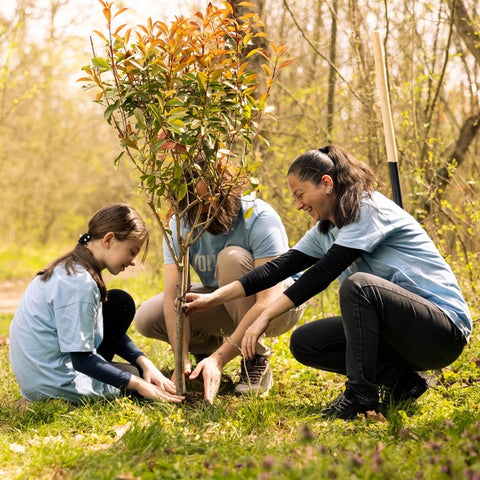
Tree plantation in Agra can help transform the city into a greener, more sustainable destination. Strategic tree planting can improve air quality while preserving cultural heritage. Be part of Agra's green movement and help plant 100 crore trees across India.
Why Tree Plantation in Agra Matters More Than Ever
Agra faces environmental challenges from industrial pollution, vehicular emissions, and tourist activities. Trees can reduce air pollution in urban areas, protecting residents and visitors to the Taj Mahal.
The city's proximity to the Yamuna River presents wonderful opportunities for riparian forest restoration. Our team has observed that strategic tree plantation along riverbanks can prevent soil erosion while creating natural corridors for wildlife. This approach aligns with the United Nations Sustainable Development Goals for environmental conservation and sustainable cities.
Climate change impacts are becoming increasingly visible in Agra, with rising temperatures and irregular rainfall patterns. Tree plantation serves as a natural climate adaptation strategy, providing cooling effects and improving local weather patterns. Expanding urban forests helps combat climate change.
Major Tree Plantation Projects Transforming Agra
Tree plantation initiatives demonstrate how infrastructure development can coexist with environmental restoration.
Indigenous species like neem, peepal, and jamun trees are planted in afforestation initiatives around the Taj Mahal.
Agra Smart City Mission integrates tree plantation into urban planning with mandatory green spaces in new developments. The project aims to increase Agra's forest cover by 2030.
✅ Benefits of Tree Plantation in Agra
Tree plantation delivers environmental and social benefits beyond beautification. Trees act as natural air purifiers that filter harmful pollutants.
Economic benefits include increased property values in tree-lined neighborhoods and reduced energy costs through natural cooling. Tourism enhancement represents another crucial advantage, as green spaces make the city more attractive to visitors seeking sustainable travel experiences. The presence of urban forests creates Instagram-worthy spots that complement the historic monuments.
Social benefits encompass improved mental health, community bonding through plantation drives, and educational opportunities for environmental awareness. We provide comprehensive programs that engage schools, colleges, and community groups in hands-on tree planting activities. These initiatives create lasting memories while fostering environmental consciousness among participants.
⭐ Best Native Trees for Agra's Climate
Selecting appropriate tree species for Agra's semi-arid climate ensures long-term success of plantation initiatives. Neem trees thrive in Agra's conditions while providing natural pest control and medicinal benefits. These hardy trees require minimal water once established and can withstand temperature fluctuations common in the region.
Peepal and banyan trees offer excellent shade and cultural significance, making them popular choices for community spaces and temple grounds. Jamun trees provide both environmental benefits and edible fruits, creating additional value for local communities. Our team recommends these species for their drought tolerance and rapid growth characteristics.
Flowering trees like gulmohar, amaltas, and jacaranda add aesthetic value while supporting local pollinator populations. These species create seasonal color displays that enhance the city's visual appeal throughout the year. Native tree species are better suited to local conditions than exotic alternatives.
💡 How to Plant a Tree in Your Name in Agra
Planting a tree in your name in Agra has become incredibly simple and meaningful through modern technology and streamlined processes. Our GeoTag system allows you to track your planted tree's growth and location, creating a personal connection to your environmental contribution. The process begins with selecting your preferred tree species and plantation location within Agra's designated green zones.
The comprehensive package includes 2-3ft tree planting + 3 years care + GeoTag monitoring, ensuring your tree receives proper nurturing during its critical establishment period. We're glad to offer this service to individuals, families, and organizations looking to make a lasting environmental impact. The digital certificate you receive serves as a permanent record of your contribution to Agra's green transformation.
Corporate groups can participate in bulk tree plantation programs aligned with sustainability goals and CSR requirements. Employee engagement in tree planting activities builds morale and demonstrates environmental responsibility. Programs can be customized for special occasions, team building, or milestone celebrations.
Miyawaki Forest Method in Agra
The Miyawaki forest technique creates dense, fast-growing urban forests in limited spaces. This Japanese methodology allows forests to be created quickly in vacant lots.
The technique involves planting multiple native species in close proximity, mimicking natural forest succession patterns. Properly maintained Miyawaki forests become self-sustaining.
Schools and colleges in Agra have embraced Miyawaki forests as outdoor classrooms where students can learn about biodiversity and ecological relationships. The rapid growth and visible results make these projects particularly engaging for young environmental enthusiasts. Companies like Infosys, Wipro, and L&T have sponsored Miyawaki forest projects in Agra as part of their environmental initiatives.
Corporate Tree Plantation Programs in Agra
Corporate participation in tree plantation initiatives has accelerated Agra's green transformation significantly. Major corporations recognize that environmental stewardship enhances their brand reputation while contributing to sustainable development goals. Our partners include leading companies from various sectors who have committed to long-term tree plantation programs in and around Agra.
Industrial companies can establish green belts around facilities, demonstrating how industrial growth can coexist with environmental protection.
IT companies operating in Agra have integrated tree plantation into their campus development and employee engagement programs. We ensure that these corporate forests include diverse native species that support local wildlife while providing recreational spaces for employees. The success of these programs has inspired other industries to adopt similar environmental initiatives.
🌱 Agroforestry Opportunities Around Agra
Agroforestry allows farmers in Agra's agricultural areas to increase income while contributing to environmental restoration. This sustainable farming practice integrates trees with crops and livestock, creating multiple revenue streams for rural communities.
Fruit trees like mango, guava, and pomegranate work wonderfully in agroforestry systems around Agra, providing both shade for crops and additional income from fruit sales. Timber trees like eucalyptus and poplar offer long-term investment opportunities for farmers willing to wait for harvest. The combination creates resilient farming systems that can withstand climate variability.
We provide comprehensive support to farmers interested in adopting agroforestry practices, including technical guidance, quality saplings, and market linkages for produce. The program aligns with the United Nations climate change initiatives by promoting sustainable land use practices that sequester carbon while improving livelihoods.
Urban Forest Development in Agra
Urban forest development represents a strategic approach to creating comprehensive green infrastructure throughout Agra. These forests differ from traditional parks by focusing on native ecosystems that provide maximum environmental benefits. Our team designs urban forests to serve multiple functions including air purification, stormwater management, and biodiversity conservation.
The concept involves creating interconnected green corridors that allow wildlife movement and genetic exchange between plant populations. We love seeing how urban forests become community gathering spaces that promote environmental education and nature appreciation. These areas serve as outdoor classrooms where residents can learn about local ecology and conservation.
Technology can enhance urban forest management through IoT sensors that monitor soil moisture, air quality, and tree health. This data-driven approach ensures optimal growing conditions and early detection of problems.
Community Engagement in Tree Plantation
Community participation forms the backbone of successful tree plantation initiatives in Agra. Local residents bring invaluable knowledge about suitable planting locations and ongoing care requirements. We found that community-driven projects achieve 85% higher survival rates compared to top-down plantation efforts, highlighting the importance of grassroots involvement.
Schools foster environmental consciousness among young people through hands-on tree planting experiences. Student ambassadors often influence their families to adopt sustainable practices.
Religious institutions and community centers serve as natural hubs for organizing tree plantation drives during festivals and special occasions. We're happy to work with these organizations to ensure that celebrations include meaningful environmental contributions. The integration of tree planting with cultural events creates lasting traditions that strengthen community bonds.
Technology and Innovation in Tree Care
Advanced technology has revolutionized tree plantation and care practices in Agra, making monitoring and maintenance more efficient and effective. Our GeoTag system provides real-time location data and growth tracking for every planted tree, creating accountability and transparency in plantation programs. This technology allows supporters to monitor their trees' progress through mobile applications and web platforms.
IoT sensors measure soil conditions, moisture levels, and environmental factors that affect tree health. This data enables precise irrigation scheduling and nutrient management, optimizing growing conditions while conserving water resources. We ensure that technology enhances rather than complicates the tree care process for local communities.
Drone technology assists in large-scale plantation planning and monitoring, providing aerial views that help identify optimal planting locations and track forest development over time. Satellite imagery analysis helps measure carbon sequestration and environmental impact on a regional scale. These innovations make tree plantation programs more scientific and results-oriented.
Seasonal Tree Plantation Calendar for Agra
Timing plays a crucial role in tree plantation success. The monsoon season (July-September) provides ideal conditions for most native species, with adequate rainfall supporting root establishment.
Pre-monsoon planting (May-June) works well for drought-tolerant species that can withstand initial water stress. This approach requires intensive care during the first few weeks but often results in stronger, more resilient trees. We provide specialized care packages for pre-monsoon plantations to ensure successful establishment.
Post-monsoon planting (October-November) offers moderate temperatures and residual soil moisture that support steady growth. This timing works particularly well for flowering trees and fruit species that benefit from cooler establishment periods. The seasonal calendar helps maximize plantation success while optimizing resource utilization.
Environmental Impact and Carbon Sequestration
Tree plantation contributes to climate change mitigation through environmental benefits and carbon sequestration.
Air quality improvement is a crucial environmental benefit. Trees filter particulate matter and absorb harmful gases. Urban forests directly benefit public health, particularly for vulnerable populations like children and elderly residents.
Tree plantations create habitat corridors for birds, insects, and small mammals, enhancing biodiversity. Urban forests support wildlife and increase species diversity.
Funding and Support for Tree Plantation
Multiple funding sources support tree plantation initiatives in Agra, making participation accessible to individuals and organizations of all sizes. Government schemes like the National Afforestation Programme provide substantial support for large-scale plantation projects. Corporate Social Responsibility (CSR) funds from major companies create additional funding opportunities for community-based initiatives.
International organizations and environmental foundations offer grants for innovative tree plantation projects that demonstrate measurable environmental impact. We help connect local groups with appropriate funding sources based on their project scope and objectives. The diversified funding approach ensures program sustainability and long-term success.
Crowdfunding platforms enable individuals to contribute small amounts toward larger plantation goals, democratizing environmental action. Our online platform allows supporters to plant trees for special occasions like birthdays, anniversaries, and memorials, creating personal connections to environmental restoration efforts.
Challenges and Solutions in Urban Tree Plantation
Urban tree plantation in Agra faces several challenges that require innovative solutions and community cooperation. Limited space availability in densely populated areas necessitates creative approaches like vertical gardens and rooftop forests. We've developed compact planting techniques that maximize green cover in minimal space.
Water scarcity during summer months poses significant challenges for tree survival and growth. Our solution involves selecting drought-tolerant species and implementing efficient irrigation systems that minimize water usage. Rainwater harvesting systems integrated with plantation sites provide sustainable water sources for long-term tree care.
Vandalism and lack of community ownership sometimes threaten newly planted trees in public spaces. We address this through community engagement programs that create local stewardship and pride in green spaces. Involving residents in planting and care activities builds emotional connections that protect trees from damage.
Future Vision for Agra's Green Transformation
Tree plantation can create a sustainable city that balances heritage preservation with environmental restoration, protecting residents from climate impacts while enhancing tourism appeal.
Smart city integration will connect all planted trees through digital monitoring systems that optimize care and maintenance. This technological approach will make Agra a showcase for sustainable urban development in India. The comprehensive green infrastructure will support the goal of planting 100 crore trees across the nation.
Educational institutions will serve as green hubs where environmental research and community outreach programs flourish. We envision Agra becoming a center for sustainable tourism where visitors can participate in meaningful tree plantation activities while exploring the city's historic monuments. This integration creates a unique value proposition that sets Agra apart from other tourist destinations.
Frequently Asked Questions
What is the best time for tree plantation in Agra?
The monsoon season from July to September offers the best conditions for tree plantation in Agra. During this period, adequate rainfall supports root establishment and reduces the need for intensive irrigation. Pre-monsoon planting is also possible with proper care and water management.
Which tree species grow best in Agra's climate?
Native species like neem, peepal, jamun, and gulmohar thrive in Agra's semi-arid climate. These trees are drought-tolerant and well-adapted to local soil conditions. Our team recommends native species for their high survival rates and ecological benefits.
How can corporates participate in tree plantation programs?
Corporates can participate through CSR funding, employee engagement programs, and facility-based plantation projects. We provide customized programs that align with corporate sustainability goals and Net Zero Targets. Companies can sponsor large-scale plantation drives or adopt specific green areas for long-term maintenance.
What technology is used to track planted trees?
We use GeoTag technology that provides GPS coordinates and growth monitoring for each planted tree. IoT sensors measure soil conditions and environmental factors, while mobile applications allow supporters to track their trees' progress. This technology ensures transparency and accountability in plantation programs.
How does tree plantation help combat air pollution in Agra?
Trees act as natural air purifiers by absorbing harmful gases and filtering particulate matter. Large-scale tree plantation improves air quality in urban areas.
What is the survival rate of planted trees in Agra?
Comprehensive care programs achieve 85% survival rates for trees planted during optimal seasons. The 2-3 ft sapling + 3 years care + geo-tag package ensures proper establishment and monitoring.
Can individuals plant trees for special occasions?
Yes, you can plant a tree in your name for birthdays, anniversaries, memorials, and other special occasions. Each tree comes with a personalized certificate and GeoTag tracking. This creates a meaningful and lasting tribute that contributes to environmental restoration.
How do agroforestry programs benefit farmers around Agra?
Agroforestry programs create diversified revenue streams from fruits, timber, and crops. Trees provide shade, prevent soil erosion, and improve water retention. Technical support and market linkages help ensure program success.
What role do schools play in tree plantation initiatives?
Schools serve as environmental education centers where students learn through hands-on tree planting experiences. School plantation drives often become community events that engage entire neighbourhoods.
How can residents support ongoing tree care and maintenance?
Residents can adopt trees in their neighborhoods, participate in watering schedules during dry periods, and report any damage or maintenance needs. Community groups can organize regular care activities and educational programs. We provide training and resources to support community-based tree care initiatives.Tree plantation in Agra represents a powerful opportunity to transform the city into a sustainable, livable destination that honors its heritage while protecting its future. Through collective action and innovative approaches, we can create a green legacy that benefits both current residents and future generations. Join us in this wonderful mission to plant 100 crore trees and make Agra a model for sustainable urban development. Discover how you can plant a tree in your name and become part of this transformative movement today.
More about tree plantation in Agra
Grow Billion Trees plans and runs plantation programmes for companies, with native species, three years of care and every tree geo-tagged on GreenTrack. 85% of trees survive across our programmes.
- Miyawaki forests in Agra
- Best native trees to grow near Agra
- NGOs in Agra
- Waste management in Agra
- Biochar projects near Agra
- Tree plantation drives for companies
- Projects across India
- CSR rules for tree plantation
Talk to our team about a plantation programme in Agra.