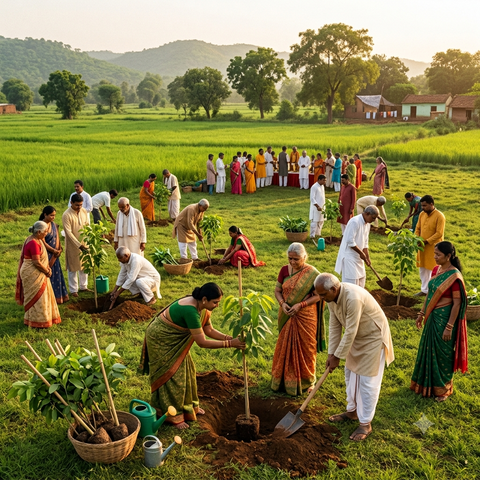
Tree plantation in Tripura can restore one of India's most biodiverse regions while creating sustainable livelihoods for local communities. Tripura's climate and soil conditions support large-scale reforestation. Strategic tree planting contributes to India's environmental future.
Companies spent ₹15.9 Cr on CSR projects in Tripura in FY 2024-25 (provisional), against ₹9.5 Cr in FY 2023-24, according to the Ministry of Corporate Affairs' National CSR Portal. See CSR spending by state.
Why Tree Plantation in Tripura Matters for Climate Action
Tripura faces environmental challenges due to shifting cultivation and urbanization. Deforestation affects local weather patterns and biodiversity.
According to the United Nations Climate Change initiative, forest restoration is one of the most effective ways to combat global warming. Tree plantation in Tripura can sequester approximately 22 tons of CO2 per hectare annually. This makes every planted tree a powerful weapon against climate change.
We ensure that our tree plantation programs in Tripura focus on native species that thrive in the region's subtropical climate. These include sal, teak, bamboo, and fruit-bearing trees that provide both environmental and economic benefits. Our partners in Tripura have seen remarkable results when combining conservation with community development.
✅ Best Tree Species for Tripura's Climate
Selecting the right species is crucial for successful tree plantation in Tripura. The state's humid subtropical climate creates conditions for diverse tree species.
Native Species That Thrive:
- Sal (Shorea robusta) - Perfect for timber and soil conservation
- Teak (Tectona grandis) - High economic value and carbon sequestration
- Bamboo varieties - Fast-growing and versatile for local industries
- Jackfruit and Mango - Food security and income generation
- Arjun (Terminalia arjuna) - Medicinal properties and riverbank protection
We provide comprehensive guidance on species selection based on soil type, elevation, and intended use. Our 2-3ft Tree Planting + 3 Years Care + GeoTag program ensures each tree receives proper nurturing throughout its critical establishment period.
💡 Miyawaki Method: Revolutionary Tree Plantation in Tripura
The Miyawaki method is a Japanese technique that creates dense native forests. It can be applied to tree plantation in Tripura.
This method involves planting 3-4 native species per square meter in a carefully designed multilayer system. The World Wildlife Fund's forest conservation research confirms that such dense plantations create self-sustaining ecosystems within just 2-3 years.
Miyawaki forests require minimal maintenance after establishment. They support local biodiversity by providing habitat for native birds, insects, and small mammals.
⭐ Corporate Tree Plantation Programs in Tripura
Corporations can use tree plantation in Tripura to support their sustainability goals. We work with companies to design customized reforestation programs.
Corporate tree plantation in Tripura offers several advantages:
- Lower costs compared to other states due to favorable land availability
- Strong government support through state forestry initiatives
- Excellent survival rates due to suitable climate conditions
- Positive community impact through employment generation
- Measurable carbon offset contributions for ESG reporting
We ensure every corporate plantation receives our signature 2-3ft Tree Planting + 3 Years Care + GeoTag service. This technology allows companies to track their environmental impact in real-time, providing transparency for stakeholders and regulatory compliance.
Community-Based Tree Plantation Initiatives
Successful tree plantation in Tripura requires strong community participation. We've found that involving local farmers and tribal communities creates sustainable, long-term forest restoration. Our agroforestry programs in Tripura have helped over 500 families increase their income while contributing to environmental conservation.
Local communities in Tripura possess traditional knowledge about native species and sustainable farming practices. Combining this with modern plantation techniques helps create thriving forest ecosystems.
The state government's Joint Forest Management program provides excellent support for community-based tree plantation in Tripura. We help communities access funding, technical expertise, and market linkages for forest products. This approach ensures that environmental conservation becomes economically viable for local populations.
Environmental Benefits of Tree Plantation in Tripura
Tree plantation in Tripura can deliver environmental benefits beyond carbon sequestration. Strategic reforestation can restore ecological balance and create resilient landscapes.
According to the United Nations Environment Programme's forest research, properly planned tree plantations can restore degraded watersheds and prevent soil erosion. In Tripura, this is particularly important given the state's hilly terrain and monsoon climate patterns.
Key Environmental Impacts:
- Soil erosion prevention on steep slopes
- Watershed protection for major river systems
- Biodiversity conservation for endangered species
- Air quality improvement in urban areas
- Microclimate regulation for agricultural zones
Our team monitors these benefits using scientific methods and GeoTag technology. We provide detailed environmental impact reports to all stakeholders, demonstrating the measurable benefits of tree plantation in Tripura.
Government Support and Policies
The Tripura government has implemented progressive policies supporting tree plantation initiatives across the state. We work closely with the Forest Department to ensure our programs align with state conservation goals. The government's Green Tripura Mission provides substantial funding and technical support for reforestation projects.
Recent policy developments include streamlined approval processes for tree plantation in Tripura and increased subsidies for native species cultivation.
We help organizations navigate the regulatory framework and access government incentives for tree plantation in Tripura.
Economic Impact of Tree Plantation Programs
Tree plantation in Tripura creates economic opportunities for local communities. Agroforestry can increase farm income by up to 3× compared with conventional two-crop farming.
Strategic tree plantation can boost the timber and non-timber forest products market while ensuring sustainable harvesting practices. We provide market linkages and value addition training to support plantation owners.
Employment generation is another crucial benefit of tree plantation in Tripura. Each hectare of plantation creates approximately 20 person-days of employment during establishment and 5 person-days annually for maintenance. This provides valuable income opportunities in rural areas where alternative employment is limited.
Technology Integration in Modern Tree Plantation
Geo-tagging allows real-time monitoring of plantation sites using satellite imagery and GPS coordinates to track tree survival.
Drone technology helps us conduct aerial surveys and identify optimal planting locations. We use soil testing equipment to determine the best species for specific sites. Mobile apps enable field teams to record plantation data and track growth progress efficiently.
Climate monitoring stations at our plantation sites collect data on rainfall, temperature, and humidity patterns. This information helps us optimize planting schedules and care protocols. We share this data with research institutions to contribute to broader understanding of forest restoration in Northeast India.
Challenges and Solutions in Tripura's Reforestation
Tree plantation in Tripura faces several challenges that require innovative solutions. Shifting cultivation practices, known locally as 'jhum', can conflict with permanent forest establishment. We work with communities to develop alternative livelihood options that reduce dependence on slash-and-burn agriculture.
Elephant corridors present another challenge, as these magnificent animals can damage young plantations. Our solution involves creating buffer zones with elephant-resistant species and coordinating with wildlife authorities. We've successfully established 500 hectares of plantation in elephant-prone areas using these techniques.
Monsoon flooding can affect low-lying plantation sites. Strategic site selection and species choice are important. Flood-tolerant varieties like bamboo and indigenous trees perform well in these conditions.
Success Stories from Tripura Tree Plantation
Miyawaki forests can be used for urban reforestation and provide recreational space.
Agroforestry combines timber trees with traditional crops, creating diversified income streams while improving soil fertility. Farmers retain income from timber harvesting.
Mangrove restoration can create natural barriers against flooding while supporting local fisheries.
Plant a Tree in Your Name: Personal Impact in Tripura
Individual action makes a tremendous difference in tree plantation in Tripura. Our "Plant a tree in your Name" program allows people across India to contribute to Tripura's reforestation while creating a personal connection to environmental conservation. For just ₹299, anyone can plant a tree with 3 years of care included.
We provide personalized certificates and regular updates on tree growth through our GeoTag system. Many families choose to plant trees in Tripura to commemorate special occasions like birthdays, anniversaries, or in memory of loved ones. This creates lasting environmental legacies while supporting local communities.
Corporate employees often participate in team-building activities centered around tree plantation in Tripura. These programs combine environmental action with professional development, creating engaged employees who become environmental ambassadors in their communities.
Future Vision: Scaling Tree Plantation in Tripura
Tree plantation in Tripura can contribute to India's goal of planting 100 crore trees by 2030. This requires collaboration between government, private sector, and civil society.
Climate change projections indicate that Tripura will experience increased rainfall variability and temperature extremes. Strategic tree plantation can help the state adapt to these changes while maintaining agricultural productivity. We're developing climate-resilient plantation models that will serve as templates for other northeastern states.
The United Nations Sustainable Development Goals emphasize the importance of forest restoration for achieving multiple development objectives. Our integrated approach to tree plantation in Tripura addresses goals related to climate action, biodiversity conservation, and sustainable livelihoods simultaneously.
Frequently Asked Questions
What is the best time for tree plantation in Tripura?
The ideal time for tree plantation in Tripura is during the monsoon season from June to September. This period provides adequate rainfall for seedling establishment. However, with proper irrigation, planting can be done year-round. We recommend avoiding the dry months of November to March for rain-fed plantations.
How much does tree plantation cost in Tripura?
Tree plantation costs vary based on species and location. A package including a 2–3ft sapling, three years of care, and geo-tagging costs ₹299 per tree. Government subsidies can reduce costs for qualifying projects.
Which native species are best for tree plantation in Tripura?
Native species like sal, teak, arjun, and various bamboo varieties perform excellently in Tripura's climate. Fruit trees such as jackfruit, mango, and litchi provide economic benefits alongside environmental impact. We recommend mixed plantations that include both timber and fruit-bearing species for maximum benefit.
How can corporates participate in tree plantation in Tripura?
Corporates can partner with us for customized tree plantation programs in Tripura. We offer comprehensive packages including site selection, plantation, maintenance, and monitoring. Our programs help companies achieve Net Zero Targets while creating positive community impact. CSR funding can be utilized for these initiatives.
What technology is used to monitor tree plantation in Tripura?
We use advanced GeoTag technology to monitor every planted tree in Tripura. This system provides GPS coordinates, growth tracking, and survival data through satellite imagery. Mobile apps allow real-time updates, while drone surveys help assess plantation health across large areas.
How does tree plantation in Tripura help local communities?
Tree plantation in Tripura creates employment opportunities, improves agricultural productivity through agroforestry, and provides sustainable income from forest products. Our programs include skill development training and market linkages to maximize community benefits. Women's self-help groups particularly benefit from nursery development activities.
What is the survival rate of trees planted in Tripura?
Tree plantation programs in Tripura achieve 85% survival rates through careful species selection, proper site preparation, and comprehensive aftercare. A 3-year care program supports survival during the critical establishment period.
Can individuals plant trees in Tripura from other states?
Yes, our "Plant a tree in your Name" program allows individuals from anywhere in India to contribute to tree plantation in Tripura. We handle all logistics, provide certificates, and send regular updates on tree growth. This makes it easy for people to support environmental conservation regardless of their location.
Taking Action: Your Role in Tripura's Green Transformation
Tree plantation in Tripura offers incredible opportunities for environmental restoration, community development, and climate action. Whether you're an individual wanting to make a personal impact or a corporation seeking to achieve sustainability goals, we're here to help you succeed. Our comprehensive approach ensures that every tree planted contributes to a greener, more prosperous future for Tripura.
We invite you to join our mission of Combating Climate Change Through Collective Action by participating in tree plantation initiatives across Tripura. Together, we can restore this beautiful state's forest cover while creating lasting benefits for local communities and the global environment.
Ready to make a difference? Explore our tree plantation programs and discover how you can contribute to Tripura's green transformation today. Every tree planted brings us closer to our goal of 100 crore trees and a sustainable future for India.