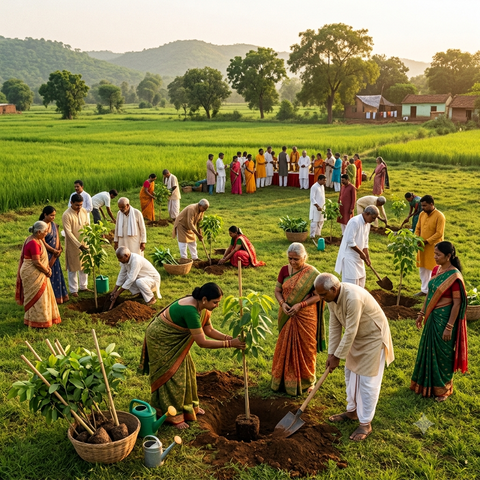
Tree plantation in Sikkim demonstrates how sustainable tree planting works in challenging Himalayan terrain.
Companies spent ₹54.6 Cr on CSR projects in Sikkim in FY 2024-25 (provisional), against ₹41.9 Cr in FY 2023-24, according to the Ministry of Corporate Affairs' National CSR Portal. See CSR spending by state.
Tree plantation in Sikkim combines traditional knowledge with modern techniques.
Why Tree Plantation in Sikkim Matters ⭐
Sikkim's unique geography makes tree plantation crucial for multiple reasons. The state faces challenges from climate change, soil erosion, and biodiversity loss. However, successful reforestation programs have proven effective in addressing these issues.
According to the United Nations Sustainable Development Goals, forest restoration is vital for achieving climate targets. Sikkim's tree plantation initiatives directly support these global objectives through local action.
The benefits of tree plantation in Sikkim include:
- ✅ Preventing soil erosion on steep slopes
- ✅ Protecting water sources and streams
- ✅ Supporting diverse wildlife habitats
- ✅ Creating sustainable livelihoods for communities
- ✅ Enhancing carbon sequestration capacity
Best Tree Species for Sikkim Plantation 🌲
Choosing the right species is essential for successful tree plantation in Sikkim. Our team has found that native species perform best in the state's varied climate zones. Different elevations require different approaches to tree selection.
Popular native species include oak, rhododendron, fir, and pine varieties. These trees naturally adapt to Sikkim's soil conditions and weather patterns. Moreover, they provide excellent habitat for local wildlife species.
High Altitude Species (Above 3000m)
Alpine regions need hardy species that can withstand extreme conditions. Silver fir, juniper, and birch trees thrive at these elevations. These species help prevent avalanches and protect fragile mountain ecosystems.
Mid-Altitude Species (1500-3000m)
Temperate zones support diverse tree species including oak, maple, and rhododendron. These areas are ideal for mixed forest plantation projects. They create beautiful landscapes while providing ecological benefits.
Lower Altitude Species (Below 1500m)
Subtropical regions welcome species like sal, teak, and bamboo. These fast-growing trees provide quick ground cover and economic benefits. They also support traditional agroforestry practices in rural areas.
Miyawaki Method Success in Sikkim 💡
The Miyawaki forest technique is a Japanese method that creates dense, native forests in small spaces.
The United Nations Environment Programme recognizes such innovative approaches as crucial for forest restoration. Sikkim's adoption of Miyawaki methods demonstrates how traditional and modern techniques can work together.
Key advantages of Miyawaki plantation in Sikkim:
- → Grows faster than conventional methods
- → Requires minimal maintenance after three years
- → Creates self-sustaining forest ecosystems
- → Maximizes biodiversity in limited space
Community Involvement and Local Impact 🤝
Tree plantation in Sikkim succeeds through strong community participation. Local residents understand their environment better than outside experts. We ensure that every plantation project involves community members from planning to maintenance.
Women's groups play a particularly important role in Sikkim's reforestation efforts. They often lead nursery management and seedling care activities. Their dedication ensures high survival rates for planted trees.
Economic benefits from tree plantation include:
- • Employment opportunities in nurseries and plantations
- • Income from sustainable forest products
- • Enhanced tourism through beautiful landscapes
- • Improved agricultural productivity through watershed protection
Challenges and Solutions in Sikkim Tree Plantation ⚠️
Tree plantation in Sikkim faces several unique challenges due to its mountainous terrain. Steep slopes make planting and maintenance difficult. However, innovative solutions have emerged to address these obstacles.
Climate change poses additional challenges with unpredictable weather patterns. The United Nations Climate Change framework emphasizes adaptation strategies like those being implemented in Sikkim.
Common challenges include:
- • Limited access to remote plantation sites
- • Soil erosion on steep slopes
- • Wildlife damage to young saplings
- • Seasonal water scarcity
- • Extreme weather events
Using local species, community involvement, and appropriate technology helps overcome obstacles.
Government Initiatives and Support Programs 📋
The Sikkim government actively promotes tree plantation through various schemes and incentives. These programs provide financial support and technical guidance to plantation projects. We're happy to work alongside government initiatives to maximize impact.
Key government programs include:
- ✅ State Forest Development Agency projects
- ✅ Compensatory Afforestation Fund schemes
- ✅ National Afforestation Programme initiatives
- ✅ Green Sikkim Mission activities
These programs guarantee support for community-based tree plantation projects. They also provide certified training for local participants in plantation techniques.
Technology and Innovation in Sikkim Forestry 🔬
Modern technology enhances tree plantation success in Sikkim significantly. GPS mapping helps identify optimal planting locations. Drone surveys monitor plantation progress and health effectively.
Our team uses GeoTag technology to track every planted tree's growth and survival. This approach ensures transparency and accountability in plantation projects. Participants can monitor their trees' progress through digital platforms.
Innovative techniques being used include:
- → Soil testing for species selection
- → Weather monitoring for optimal planting times
- → Mobile apps for plantation data collection
- → Satellite imagery for forest cover assessment
Seasonal Considerations for Tree Plantation 🌱
Timing is crucial for successful tree plantation in Sikkim. The state's monsoon season provides ideal conditions for planting activities. However, different species may require different planting schedules.
Pre-monsoon planting (April-May) works well for hardy species that can establish before heavy rains. Monsoon planting (June-September) is ideal for most native species. Post-monsoon planting (October-November) suits certain high-altitude varieties.
Proper timing is important for tree survival.
Corporate Partnerships and Net Zero Targets 🏢
Many corporations choose Sikkim for their tree plantation initiatives to achieve Net Zero Targets. The state's proven track record and beautiful locations make it attractive for corporate social responsibility programs.
Companies can Plant a tree in your Name through our certified programs in Sikkim. Each plantation includes 2-3ft Tree Planting + 3 Years Care + GeoTag tracking for complete transparency.
Corporate benefits include:
- • Verified carbon offset credits
- • Employee engagement opportunities
- • Brand association with successful conservation
- • Measurable environmental impact
Future Vision: 100 Crore Trees Initiative
Tree plantation in Sikkim contributes to India's ambitious goal of planting 100 crore trees by 2030. This massive undertaking requires coordinated efforts across all states. Sikkim's success story provides a blueprint for other regions.
The World Wildlife Fund forest conservation initiatives support such large-scale restoration efforts globally. Sikkim's approach aligns with international best practices for forest restoration.
Our commitment to Combating Climate Change Through Collective Action drives every plantation project. Together, we can transform landscapes and create a sustainable future for coming generations.
Frequently Asked Questions
What is the best time for tree plantation in Sikkim?
The monsoon season from June to September is ideal for tree plantation in Sikkim. This period provides adequate rainfall for sapling establishment. However, pre-monsoon planting in April-May also works well for certain species.
Which tree species grow best in Sikkim's climate?
Native species like oak, rhododendron, fir, and pine perform best in Sikkim. These trees are naturally adapted to local soil and weather conditions. They also support local wildlife and ecosystem balance.
How much does tree plantation cost in Sikkim?
Tree plantation costs vary based on species, location, and care requirements. Our basic package starts at ₹299 per tree including three years of maintenance. This includes planting, watering, and monitoring services.
Can individuals participate in tree plantation programs?
Yes, individuals can easily join tree plantation programs in Sikkim. We welcome participation from people across India who want to contribute to environmental restoration. Each participant receives a certificate and GeoTag location of their tree.
What survival rate can be expected for planted trees?
Proper care, species selection, and regular monitoring improve long-term success rates.
How does tree plantation help local communities?
Tree plantation creates employment opportunities in nurseries and maintenance activities. It also provides sustainable income from forest products. Additionally, improved watersheds benefit agricultural productivity in surrounding areas.
Are there government incentives for tree plantation?
The Sikkim government offers various incentives and support programs for tree plantation. These include financial assistance, technical guidance, and land allocation for plantation projects. Community groups can access multiple funding sources.
How is the success of plantation projects measured?
Success is measured through survival rates, growth monitoring, and ecosystem impact assessment. We use technology like GPS tracking and drone surveys for accurate monitoring. Regular reports ensure transparency and accountability.
Can tree plantation help achieve carbon neutrality?
Yes, tree plantation significantly contributes to carbon sequestration and climate change mitigation. Each mature tree can absorb 20-50 kg of CO2 annually. Large-scale plantation projects provide verified carbon offset credits.
What role does technology play in modern tree plantation?
Technology enhances every aspect of tree plantation from site selection to monitoring. GPS mapping, soil testing, and mobile apps improve efficiency and success rates. Our GeoTag system allows real-time tracking of individual trees.Tree plantation in Sikkim represents hope for our planet's future. Through collective action and sustainable practices, we can restore damaged ecosystems and create thriving forests. Join us in this wonderful journey of environmental restoration. Discover how you can plant a tree in Sikkim today and become part of this green revolution.