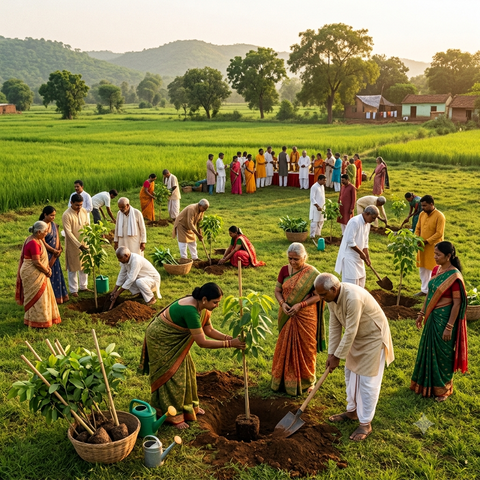
Tree plantation in Ghaziabad helps address urbanization's impact on natural ecosystems. Strategic tree planting can reduce air pollution and create healthier communities by improving air quality and lowering temperatures.
Ghaziabad faces significant environmental challenges including rising pollution levels and decreasing green cover. However, dedicated tree plantation initiatives are making a wonderful difference across the city. These efforts align perfectly with global sustainability goals while addressing local environmental concerns.
Why Tree Plantation in Ghaziabad is Critical for Environmental Health
The environmental benefits of tree plantation in Ghaziabad extend far beyond aesthetic improvements. Trees naturally filter harmful pollutants from the air, reducing respiratory health issues among residents. According to the United Nations Sustainable Development Goals, urban forestry initiatives play a vital role in creating sustainable cities and communities.
Our team has observed that a single mature tree can absorb up to 48 pounds of carbon dioxide annually. In a densely populated city like Ghaziabad, this impact becomes exponentially significant. Trees also provide natural cooling, reducing urban heat island effects by up to 9 degrees Fahrenheit in surrounding areas.
Water conservation represents another crucial benefit of tree plantation efforts. Trees help prevent soil erosion and improve groundwater recharge, addressing Ghaziabad's growing water scarcity concerns. Moreover, they create natural habitats for birds and beneficial insects, supporting local biodiversity.
⭐ Successful Tree Plantation Projects Transforming Ghaziabad
Tree plantation initiatives in Ghaziabad have expanded green areas in various locations. Native tree planting efforts create natural buffer zones.
Miyawaki forests can be created in urban areas for rapid forest growth and dense vegetation.
Corporate participation has been instrumental in these success stories. Maruti Suzuki partnered with local authorities to establish green belts around industrial areas. Their commitment to environmental responsibility demonstrates how businesses can contribute meaningfully to urban reforestation efforts. Similarly, Dabur India supported extensive tree plantation drives in residential colonies, focusing on medicinal and fruit-bearing species.
The Smart City Mission in Ghaziabad includes tree plantation as a component of urban planning, ensuring that new developments incorporate adequate green spaces and tree coverage.
💡 Best Tree Species for Ghaziabad's Climate and Soil
Selecting appropriate tree species is crucial for successful tree plantation in Ghaziabad. Native species adapt better to local conditions and require less maintenance. Neem trees grow well in Ghaziabad's climate, providing natural pest control and medicinal benefits.
Peepal and Banyan trees offer excellent air purification capabilities and can withstand the region's temperature variations. These indigenous species also hold cultural significance, making them popular choices for community plantation drives. Gulmohar and Amaltas trees add vibrant colors during flowering seasons while providing substantial shade.
For areas with limited space, we recommend fast-growing species like Eucalyptus and Bamboo. However, these should be planted strategically to avoid water table depletion. Fruit-bearing trees such as Mango, Guava, and Jamun serve dual purposes of environmental benefit and food security.
Native and indigenous species are important for forest restoration and are suited to urban environments. More information is available from the United Nations Environment Programme.
✅ Community Engagement and Volunteer Opportunities
Tree plantation in Ghaziabad thrives through active community participation and volunteer engagement. Local schools have embraced environmental education by organizing regular tree planting events. Students learn hands-on about environmental conservation while contributing to their city's green transformation.
Resident welfare associations across Ghaziabad have initiated neighborhood tree plantation drives. These grassroots efforts ensure long-term tree care and maintenance, creating a sense of ownership among residents.
Corporate employee volunteering programs have gained tremendous momentum in recent years. Companies like HCL Technologies and Godrej organize monthly tree plantation activities for their workforce. These initiatives boost employee morale while contributing to environmental restoration goals.
Religious institutions and community centers serve as excellent venues for tree plantation awareness campaigns. These gatherings help spread knowledge about proper tree care techniques and the importance of urban forestry. Social media campaigns have also proven effective in mobilizing young volunteers for plantation drives.
Technology and Innovation in Modern Tree Plantation
Modern tree plantation in Ghaziabad incorporates cutting-edge technology to ensure higher success rates. GeoTag technology allows precise tracking of planted trees, enabling better monitoring and care. This innovative approach provides transparency and accountability in plantation initiatives.
Soil testing and GPS mapping help identify optimal locations for different tree species. Moisture sensors and automated irrigation systems can ensure adequate water supply during critical growth periods.
Mobile applications now enable citizens to report tree health issues and request maintenance services. This digital approach streamlines tree care operations and ensures prompt attention to problems. Drone surveillance helps monitor large plantation areas and identify trees requiring immediate intervention.
Smart irrigation systems use weather data and soil moisture levels to optimize watering schedules. This technology reduces water wastage while ensuring trees receive adequate hydration. Solar-powered irrigation pumps make these systems environmentally sustainable and cost-effective.
→ Corporate Social Responsibility and Environmental Impact
Corporate participation in tree plantation in Ghaziabad has created significant environmental impact while fulfilling social responsibility objectives. Major corporations recognize that environmental sustainability directly affects their long-term business success. These partnerships provide essential funding and resources for large-scale plantation projects.
Tata Motors established a green belt around their manufacturing facility with native trees. Their initiative aims to create a natural barrier against industrial pollution while enhancing the local ecosystem.
Wipro's sustainability program includes extensive tree plantation drives across Ghaziabad's educational institutions. Their focus on schools ensures that environmental awareness reaches the next generation while creating green spaces for learning. This initiative has transformed 50 school campuses into mini urban forests.
The collaboration between private sector and government agencies has accelerated tree plantation efforts significantly. These partnerships leverage corporate efficiency with government reach, creating win-win scenarios for environmental conservation. According to the United Nations Climate Change initiative, such collaborations are essential for achieving global climate targets.
Seasonal Planning and Optimal Planting Times
Successful tree plantation in Ghaziabad requires careful timing and seasonal planning. The monsoon season from July to September provides ideal conditions for tree planting, with natural rainfall supporting initial growth.
Pre-monsoon preparation involves site selection, soil preparation, and saplings procurement. We ensure that planting sites receive adequate sunlight and have proper drainage systems. Soil enrichment with organic compost improves nutrient availability for young trees.
Post-monsoon care includes regular watering, pruning, and protection from grazing animals. Winter months require reduced watering frequency but continued monitoring for pest attacks. Spring season offers opportunities for fertilization and health assessments of established trees.
Year-round planning ensures continuous tree plantation activities regardless of weather conditions. Indoor nurseries and greenhouse facilities enable sapling production throughout the year. This approach maintains steady progress toward reforestation goals while adapting to climatic variations.
Economic Benefits and Green Job Creation
Tree plantation in Ghaziabad generates substantial economic benefits while creating employment opportunities in the green sector. Nursery operations, tree care services, and urban forestry consulting have emerged as thriving businesses. These enterprises provide sustainable livelihoods while contributing to environmental restoration.
Tree-lined neighborhoods attract residents. Real estate developers increasingly prioritize tree plantation in their projects.
Tourism potential increases significantly in areas with well-maintained urban forests and green spaces. Eco-tourism initiatives around plantation sites generate revenue while promoting environmental awareness. Local vendors benefit from increased foot traffic in green areas.
Healthcare cost savings represent another significant economic benefit of tree plantation efforts. Improved air quality reduces respiratory ailments, leading to lower medical expenses for residents. Studies indicate that every dollar invested in urban forestry generates four dollars in economic benefits through health improvements and energy savings.
⚠️ Challenges and Solutions in Urban Tree Plantation
Tree plantation in Ghaziabad faces several challenges that require innovative solutions and community cooperation. Limited space in densely populated areas constrains large-scale plantation efforts. However, vertical gardens and rooftop plantations offer alternative approaches to increase green cover.
Water scarcity poses a significant threat to newly planted trees, especially during summer months. Rainwater harvesting systems and greywater recycling help address this challenge sustainably. Mulching techniques reduce water evaporation and maintain soil moisture levels.
Vandalism and encroachment threaten established trees in public spaces. Community awareness programs and protective barriers help safeguard planted trees. Adoption programs where individuals or organizations take responsibility for specific trees have proven highly effective.
Soil contamination in industrial areas requires remediation before tree plantation can succeed. Phytoremediation using specific plant species helps cleanse contaminated soil naturally. This biological approach is both cost-effective and environmentally friendly compared to chemical treatments.
Government Initiatives and Policy Support
Government support helps scale tree plantation in Ghaziabad through policy frameworks and funding mechanisms. The Uttar Pradesh government's Green India Mission provides financial incentives for community-based plantation initiatives.
Municipal bylaws now mandate minimum tree coverage for new construction projects. Developers must plant a specified number of trees or pay compensation fees that fund public plantation drives. This policy ensures that urban development includes environmental considerations.
The Forest Department provides technical expertise and quality saplings for large-scale plantation projects. Their nurseries maintain genetic diversity and ensure disease-free planting material. Regular training programs help volunteers learn proper plantation and care techniques.
Tax incentives encourage private landowners to participate in tree plantation initiatives. Property tax rebates for maintaining green cover motivate individuals to preserve and expand tree populations on their land. These economic incentives align private interests with environmental goals.
Future Vision and Sustainable Development Goals
The future of tree plantation in Ghaziabad could see green corridors connecting neighborhoods with natural habitats thriving alongside urban infrastructure.
Climate resilience becomes increasingly important as extreme weather events become more frequent. Trees provide natural protection against floods, storms, and heat waves while supporting urban biodiversity. The World Wildlife Fund emphasizes that urban forests are essential for climate adaptation strategies.
Educational institutions will serve as centers of excellence for environmental research and tree plantation techniques. University partnerships with international organizations will bring advanced knowledge and best practices to Ghaziabad. This academic collaboration ensures continuous improvement in plantation methodologies.
Smart city integration will incorporate tree health monitoring into urban management systems. IoT sensors and artificial intelligence will optimize tree care operations while minimizing resource consumption. This technological advancement will make tree plantation efforts more efficient and sustainable.
Frequently Asked Questions
What is the best time for tree plantation in Ghaziabad?
The monsoon season from July to September offers optimal conditions for tree plantation in Ghaziabad. Natural rainfall supports initial growth and reduces watering requirements. However, with proper care and irrigation, trees can be planted throughout the year.
Which tree species grow best in Ghaziabad's climate?
Native species like Neem, Peepal, Banyan, and Gulmohar thrive in Ghaziabad's climate. These trees adapt well to local soil and weather conditions while requiring minimal maintenance. Fruit trees like Mango and Guava also perform excellently in the region.
How can individuals participate in tree plantation drives?
Individuals can join community plantation drives organized by local NGOs and resident associations. Corporate volunteer programs offer regular opportunities for tree planting activities. Social media groups and environmental organizations frequently announce upcoming plantation events.
What care do newly planted trees require?
Newly planted trees need regular watering, especially during the first two years. Protection from grazing animals and proper staking prevent damage. Organic fertilization and pruning help establish healthy growth patterns.
How do tree plantation efforts help combat air pollution?
Trees naturally filter harmful pollutants from the air through their leaves and bark. A mature tree can absorb 48 pounds of carbon dioxide annually while producing oxygen. Large-scale plantation creates significant improvements in local air quality.
What role do corporations play in Ghaziabad's tree plantation initiatives?
Corporations provide funding, volunteer workforce, and technical expertise for tree plantation projects. Companies like Maruti Suzuki, Dabur, and Tata Motors have established extensive green belts and urban forests. Corporate social responsibility programs make large-scale plantation financially viable.
How can technology improve tree plantation success rates?
GeoTag technology enables precise tracking and monitoring of planted trees. Automated irrigation systems optimize water usage while soil sensors provide real-time health data. Mobile applications facilitate citizen reporting of tree care needs.
What economic benefits does tree plantation provide to Ghaziabad?
Tree plantation increases property values, creates green jobs, and reduces healthcare costs through improved air quality. Eco-tourism opportunities generate revenue while urban forests attract investment. Every dollar invested in urban forestry generates four dollars in economic benefits.
How does tree plantation support Ghaziabad's climate resilience?
Trees provide natural cooling, reduce urban heat island effects, and prevent soil erosion. They offer protection against extreme weather events while supporting groundwater recharge. Urban forests create microclimates that moderate temperature and humidity levels.
What government support exists for tree plantation in Ghaziabad?
The UP government's Green India Mission provides financial incentives for plantation initiatives. Municipal bylaws mandate tree coverage for new developments while tax incentives encourage private participation. The Forest Department offers technical support and quality saplings.Tree plantation in Ghaziabad represents hope for a sustainable future where environmental health and urban development coexist harmoniously. Our collective efforts today will create a legacy of clean air, cooler temperatures, and thriving ecosystems for generations to come. We encourage everyone to plant a tree in your name and join this transformative movement toward a greener Ghaziabad. Together, we can achieve our goal of planting 100 crore trees while combating climate change through collective action. Discover how you can contribute to Ghaziabad's green transformation and learn more about our comprehensive tree plantation programs.
More about tree plantation in Ghaziabad
Grow Billion Trees plans and runs plantation programmes for companies, with native species, three years of care and every tree geo-tagged on GreenTrack. 85% of trees survive across our programmes.
- Miyawaki forests in Ghaziabad
- Best native trees to grow near Ghaziabad
- NGOs in Ghaziabad
- Waste management in Ghaziabad
- Biochar projects near Ghaziabad
- Tree plantation drives for companies
- Projects across India
- CSR rules for tree plantation
Talk to our team about a plantation programme in Ghaziabad.