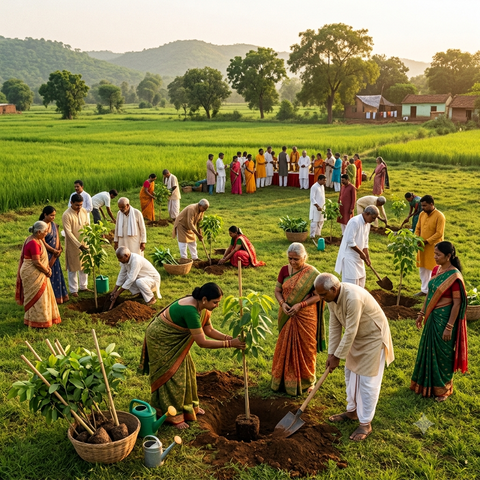
Mangroves in Goa form one of India's most biodiverse and ecologically vital coastal ecosystems, thriving along the Mandovi and Zuari river estuaries. These salt-tolerant forests shelter hundreds of species, store vast quantities of carbon, and protect communities from storms and floods. Our team at Grow Billion Trees has witnessed first-hand how these green corridors sustain both wildlife and human livelihoods. In 2026, restoring and protecting Goa's mangroves is one of the most urgent environmental priorities in coastal India.
Why Mangroves in Goa Are Ecologically Vital ✅
Mangroves are among the most carbon-dense ecosystems on earth, storing up to four times more carbon per hectare than tropical rainforests. According to the United Nations Climate Change framework, coastal forests like mangroves are indispensable tools in the global fight against warming. They also stabilise shorelines, filter pollutants, and nurture marine biodiversity. Moreover, they act as natural nurseries for fish and crustaceans that sustain millions of livelihoods.
Goa's mangrove cover faces loss due to urban growth and tourism pressure. Restoration efforts can target degraded areas within the Mandovi and Zuari river systems.
The Mandovi River: A Mangrove Biodiversity Hotspot ⭐
The Mandovi River estuary hosts one of the richest mangrove communities in peninsular India. Species including Rhizophora mucronata, Avicennia marina, and Sonneratia alba thrive in its brackish, tidal waters. In addition, these forests support over 200 species of birds — from the vivid kingfisher to the stately grey heron. Our partners working within this estuary describe it as a living, breathing sanctuary unlike anywhere else.
The Mandovi's mangrove belt also serves as a critical breeding ground for commercially important species. For example, prawns, crabs, and mullet all depend on these forests during their juvenile stages. As a result, local fishing communities derive direct, measurable economic benefit from healthy mangrove habitats. We provide conservation education to these communities as part of our hands-on restoration work, building local guardianship for the long term.
The inter-tidal zones of the Mandovi support estuarine crocodiles, otters, and mudskippers — species rarely found in disturbed habitats. Restored mangrove patches can attract wildlife and support biodiversity recovery.
The Zuari River System and Its Mangrove Ecosystem ✅
The Zuari River, Goa's widest river, hosts a distinct mangrove community across its upper and lower estuarine zones. These forests support monitor lizards, brahminy kites, and a great diversity of migratory shorebirds each season. According to WWF's research on deforestation and forest degradation, mangrove loss in river estuaries accelerates biodiversity collapse far beyond the forest boundary itself. The Zuari system is therefore a priority zone for conscious, science-led intervention.
Natural regeneration of mangroves is possible with community support. Native species can help support ecosystem recovery. Mangrove forests filter agricultural runoff, protecting downstream water quality and benefiting local communities.
Threats Facing Goa's Mangrove Forests ⚠️
Despite legal protections under the Coastal Regulation Zone (CRZ) notifications, mangroves in Goa face ongoing pressure. Encroachment for real estate development, shrimp farming, and infrastructure expansion continues to fragment these forests. The WWF Forests Initiative highlights that coastal deforestation is accelerating globally, with mangroves among the most threatened habitat types on the planet.
Pollution from tourism, sewage discharge, and industrial activity further stresses these ecosystems. However, the greatest long-term threat is climate change — rising sea levels and intensifying storms are altering the tidal conditions mangroves need to thrive. Mindful, collective action today is essential to ensure these forests survive for future generations. Every sustainable choice to protect green spaces contributes to a more resilient coastline.
How Grow Billion Trees Is Restoring Mangroves in Goa 💡
Grow Billion Trees is deeply committed to the restoration of mangroves across India's coastline, with active programmes in the Mandovi and Zuari river systems. Our team uses hands-on, community-led planting methods with verified, locally sourced saplings to ensure authentic ecosystem recovery. We provide every planted tree with 2-3ft Tree Planting + 3 Years Care + GeoTag technology, making each contribution fully transparent and accountable. This certified, secure approach gives our partners and supporters complete confidence in their real-world impact.
Our mangrove restoration work sits within a larger, inspiring mission to plant 100 crore trees across India by June 2030. We work with coastal communities, agroforestry farmers, and corporate partners to grow this impact together. Our partners in Goa's coastal belt include fishing families whose livelihoods depend directly on healthy estuaries and thriving marine populations. We ensure every planting site is scientifically selected for maximum ecological benefit and long-term survival.
You can Plant a tree in your Name within our mangrove restoration initiative and receive a personalised, verified certificate of contribution. This is a wonderful way to honour a loved one, commemorate a special occasion, or simply give back to the earth with purpose. In addition, corporates across India are partnering with us to meet their Net Zero Targets through certified, traceable mangrove restoration. Our platform is secure, transparent, and guaranteed to deliver documented environmental outcomes.
Combating Climate Change Through Collective Action
Combating Climate Change Through Collective Action is the guiding principle behind everything Grow Billion Trees does. According to the United Nations Environment Programme's forests initiative, restoring degraded coastal forests can contribute substantially to global carbon reduction targets. Mangroves alone can sequester carbon at rates that make them indispensable to any serious climate strategy. We are glad to be part of this global movement, planting trees that will protect coastlines for decades to come.
Mangrove restoration can involve community participation, education, and monitoring to support long-term recovery.
How You Can Help Protect Mangroves in Goa ✅
There are several meaningful, impactful ways to support the restoration of mangroves in Goa:
- ✅ Plant a tree in your Name through Grow Billion Trees with GeoTag tracking included
- ✅ Corporate partnerships — achieve Net Zero Targets through certified mangrove restoration
- ✅ Gift a tree for birthdays, memorials, or Women's Day as a living, lasting tribute
- ✅ Volunteer for hands-on planting drives in Goa's coastal estuaries
- ✅ Spread awareness about the biodiversity value of Goa's mangrove ecosystems
Every action, however small, builds toward a greener, more resilient future for India's coastlines. We love seeing our community grow as more conscious individuals choose to make a genuine impact on the planet. Explore the full range of eco-friendly programmes at Grow Billion Trees and discover how you can be part of this movement today.
Frequently Asked Questions
What makes mangroves in Goa unique?
Mangroves in Goa are unique because they thrive at the intersection of two major river estuaries — the Mandovi and Zuari — creating rare biodiversity hotspots. The combination of tidal rhythms, brackish water, and river sediment supports an exceptional mix of species. Our team has documented wildlife here that is rarely found in other Indian coastal habitats.
How many mangrove species are found in Goa?
Goa is home to approximately 14 recorded mangrove species, including Rhizophora mucronata, Avicennia officinalis, and Bruguiera gymnorrhiza. These species vary by salinity zone and tidal exposure across the Mandovi and Zuari systems. Each species plays a distinct role in the overall health and resilience of the ecosystem.
Are mangroves in Goa legally protected?
Yes, mangroves in Goa are protected under the Coastal Regulation Zone (CRZ) notifications and the Forest (Conservation) Act. However, enforcement remains inconsistent in certain areas, and encroachment continues. Restoration initiatives like those by Grow Billion Trees supplement legal protection with active, on-the-ground ecological recovery.
What wildlife depends on Goa's mangrove forests?
Goa's mangroves support estuarine crocodiles, monitor lizards, over 200 bird species, and numerous fish and crustacean species. Migratory shorebirds also rely on these forests as seasonal feeding and resting grounds. In addition, the Irrawaddy dolphin has been observed near estuarine mangrove zones in Goa.
How does mangrove loss affect local communities?
Mangrove loss reduces the fish and shellfish populations that coastal communities depend on for food and income. It also removes a natural barrier against floods, cyclones, and storm surges. As a result, villages near degraded mangrove zones face higher economic losses and greater vulnerability to extreme weather events in 2026.
How does Grow Billion Trees contribute to mangrove restoration in Goa?
Grow Billion Trees plants native mangrove species in the Mandovi and Zuari river systems using hands-on, community-led methods. Every tree receives 2-3ft Tree Planting + 3 Years Care + GeoTag tracking for full transparency. Our certified programmes allow individuals, gift-givers, and corporates to contribute to verified, impactful ecological restoration.
Can I plant a tree specifically in a mangrove habitat?
Yes. Grow Billion Trees offers dedicated mangrove planting programmes in coastal India, including Goa. You can Plant a tree in your Name in a mangrove habitat and receive a personalised, verified certificate. This is a meaningful, impact-driven choice for any occasion — from birthdays to corporate sustainability goals.
How do mangroves help combat climate change?
Mangroves sequester carbon at rates far higher than most terrestrial forests, storing it in both above-ground biomass and deep sediment layers. This makes them among the most powerful natural climate solutions available today. Restoring mangroves is therefore a core strategy in Combating Climate Change Through Collective Action.
What is Grow Billion Trees' broader environmental mission?
Grow Billion Trees aims to plant 100 crore trees across India by June 2030, spanning mangrove restoration, Miyawaki forests, agroforestry, urban forestry, and beach and lake restoration. The mission is driven by a belief that every individual action, multiplied across millions of people, can transform India's ecological future. We are glad to welcome every participant into this movement.
A Living Future, Rooted in Mangroves
The mangroves in Goa are far more than a scenic backdrop — they are the lungs, nurseries, and shields of the entire coastal ecosystem. Our team at Grow Billion Trees is proud to nurture these vital forests as part of our mission to plant 100 crore trees across India. With proven, hands-on methods and GeoTag technology, we ensure every restored tree is tracked, cared for, and counted. Together, we can grow a sustainable, thriving future for Goa and for our shared planet.
Discover how you can make a real difference — explore our mangrove restoration programmes today and Plant a tree in your Name. Your mindful choice today will echo through generations, sustaining biodiversity, protecting coastlines, and helping India reach its Net Zero Targets. We would love to welcome you to our growing community of eco-conscious changemakers.
Mangrove restoration with Grow Billion Trees
We restore mangroves on degraded coastal land with local communities, and care for and track every plantation. Mangrove afforestation is also one of the approved methods under India's carbon market.
- Mangrove restoration programme
- Mangrove projects
- Carbon credit trading in India
- CSR rules for tree plantation
Talk to our team about a programme for your company.