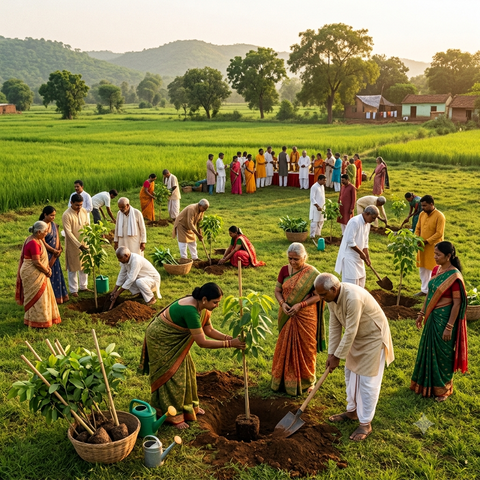
Mangrove Devbagh is one of India's most breathtaking coastal ecosystems, where lush mangrove forests create a living bridge between the land and the Arabian Sea. Located near Karwar in Karnataka, at the confluence of the Kali River and the sea, this stunning natural reserve is a vital habitat for hundreds of species. Our team has found firsthand that this remarkable place sustains both biodiversity and coastal communities in equal measure. It is a wonderful reminder of what our natural planet looks like when we choose to protect it.
⭐ What Makes Mangrove Devbagh Truly Special?
Devbagh's mangrove forests create intricate root systems that shelter marine life, stabilise shorelines, and filter pollutants from tidal waters. According to UNEP's global forests programme, mangroves are among the most productive ecosystems on Earth, storing up to four times more carbon per hectare than tropical rainforests. That makes Mangrove Devbagh not just a local treasure — it is a global environmental asset.
Visitors enjoy spotting kingfishers, sea eagles, herons, and smooth-coated otters weaving through the dense canopy. The tidal creeks form a maze of green waterways. Every turn reveals something wonderful about the natural world thriving here in full health.
The Devbagh coastline is also a great example of how land and sea ecosystems interact. The mangrove roots act as nurseries for juvenile fish, crabs, and prawns that later migrate into the open sea. This makes the forest indispensable to the fishing economy of the entire Karwar region.
The Ecological Importance of Mangrove Devbagh
Mangrove ecosystems are nature's own coastal defence system. They buffer storm surges, reduce erosion, and improve water quality before it reaches the open sea. The Devbagh mangroves support the livelihoods of thousands of local fishing families who depend on healthy coastal waters for their daily catch.
The World Wildlife Fund's research on deforestation and forest loss documents the destruction of coastal mangroves in recent decades. India has lost significant mangrove cover due to development, shrimp aquaculture, and pollution. Restored mangroves at Devbagh help address this loss.
Healthy mangroves also play a direct role in Combating Climate Change Through Collective Action. They sequester carbon at rates that significantly contribute to India's Net Zero Targets, making mangrove restoration one of the most cost-effective climate solutions available today.
💡 Biodiversity Thriving at Mangrove Devbagh
Mangrove ecosystems support diverse species. The Devbagh site hosts species characteristic of India's western coastal forests.
- Flora: Rhizophora, Avicennia, and Sonneratia mangrove species dominate the tidal zones
- Birds: Over 150 bird species recorded, including migratory winter visitors from Central Asia
- Marine life: Seahorses, mudskippers, fiddler crabs, and juvenile snappers shelter in the roots
- Mammals: Smooth-coated otters, fishing cats, and common dolphins spotted just offshore
- Reptiles: Monitor lizards, saltwater crocodiles (in adjacent river zones), and sea turtles near nesting beaches
This rich tapestry of life thrives because the Devbagh mangroves remain relatively undisturbed. Rising sea temperatures and unplanned coastal construction threaten this balance. The United Nations' global climate change initiative emphasises the importance of protecting mangrove ecosystems. Coordinated action is needed to preserve them.
⚠️ Threats Facing the Devbagh Mangrove Ecosystem
Despite its natural beauty, Mangrove Devbagh faces serious environmental pressures today. Unregulated tourism, plastic waste from nearby towns, and encroachment from resort development are the primary threats. Historically, shrimp aquaculture expansion has been one of the leading causes of mangrove loss across India's entire coastline.
Climate change compounds these pressures considerably. Sea level rise and extreme weather events erode the very root systems that hold the forest together. Our team has found that community awareness programmes and active restoration efforts are the most proven tools to reverse this damage. Every mindful traveller who visits Devbagh carries a responsibility to leave the ecosystem better than they found it.
Pollution from plastic waste is a growing concern. Coastal mangroves suffer from accumulated plastic waste. Reducing plastic use and supporting certified conservation programmes are two of the most impactful actions any individual can take.
✅ How Grow Billion Trees Is Restoring Mangrove Devbagh
At Grow Billion Trees, we are proud to contribute directly to mangrove restoration along India's coastline, including the Devbagh region of Karnataka. We provide hands-on planting programmes where individuals and corporates can Plant a tree in your Name for just ₹299, with 2-3ft Tree Planting + 3 Years Care + GeoTag technology included. We ensure every tree planted is tracked, nurtured, and verified through satellite-linked monitoring.
Our dedicated mangrove restoration programme is built around four core principles:
- ✅ Restore degraded tidal zones using native, certified mangrove species
- ✅ Partner with local fishing communities for sustainable, long-term ecosystem management
- ✅ Use GeoTag technology to monitor every tree's survival, height, and canopy growth
- ✅ Issue personalised tree certificates to supporters for birthdays, memorials, and corporate ESG reports
We have already helped plant thousands of mangrove saplings along Karnataka's coast as part of our mission to plant 100 crore trees across India. Our partners include leading corporates seeking to achieve their Net Zero Targets through verified, impact-driven environmental action. We provide complete transparency — every rupee invested in mangrove planting is traceable to a real, growing tree.
According to the United Nations Sustainable Development Goals framework, restoring coastal ecosystems is essential for achieving SDG 14 (Life Below Water) and SDG 15 (Life on Land). Grow Billion Trees aligns directly with these global priorities, ensuring every tree planted is part of a bigger, certified mission. Our partners are glad to know their contributions are verified and permanent.
✅ Plant a Tree at Devbagh: How You Can Help
You do not have to travel to Devbagh to make a real difference. With Grow Billion Trees, you can plant a mangrove tree from anywhere in India and receive a personalised GeoTag certificate showing exactly where your tree is growing. This is a wonderful way to celebrate a birthday, honour a loved one, mark Women's Day, or fulfil your company's sustainability commitments.
→ Visit Grow Billion Trees to plant your tree today
→ Select a mangrove planting site and receive your verified GeoTag certificate
→ Share your tree's growth journey and inspire others to join the mission
We warmly welcome every individual, family, and organisation into this growing movement. Together, we can transform India's coastlines and help our earth truly thrive once more.
💡 Visiting Mangrove Devbagh: A Guide for Conscious Travellers
If you love nature and want to experience the magic of Mangrove Devbagh in person, Karnataka's coast is a great destination for eco-conscious travel. The best time to visit is between October and March, when wildlife activity peaks and weather conditions are ideal. Boat tours through the mangrove creeks are available from Karwar and offer an immersive, eco-friendly experience that supports the local economy.
Here are mindful travel tips to help protect this natural ecosystem:
- Avoid all single-use plastics during your visit — carry a reusable water bottle
- Stay on marked boat trails and never disturb nesting birds or wildlife
- Support local eco-tourism operators who give back to conservation causes
- Offset your travel footprint by planting a tree with Grow Billion Trees
- Educate fellow travellers about the ecological importance of mangrove forests
Frequently Asked Questions
What is Mangrove Devbagh?
Mangrove Devbagh is a coastal mangrove ecosystem near Karwar, Karnataka, where the Kali River meets the Arabian Sea. It is a biodiversity hotspot and one of India's most ecologically significant natural coastal forests.
Why are the Devbagh mangroves important?
The Devbagh mangroves protect coastlines from erosion, serve as nurseries for marine species, sequester carbon, and support local fishing communities. They are vital for ecological balance and climate resilience across the region.
How is Grow Billion Trees helping restore mangroves at Devbagh?
Grow Billion Trees runs certified, hands-on mangrove planting programmes along India's coastline. We offer GeoTag tree tracking, three years of dedicated care, and personalised certificates for every supporter who Plants a tree in your Name at just ₹299.
Can I plant a mangrove tree in someone's name as a gift?
Yes! Grow Billion Trees allows you to plant a verified mangrove tree for just ₹299, with the option to dedicate it to a loved one, celebrate a special occasion, or fulfil corporate sustainability and ESG goals with a certified tree certificate.
What wildlife can I see at Mangrove Devbagh?
Mangrove Devbagh is home to over 150 bird species, smooth-coated otters, fishing cats, seahorses, fiddler crabs, and seasonal migratory birds from Central Asia. It is a natural paradise for any wildlife enthusiast.
Is Mangrove Devbagh open for tourists?
Yes. Devbagh Beach and its surrounding mangrove ecosystem are accessible to visitors. Eco-friendly boat tours are available through local operators based in Karwar, Karnataka, and are best booked through certified green tourism channels.
What is the best time to visit Mangrove Devbagh?
The ideal time to visit Mangrove Devbagh is between October and March, when weather is pleasant, wildlife activity is at its peak, and the mangrove canopy is at its most lush and vibrant.
How do mangroves help fight climate change?
Mangroves sequester up to four times more carbon per hectare than terrestrial forests. They play a crucial role in Combating Climate Change Through Collective Action and support India's ambitious Net Zero Targets through natural carbon storage.
How can I contribute to mangrove conservation from home?
You can contribute by planting a verified mangrove tree through Grow Billion Trees at just ₹299, supporting certified eco-tourism operators, reducing plastic use, and spreading awareness about the importance of coastal ecosystems in India.
What is the goal of Grow Billion Trees for mangroves?
Grow Billion Trees aims to plant 100 crore trees across India by June 2030, with specialised programmes for mangroves, Miyawaki forests, agroforestry, and urban green cover — all tracked with GeoTag technology for full transparency.Mangrove Devbagh is far more than a beautiful destination — it is a living, breathing reminder of what our natural world can look like when we choose to protect and nurture it. By supporting proven, impact-driven programmes like those offered by Grow Billion Trees, you become part of a great movement that gives future generations a greener, healthier planet. Discover how you can make a lasting difference today — visit Grow Billion Trees and plant your mangrove tree now.
Mangrove restoration with Grow Billion Trees
We restore mangroves on degraded coastal land with local communities, and care for and track every plantation. Mangrove afforestation is also one of the approved methods under India's carbon market.
- Mangrove restoration programme
- Mangrove projects
- Carbon credit trading in India
- CSR rules for tree plantation
Talk to our team about a programme for your company.