Mangrove Barda Sanctuary, located in Porbandar district, Gujarat, is one of India's most precious and underappreciated coastal reserves. Covering approximately 162 square kilometres along the Arabian Sea, this sanctuary shelters a rich tapestry of wildlife, wetlands, and dense mangrove forests. Our team has explored this region extensively, and we found that its ecological value far exceeds what its modest size might suggest.
In 2026, as climate pressures continue to mount globally, sanctuaries like Mangrove Barda are playing a critical role in Combating Climate Change Through Collective Action. According to United Nations Climate Change reports, coastal mangrove forests absorb up to four times more carbon per hectare than tropical rainforests. This makes protecting and restoring every patch of mangrove forest an urgent global priority.
What Is Mangrove Barda Sanctuary? ⭐
Mangrove Barda Sanctuary is a protected wildlife area established to conserve the unique mangrove ecosystem along Gujarat's western coastline. The sanctuary encompasses mangrove forests, mudflats, tidal creeks, and coastal wetlands that form a vital ecological corridor. It is one of Gujarat's most important natural habitats and a certified biodiversity hotspot.
The sanctuary's mangrove forests provide a natural shield for coastal communities. For example, during cyclones and storm surges, these dense tree groves absorb wave energy and protect inland areas from flooding. Moreover, the root systems of mangrove trees stabilise coastline soils, preventing erosion and preserving the natural shoreline.
Mangrove Barda Sanctuary also functions as a natural water treatment system. The intricate root networks filter agricultural runoff, effluents, and sediment from coastal waters. As a result, water quality within and around the sanctuary remains healthier than in unprotected coastal zones nearby.
Key Facts About Mangrove Barda Sanctuary ✅
- ✅ Location: Porbandar district, Gujarat, India
- ✅ Area: Approximately 162 square kilometres
- ✅ Ecosystem type: Mangrove forests, mudflats, coastal wetlands, tidal creeks
- ✅ Bird species: Over 200, including flamingos, herons, egrets, and migratory visitors
- ✅ Mammal residents: Indian wolf, jungle cat, nilgai, jackal
- ✅ Key mangrove species: Avicennia marina, Rhizophora mucronata, Ceriops tagal
- ✅ Carbon benefit: Up to 4x carbon sequestration rate versus tropical forests
The Ecological Importance of Mangrove Forests 💡
Mangrove forests rank among the most productive ecosystems on our planet. For background, see United Nations Environment Programme. These natural forests serve as vital nurseries for juvenile fish and crustaceans, sustaining entire marine food chains.
However, the world is losing its mangroves at an alarming pace. For background, see WWF's deforestation and forest degradation research. Coastal development, aquaculture expansion, and industrial pollution are the primary drivers of this loss.
Therefore, every mangrove patch that survives — including Mangrove Barda Sanctuary — represents an irreplaceable ecological asset. These resilient forests sequester carbon, nurture biodiversity, support fishing livelihoods, and protect coastal communities. Their conservation is not optional — it is essential for our shared future.
Biodiversity at Mangrove Barda Sanctuary ✅
Mangrove Barda Sanctuary is a wonderful home to an extraordinary range of wildlife. It hosts over 200 species of birds, including resident and migratory varieties that travel from Central Asia and Europe each winter. Nature lovers and birdwatchers enjoy spectacular sightings of flamingos, purple herons, little egrets, and white-throated kingfishers throughout the year.
Among the sanctuary's notable mammal residents are the Indian wolf, jungle cat, jackal, and nilgai. These species depend on the sanctuary's diverse habitat — a mix of mangrove forest, grassland, and coastal scrub — to grow and thrive year-round. The sanctuary's protected status is critical for maintaining their populations and genetic diversity.
Marine biodiversity is equally impressive at Mangrove Barda. The sanctuary's tidal waters support mud crabs, prawns, juvenile fish of multiple species, and a variety of molluscs. Local fishing communities have depended on this natural bounty for generations. The health of Mangrove Barda Sanctuary is directly tied to the livelihoods of thousands of families in the Porbandar region.
The sanctuary's flora features several mangrove species perfectly adapted to brackish coastal conditions. Key species include Avicennia marina, Rhizophora mucronata, Ceriops tagal, Bruguiera gymnorhiza, and Aegiceras corniculatum. In addition, saltmarsh grasses and coastal scrub vegetation create layered microhabitats that support the sanctuary's full range of species.
Threats Facing Mangrove Barda Sanctuary ⚠️
Despite its protected status, Mangrove Barda Sanctuary faces serious and ongoing threats. Coastal encroachment by urban and industrial development is reducing the sanctuary's effective area. Illegal logging, overfishing, and pollution from nearby towns continue to degrade water quality and habitat integrity across the reserve.
Climate change adds additional layers of risk. Rising sea levels accelerate shoreline erosion, while increased storm frequency threatens to uproot young mangrove trees before they establish strong root systems.
Saltwater intrusion is also altering the delicate ecological balance of the sanctuary's wetland zones. As saline water pushes further inland, freshwater-dependent plant and animal species are displaced. This ongoing shift threatens to permanently transform the sanctuary's biodiversity and reduce its natural resilience.
How Grow Billion Trees Is Supporting Mangrove Restoration ✅
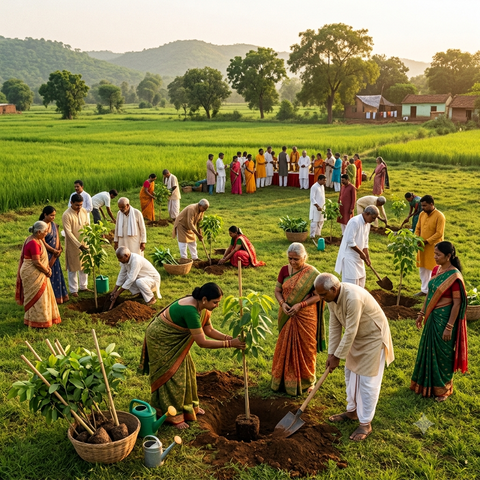
At Grow Billion Trees, we are deeply glad to be part of India's mangrove restoration effort. Our dedicated mangrove planting programme is a key pillar of our mission to plant 100 crore trees across India by June 2030. We work alongside local communities, Gujarat forest department officers, and environmental scientists to ensure every sapling planted receives proper care.
Sustainable mangrove restoration requires far more than just planting trees. This approach includes 2-3ft tree planting, 3 years of care, and geo-tagging, along with regular health checks, replanting where needed, and geo-location verification. This improves survival rates and long-term ecological impact.
We ensure that local communities become partners in the restoration process, not passive observers. Our team trains fishermen and coastal villagers as mangrove stewards, equipping them with skills and incentives to protect restored areas. This community-centred strategy transforms individual tree planting into a collective, sustainable conservation movement with lasting results.
Through the Plant a tree in your Name programme, any individual can contribute to mangrove restoration for just ₹299. Each tree comes with a personalised certificate, GeoTag tracking, and three years of verified care. Whether you want to celebrate a birthday, honour a loved one, or mark Women's Day — planting a mangrove tree is a great, meaningful way to give back to the earth.
Corporate Partnerships for Net Zero Targets
India's corporates are increasingly recognising mangrove restoration as a credible, proven pathway to achieving Net Zero Targets. Mangroves offer some of the highest carbon sequestration rates of any ecosystem, making them ideal assets for corporate sustainability strategies. Our certified programmes are trusted by organisations across Mumbai, Bangalore, Delhi, Chennai, and Hyderabad.
Our corporate partners receive authentic impact reports, GeoTag-verified planting data, and sustainability certificates that meet CSR audit requirements. In addition, our programmes align directly with the United Nations Sustainable Development Goals — specifically SDG 13 (Climate Action), SDG 14 (Life Below Water), and SDG 15 (Life on Land). We guarantee full transparency in every planting project we undertake.
Customers and companies who partner with Grow Billion Trees are rated among India's most conscious environmental contributors. Our eco-friendly, nature-based approach ensures that restored mangrove areas deliver genuine, long-term value. Together, we can boost India's coastal resilience and build a greener, more secure future for all.
How You Can Help Protect Mangrove Barda Sanctuary
Everyone has a meaningful role to play in protecting Mangrove Barda Sanctuary. Small, conscious actions — taken together — can produce transformative and lasting change for India's coastlines. Here are some practical steps to get involved today:
- ✅ Plant a mangrove tree through Grow Billion Trees for just ₹299 — includes 3 years of care and GeoTag tracking
- ✅ Support Net Zero Targets through our certified corporate mangrove planting programmes
- ✅ Spread awareness about Mangrove Barda Sanctuary and India's coastal conservation needs
- ✅ Reduce plastic waste to prevent pollution from entering coastal and mangrove ecosystems
- ✅ Gift a tree for birthdays, memorials, Women's Day, or anniversaries — a sustainable, mindful, and eco-friendly present
Together, our collective impact can help India's mangrove forests grow and recover. A conscious, eco-friendly lifestyle — combined with direct action through Grow Billion Trees — can genuinely save critical habitats like Mangrove Barda Sanctuary. The future of our coastlines depends on what we choose to do today.
Mangrove Barda Sanctuary is small in area but enormous in ecological importance. It protects biodiversity, sequesters carbon, supports livelihoods, and shields coastal communities — all while nurturing one of India's most unique natural environments. Discover how you can be part of its protection. Explore our mangrove planting programmes at Grow Billion Trees and plant your tree today — because every tree matters, every action counts, and together we can restore our planet.
Frequently Asked Questions
Where is Mangrove Barda Sanctuary located?
Mangrove Barda Sanctuary is located in Porbandar district, Gujarat, on India's western coastline along the Arabian Sea. It is one of Gujarat's key protected coastal ecosystems and covers approximately 162 square kilometres.
Why is Mangrove Barda Sanctuary important?
Mangrove Barda Sanctuary is vital because it hosts over 200 bird species, supports rich marine biodiversity, sequesters significant amounts of carbon, and shields coastal communities from storms and flooding. It is a proven natural defence against climate impacts.
What species live in Mangrove Barda Sanctuary?
The sanctuary is home to birds including flamingos and herons, mammals like the Indian wolf and jungle cat, and diverse marine life including mud crabs, prawns, and multiple fish species. Key mangrove tree species include Avicennia marina and Rhizophora mucronata.
What are the main threats to Mangrove Barda Sanctuary?
The sanctuary faces threats from coastal encroachment, illegal logging, industrial pollution, and climate change. Rising sea levels and saltwater intrusion are particularly damaging.
How does Grow Billion Trees help mangrove conservation?
Grow Billion Trees runs a dedicated mangrove restoration programme across India's coastlines. We plant mangrove saplings with 2-3ft Tree Planting + 3 Years Care + GeoTag technology, working hand-in-hand with local communities to ensure long-term survival and verified impact.
Can I plant a mangrove tree in someone's name?
Yes! Through the Plant a tree in your Name programme, you can plant a mangrove tree for just ₹299. It comes with a personalised certificate, GeoTag tracking, and three full years of verified care — a wonderful gift for any occasion.
How do mangroves help fight climate change?
Mangroves absorb up to four times more carbon per hectare than tropical rainforests. They also protect coastlines from sea-level rise and storm surges. This makes them essential tools in Combating Climate Change Through Collective Action across India and globally.
How can corporations support mangrove conservation through Grow Billion Trees?
Corporations can partner with Grow Billion Trees to plant certified mangroves as part of their CSR and Net Zero Targets strategies. We offer authenticated impact reports, GeoTag-verified data, and sustainability certificates aligned with United Nations SDGs 13, 14, and 15.
Are mangrove forests disappearing globally?
Yes. Mangrove forests have been declining due to deforestation, coastal development, and climate change. Sanctuaries like Mangrove Barda and restoration efforts are urgently needed to reverse this trend.
What is the goal of Grow Billion Trees for mangrove restoration?
Grow Billion Trees aims to plant 100 crore trees across India by June 2030, with mangrove restoration forming a core part of this mission. Our hands-on, community-driven approach ensures every tree planted truly takes root and delivers lasting ecological value.
Mangrove restoration with Grow Billion Trees
We restore mangroves on degraded coastal land with local communities, and care for and track every plantation. Mangrove afforestation is also one of the approved methods under India's carbon market.
- Mangrove restoration programme
- Mangrove projects
- Carbon credit trading in India
- CSR rules for tree plantation
Talk to our team about a programme for your company.