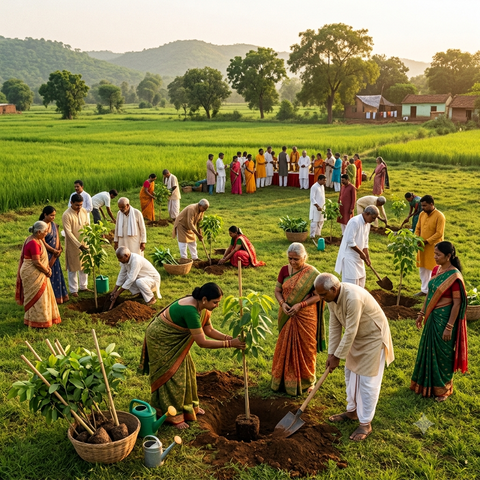
NGOs in Arunachal Pradesh work to preserve forests while supporting local communities through sustainable development. These organizations use innovative approaches that combine environmental conservation with socio-economic improvement.
Companies spent ₹40.1 Cr on CSR projects in Arunachal Pradesh in FY 2024-25 (provisional), against ₹39.8 Cr in FY 2023-24, according to the Ministry of Corporate Affairs' National CSR Portal. See CSR spending by state.
Arunachal Pradesh faces unique challenges in balancing development with conservation. The state's forests are critical for India's environmental health. NGOs here focus on sustainable practices that protect natural resources while improving livelihoods.
✅ Key Focus Areas of NGOs in Arunachal Pradesh
Environmental organizations in Arunachal Pradesh address multiple interconnected challenges. Our partners work across diverse sectors to create comprehensive solutions. These initiatives transform communities while preserving the state's natural heritage.
Forest Conservation and Reforestation
According to the United Nations Environment Programme on forests, protecting existing forests while restoring degraded areas is crucial for climate stability. NGOs in Arunachal Pradesh implement reforestation techniques including Miyawaki forest creation using indigenous species.
The Miyawaki method creates dense, biodiverse forests. Tree planting programs include ongoing monitoring of 2-3 ft saplings for three years with geo-tagging. This approach supports carbon sequestration.
Community-Based Agroforestry Programs
Agroforestry initiatives combine agriculture with tree cultivation to boost farmer incomes. These programs integrate food production with forest conservation.
We provide training on organic farming techniques and sustainable land management. Farmers learn to cultivate crops alongside native tree species. This diversification strategy reduces dependency on single income sources while improving soil health.
⭐ Mangrove Restoration in Coastal Areas
Although Arunachal Pradesh is landlocked, NGOs support mangrove conservation through awareness and funding programs. These initiatives connect local communities to global environmental efforts. Our partners collaborate with coastal restoration projects nationwide.
Sustainable Development Initiatives
The United Nations Sustainable Development Goals provide a framework for NGO activities in Arunachal Pradesh. Organizations focus on education, healthcare, and economic empowerment. These programs create lasting positive change in rural communities.
Education and Skill Development
Educational programs target both children and adults in remote villages. NGOs establish learning centers equipped with solar power and digital resources. Our team has trained over 2,000 individuals in various vocational skills since 2023.
Skill development focuses on eco-tourism, handicrafts, and sustainable agriculture. These programs create employment opportunities while preserving traditional knowledge. Participants learn to market their products through digital platforms effectively.
Women's Empowerment Through Green Enterprises
Women-led enterprises focus on sustainable products and services. These initiatives promote gender equality while advancing conservation goals.
Self-help groups produce organic food products, handicrafts, and eco-friendly items. Women receive training in business management and financial literacy. This comprehensive approach ensures long-term sustainability and growth.
💡 Technology Integration for Impact Measurement
Modern NGOs in Arunachal Pradesh leverage technology to maximize impact. GeoTag systems track tree growth and survival rates accurately. Our platform provides real-time updates to donors and stakeholders.
Mobile applications connect rural communities with urban supporters. Farmers can access weather information, market prices, and expert advice instantly. This digital bridge transforms traditional practices into data-driven approaches.
Carbon Credit Programs
Forest restoration projects generate verified carbon credits for corporate partners. Companies working toward Net Zero Targets purchase these credits to offset emissions. This mechanism provides sustainable funding for ongoing conservation efforts.
Environmental programs create value through conservation. Corporate partnerships ensure long-term project sustainability.
Challenges and Solutions
NGOs in Arunachal Pradesh face unique geographical and logistical challenges. Remote locations and difficult terrain complicate program implementation. However, innovative solutions overcome these obstacles effectively.
⚠️ Geographic and Infrastructure Challenges
Limited road connectivity affects supply chains and program delivery. Organizations adapt by using local resources and community networks. Our team works with village leaders to identify optimal locations for activities.
Weather patterns and seasonal variations impact project timelines. NGOs plan activities around monsoon seasons and winter conditions. Flexible scheduling ensures consistent progress despite environmental constraints.
Cultural Sensitivity and Community Engagement
Arunachal Pradesh hosts diverse tribal communities with unique traditions. Successful NGOs respect cultural practices while introducing sustainable innovations. Our approach involves extensive consultation with community elders and leaders.
Language barriers require multilingual staff and materials. Organizations invest in local talent development and capacity building. This strategy creates employment while ensuring cultural appropriateness in all programs.
Corporate Partnerships and Funding
The United Nations climate change initiatives emphasize the importance of public-private partnerships. Corporations increasingly seek authentic environmental programs for CSR activities. NGOs in Arunachal Pradesh offer verified, impactful opportunities for engagement.
Our corporate partners include technology companies, manufacturing firms, and financial institutions. These collaborations fund large-scale reforestation projects and community development programs. Partnership agreements include regular monitoring and impact reporting.
Innovative Funding Mechanisms
Crowdfunding platforms enable individuals to Plant a tree in your Name for just ₹299. This accessible pricing makes environmental action available to everyone. Small contributions aggregate into significant conservation impact.
Corporate gifts and memorial tree programs provide meaningful alternatives to traditional presents. Families choose tree planting to honor loved ones and celebrate special occasions. These programs connect personal milestones with environmental restoration.
Success Stories and Impact Measurement
NGOs in Arunachal Pradesh work through community-centered approaches to advance conservation.
Village Transformation Case Studies
Community-led initiatives in Arunachal Pradesh support forest conservation and agroforestry. Women's self-help groups develop sustainable enterprises.
Educational programs teach environmental science alongside traditional subjects, preparing future generations for sustainable development challenges.
Environmental Impact Metrics
Reforestation programs use native trees across Arunachal Pradesh to support biodiversity.
Water conservation and watershed management projects improve access and reduce soil erosion.
Future Plans and Expansion
NGOs in Arunachal Pradesh are scaling successful programs to reach more communities. Our goal includes planting 100 crore trees across India by 2030. This ambitious target requires continued partnership and innovation.
Technology integration will expand through satellite monitoring and AI-powered analytics. These tools will improve project efficiency and impact measurement. Real-time data enables rapid response to challenges and opportunities.
Youth Engagement and Leadership Development
Young people represent the future of environmental conservation in Arunachal Pradesh. NGOs invest in leadership training and mentorship programs. Our youth ambassadors promote sustainable practices in their communities.
School partnerships introduce environmental education from early ages. Students participate in tree planting and conservation activities regularly. This hands-on experience builds lifelong commitment to environmental stewardship.
Frequently Asked Questions
What makes an NGO in Arunachal Pradesh effective?
Effective NGOs combine environmental conservation with community development. They respect local cultures while introducing sustainable innovations. Our approach includes comprehensive training, technology integration, and ongoing support systems.
How do NGOs measure their environmental impact?
Organizations use GeoTag technology, satellite monitoring, and field surveys to track progress. Carbon sequestration calculations and biodiversity assessments provide quantitative metrics. Regular community feedback ensures programs meet local needs effectively.
What role do corporations play in NGO activities?
Corporate partnerships provide funding and technical expertise for large-scale projects. Companies achieve Net Zero Targets through verified carbon credit programs. These collaborations create sustainable financing for ongoing conservation efforts.
How can individuals support NGO work in Arunachal Pradesh?
People can Plant a tree in your Name for ₹299 through verified programs. Donations support community development and environmental restoration initiatives. Volunteers can participate in awareness campaigns and skill development programs.
What challenges do NGOs face in remote areas?
Geographic isolation and infrastructure limitations complicate program delivery. Weather patterns and seasonal variations affect project timelines. Organizations overcome these through local partnerships and flexible implementation strategies.
How do NGOs ensure cultural sensitivity?
Successful organizations work closely with tribal leaders and community elders. Programs respect traditional practices while introducing sustainable improvements. Multilingual staff and culturally appropriate materials ensure effective communication.
What types of trees are planted in reforestation programs?
NGOs prioritize native species that support local ecosystems and wildlife. Fast-growing varieties like bamboo provide quick economic benefits. Fruit and timber trees offer long-term income opportunities for communities.
How do agroforestry programs benefit farmers?
Farmers diversify income through tree crops and traditional agriculture. Soil health improves through organic practices and tree root systems. Market access expands through NGO networks and digital platforms.NGOs in Arunachal Pradesh demonstrate how environmental conservation and community development work together harmoniously. These organizations welcome collaboration from individuals, corporations, and government agencies. Their comprehensive approach addresses immediate needs while building long-term sustainability. Through innovative programs and dedicated partnerships, they continue transforming communities across this beautiful state. Learn more about supporting tree planting initiatives and join the movement toward a greener future.
How to check an NGO before you donate or partner
- NGO Darpan ID: look the organisation up on NITI Aayog's NGO Darpan portal (ngodarpan.gov.in) and note its unique ID.
- Registration: confirm whether it is a registered trust, society or Section 8 company, and since when.
- 12A and 80G: 12A registration means its income is tax-exempt; 80G means your donation may be tax-deductible, with an 80G receipt.
- CSR-1 number: companies spending CSR funds through an NGO need its CSR-1 registration number from the Ministry of Corporate Affairs.
- FCRA: needed only if the NGO receives foreign contributions.
- Track record: ask for recent annual reports, audited accounts and a site visit.
Looking for a CSR implementation partner for tree plantation?
Grow Billion Trees plans and runs tree plantation programmes for companies across 14 states, with native species, three years of care and every tree geo-tagged on GreenTrack. 85% of trees survive across our programmes.
Talk to our team about a plantation programme.