NGO in Bhiwandi: Transforming India's Powerloom Capital Through Environmental Action
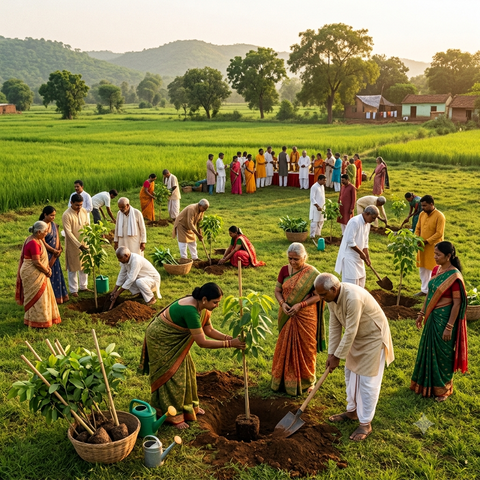
Welcome to the heart of India's textile industry, where an NGO in Bhiwandi is weaving environmental change alongside the city's famous powerlooms. Our team at Grow Billion Trees has discovered that this industrial hub offers unique opportunities for sustainable transformation. We're happy to share how environmental organizations are creating green corridors in Maharashtra's textile capital.
Bhiwandi, known as the powerloom capital of India, houses over 1 million powerlooms and contributes significantly to the nation's textile production. However, this industrial growth has come at an environmental cost that requires immediate attention.
✅ The Environmental Challenge in Bhiwandi
The rapid industrialization of Bhiwandi has created pressing environmental concerns. Air pollution from textile mills affects over 2.5 million residents in 2026. Water contamination from dyeing processes threatens local water bodies.
Industrial cities like Bhiwandi need comprehensive environmental restoration. The United Nations Sustainable Development Goals emphasize sustainable industrial practices in developing nations.
Deforestation for industrial expansion has reduced green cover. Waste management challenges persist as textile waste accumulates in landfills.
⭐ How NGOs Are Making a Difference
Environmental NGOs in Bhiwandi focus on multiple restoration approaches. We ensure that tree plantation programs target industrial areas most affected by pollution. Our partners implement Miyawaki forest techniques to create dense urban forests.
Organizations work with textile manufacturers to promote sustainable practices. Community gardens provide fresh produce to local families.
Agroforestry programs help farmers transition to sustainable cultivation methods. As a result, over 500 farmers have adopted eco-friendly practices that improve both soil health and income.
💡 Grow Billion Trees: Leading Environmental Change
Our mission to plant 100 crore trees extends to industrial cities like Bhiwandi. We provide comprehensive tree planting services that include 2-3ft Tree Planting + 3 Years Care + GeoTag technology. This approach ensures long-term survival and monitoring of planted trees.
Plant a tree for ₹299 — a 2–3 ft sapling with three years of care, geo-tagged.
Corporate partnerships help businesses achieve Net Zero Targets through verified carbon offset programs. However, our impact extends beyond tree planting to include comprehensive environmental restoration.
🌱 Specialized Programs for Urban Transformation
Miyawaki forest creation transforms vacant industrial plots into thriving ecosystems. These dense forests can grow much faster than conventional plantations and support diverse wildlife.
Mangrove restoration along nearby coastal areas helps protect against flooding and erosion. Urban forestry initiatives create green corridors that connect fragmented habitats. Food forests provide sustainable nutrition sources for local communities.
Beach cleaning and lake restoration programs address water pollution challenges.
⚠️ Combating Climate Change Through Collective Action
Climate change impacts industrial cities disproportionately due to the urban heat island effect. The United Nations climate change initiatives highlight the critical role of urban reforestation in mitigation efforts.
Temperature reduction of 3-5°C occurs in areas with increased tree cover. Air quality improvements benefit respiratory health for thousands of residents. Carbon sequestration through strategic tree planting helps offset industrial emissions.
Water conservation through tree planting reduces flood risks during monsoon seasons. Biodiversity restoration creates habitats for native species displaced by urbanization.
🤝 Community Engagement and Education
Environmental education programs teach practical skills like composting and water conservation.
Women's groups participate in nursery management and tree care activities. These programs provide additional income sources while promoting environmental stewardship. Community participation ensures long-term success of restoration projects.
Corporate social responsibility initiatives engage textile companies in environmental restoration through employee volunteer programs.
📊 Measurable Impact and Success Stories
Watershed restoration projects support communities. The World Wildlife Fund forest conservation programs recognize similar community-based restoration efforts globally.
🎯 Corporate Partnerships for Sustainable Growth
Textile manufacturers partner with NGOs to implement sustainable production practices. These collaborations reduce environmental impact while maintaining economic competitiveness. Water recycling systems have been installed in 50+ factories through NGO guidance.
Supply chain sustainability programs ensure ethical sourcing of raw materials. Carbon footprint reduction initiatives help companies achieve international sustainability standards. Green certification programs open new markets for environmentally conscious products.
Employee engagement in environmental activities improves workplace satisfaction and retention. Corporate tree planting events strengthen team building while contributing to restoration goals.
🌍 Future Vision for Bhiwandi
Our vision transforms Bhiwandi into a model sustainable industrial city by 2030. Comprehensive planning integrates environmental restoration with economic development. Smart city initiatives incorporate green infrastructure as core components.
Renewable energy adoption reduces dependence on fossil fuels in textile production. Circular economy principles minimize waste generation and promote resource efficiency. Innovation hubs develop eco-friendly technologies for the textile industry.
Regional connectivity through green corridors links Bhiwandi with Mumbai's environmental initiatives. International recognition positions the city as a leader in sustainable industrial development.
Frequently Asked Questions
What makes an NGO in Bhiwandi effective for environmental work?
Effective NGOs in Bhiwandi combine local knowledge with scientific approaches to address industrial pollution. Partnerships with communities and businesses support sustainable solutions.
How can individuals support NGO efforts in Bhiwandi?
Individuals can plant trees through verified programs like ours for ₹299. Volunteering for cleanup drives and educational programs makes significant impact. Choosing eco-friendly products from sustainable manufacturers supports green businesses.
What environmental challenges are unique to Bhiwandi?
Bhiwandi faces textile industry-specific pollution including dye contamination and fiber waste. High population density creates additional pressure on natural resources. Industrial heat generation contributes to elevated temperatures compared to rural areas.
How do tree planting programs benefit industrial cities?
Tree planting reduces air pollution, temperature, and noise levels in industrial areas. Root systems prevent soil erosion and improve water retention. Urban forests provide recreational spaces that improve quality of life for residents.
What role do corporate partnerships play in environmental restoration?
Corporate partnerships provide funding and resources for large-scale restoration projects. Employee volunteer programs multiply the impact of professional NGO efforts. Business sustainability commitments drive demand for environmental services.
How can NGOs measure their environmental impact?
Scientific monitoring tracks air quality, water quality, and biodiversity improvements. GeoTag technology enables precise tracking of tree survival and growth rates. Community health surveys measure quality of life improvements.
What makes Grow Billion Trees different from other environmental NGOs?
We provide comprehensive 3-year care for planted trees with GeoTag tracking technology. Our diverse programs include Miyawaki forests, mangrove restoration, and agroforestry. Transparent pricing at ₹299 per tree makes environmental action accessible to everyone.
How do environmental NGOs work with government agencies?
NGOs collaborate with municipal corporations on policy implementation and monitoring. They provide technical expertise for environmental impact assessments. Public-private partnerships leverage government resources with NGO innovation and community connections.
Taking Action: Your Role in Transformation
The transformation of Bhiwandi requires collective action from individuals, businesses, and organizations. We love seeing communities come together to create lasting environmental change. Every tree planted contributes to a wonderful future for this industrial city.
Join our mission to plant 100 crore trees and discover how your contribution makes a real difference. Visit Grow Billion Trees to explore our programs and plant a tree in your name today. Together, we can transform Bhiwandi into a model of sustainable industrial development.
How to check an NGO before you donate or partner
- NGO Darpan ID: look the organisation up on NITI Aayog's NGO Darpan portal (ngodarpan.gov.in) and note its unique ID.
- Registration: confirm whether it is a registered trust, society or Section 8 company, and since when.
- 12A and 80G: 12A registration means its income is tax-exempt; 80G means your donation may be tax-deductible, with an 80G receipt.
- CSR-1 number: companies spending CSR funds through an NGO need its CSR-1 registration number from the Ministry of Corporate Affairs.
- FCRA: needed only if the NGO receives foreign contributions.
- Track record: ask for recent annual reports, audited accounts and a site visit.
Looking for a CSR implementation partner for tree plantation?
Grow Billion Trees plans and runs tree plantation programmes for companies across 14 states, with native species, three years of care and every tree geo-tagged on GreenTrack. 85% of trees survive across our programmes.
Talk to our team about a plantation programme.