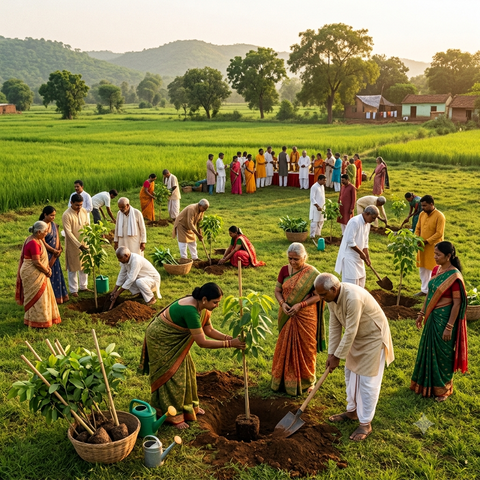
Meghalaya faces environmental and social challenges. Non-governmental organizations work on forest conservation and community empowerment, supporting both the region's natural heritage and local livelihoods.
Companies spent ₹62.1 Cr on CSR projects in Meghalaya in FY 2024-25 (provisional), against ₹34.7 Cr in FY 2023-24, according to the Ministry of Corporate Affairs' National CSR Portal. See CSR spending by state.
✅ Why Meghalaya Needs Dedicated NGO Support
Meghalaya experiences some of India's highest rainfall. According to the World Wildlife Fund's research on deforestation, Northeast India faces critical forest loss that impacts indigenous communities.
Coal mining activities have degraded Meghalaya's forest cover. Local tribes depend on these forests for their traditional livelihoods.
Our team has witnessed how climate change affects monsoon patterns in the region. The United Nations climate change initiatives highlight the urgent need for community-based adaptation strategies in vulnerable regions like Meghalaya.
⭐ Key Focus Areas for NGOs in Meghalaya
Environmental Conservation and Reforestation
Forest restoration remains the top priority for any NGO in Meghalaya. We ensure that our tree planting programs focus on native species that support local ecosystems. The Miyawaki method proves particularly effective in this region's climate.
Reforestation efforts support the goal of planting 100 crore trees across India. Each tree comes with 3 years of care and GeoTag tracking.
💡 Community Livelihood Programs
Agroforestry programs provide alternative income sources for local families. Training in techniques suited to Meghalaya's climate helps farmers protect the environment while improving livelihoods.
Women's empowerment initiatives focus on traditional crafts and sustainable enterprises.
Education and Skill Development
Educational programs connect traditional knowledge with modern sustainable practices.
Skill development workshops in eco-tourism and sustainable agriculture create new employment opportunities. Young people can stay in their communities while earning decent livelihoods.
→ How Grow Billion Trees Serves as an Effective NGO in Meghalaya
As a leading environmental NGO, we focus on Combating Climate Change Through Collective Action throughout Meghalaya. Our comprehensive approach includes multiple specialized programs designed for the region's unique needs.
Plant a tree for ₹299, including 2–3 ft sapling with 3 years of care and GeoTag tracking. This makes environmental action accessible to everyone.
Miyawaki forest programs create dense, native forests. These forests provide environmental benefits and support local biodiversity.
Corporate Partnership Programs
We help businesses achieve their Net Zero Targets through verified tree planting and carbon offset programs. Corporate partners can sponsor entire forest restoration projects in Meghalaya. Our certified programs ensure measurable environmental impact.
Companies working with us receive detailed impact reports and GeoTag locations for their sponsored trees. This transparency builds trust and demonstrates genuine environmental commitment.
🌱 Success Stories from Meghalaya
Community-led initiatives can improve environmental and waste management outcomes in local areas.
Agroforestry programs help farming families adopt sustainable practices while protecting watershed areas.
Women's self-help groups in Shillong have established successful organic farming cooperatives. These groups supply fresh produce to urban markets while maintaining traditional farming wisdom. Their success inspires other communities across the state.
⚠️ Challenges Facing NGOs in Meghalaya
Remote geography makes it difficult to reach isolated communities with development programs. Many villages lack proper road connectivity, requiring innovative delivery methods for aid and education.
Limited internet connectivity hampers digital education initiatives. However, we've found that community-based learning centers can overcome this challenge effectively.
Balancing traditional practices with modern conservation needs requires careful cultural sensitivity. Successful NGOs in Meghalaya must work closely with tribal councils and respect indigenous knowledge systems.
💡 How to Support NGO Work in Meghalaya
Individual donors can Plant a tree in your Name to support reforestation efforts across the state. Every ₹299 donation includes professional planting, care, and monitoring services. You'll receive a personalized certificate and can track your tree's growth online.
Corporate sponsors can fund larger restoration projects that align with their sustainability goals. We provide comprehensive impact reporting and verification for all corporate partnerships.
Volunteers can participate in tree planting drives, educational programs, and community development activities. Our hands-on approach ensures that volunteers gain meaningful experience while making a real difference.
🌍 The Future of NGO Work in Meghalaya
Forest restoration supports India's commitment to plant 100 crore trees by 2030. According to the United Nations Sustainable Development Goals, forest restoration is crucial for achieving global climate targets.
Technology integration will improve program delivery and impact measurement. GeoTag systems help communities monitor their environmental progress in real-time. Mobile apps connect remote villages with urban supporters and resources.
The United Nations Environment Programme's forest initiatives emphasize the importance of community-based conservation in regions like Meghalaya. Our programs align with these global frameworks while addressing local needs.
Frequently Asked Questions
What makes an NGO in Meghalaya different from other regions?
NGOs in Meghalaya must navigate unique challenges including extreme rainfall, tribal governance systems, and remote geography. Successful organizations adapt their programs to work with traditional community structures while addressing specific environmental concerns like coal mining impacts and monsoon-related flooding.
How can I verify that my donation to an NGO in Meghalaya creates real impact?
Look for organizations that provide GeoTag tracking, regular photo updates, and third-party verification of their work. Transparent NGOs share detailed impact reports and allow donors to visit project sites. Our GeoTag system lets you track your specific tree's location and growth progress.
What types of trees work best for reforestation in Meghalaya?
Native species like Khasi pine, oak varieties, and bamboo perform well in Meghalaya's climate. These trees support local ecosystems and provide economic benefits to communities. The Miyawaki method using indigenous species creates dense forests.
How do NGOs in Meghalaya work with tribal communities?
Effective NGOs collaborate directly with traditional councils and respect indigenous knowledge systems. Programs must align with customary laws and cultural practices. We ensure that community members lead decision-making processes while providing technical support and resources.
Can corporations partner with NGOs in Meghalaya for sustainability goals?
Yes, many corporations achieve their Net Zero Targets through verified tree planting and community development programs in Meghalaya. Corporate partnerships fund large-scale restoration projects while providing measurable environmental impact. We offer comprehensive reporting and certification for all corporate initiatives.
What role does education play in NGO work in Meghalaya?
Education bridges traditional knowledge with modern conservation practices. Sustainability education programs help community members become environmental leaders while preserving cultural wisdom. We provide certificates that enhance employment opportunities in eco-tourism and sustainable agriculture.
How do weather patterns affect NGO operations in Meghalaya?
Extreme monsoons require careful timing of tree planting and community programs. We schedule activities during optimal seasons and use weather-resistant techniques. Our 3-year care program ensures that planted trees survive challenging weather conditions.
What long-term changes can effective NGO work create in Meghalaya?
Successful programs create self-sustaining communities that balance economic development with environmental protection. We've seen villages achieve carbon neutrality while improving local incomes. Long-term success requires building local capacity and supporting community-led initiatives.The work of dedicated NGOs in Meghalaya creates lasting positive change for both people and the planet. Through collaborative efforts, we can preserve this beautiful state's natural heritage while empowering local communities to thrive. Discover how you can support our mission by planting a tree today and joining thousands of others working toward a more sustainable future. Learn more about our programs and start your environmental journey with us.
How to check an NGO before you donate or partner
- NGO Darpan ID: look the organisation up on NITI Aayog's NGO Darpan portal (ngodarpan.gov.in) and note its unique ID.
- Registration: confirm whether it is a registered trust, society or Section 8 company, and since when.
- 12A and 80G: 12A registration means its income is tax-exempt; 80G means your donation may be tax-deductible, with an 80G receipt.
- CSR-1 number: companies spending CSR funds through an NGO need its CSR-1 registration number from the Ministry of Corporate Affairs.
- FCRA: needed only if the NGO receives foreign contributions.
- Track record: ask for recent annual reports, audited accounts and a site visit.
Looking for a CSR implementation partner for tree plantation?
Grow Billion Trees plans and runs tree plantation programmes for companies across 14 states, with native species, three years of care and every tree geo-tagged on GreenTrack. 85% of trees survive across our programmes.
Talk to our team about a plantation programme.