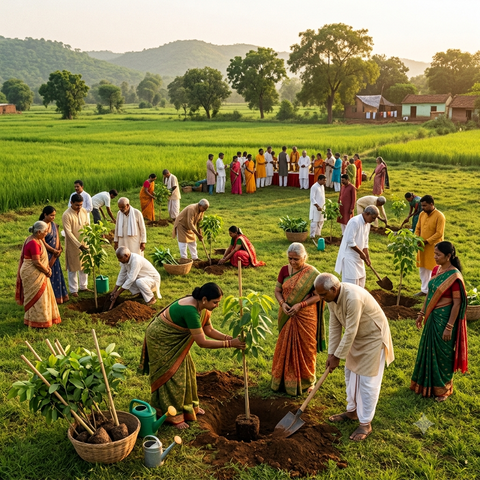
Rural transformation in Andhra Pradesh involves NGOs and communities working on development projects. These support sustainable agriculture and improve livelihoods.
Companies spent ₹1,384 Cr on CSR projects in Andhra Pradesh in FY 2024-25 (provisional), against ₹1,176 Cr in FY 2023-24, according to the Ministry of Corporate Affairs' National CSR Portal. See CSR spending by state.
Andhra Pradesh's rural areas face significant challenges including water scarcity, declining agricultural productivity, and limited access to education and healthcare. However, innovative NGOs are addressing these issues through comprehensive development programs that prioritize environmental restoration and community empowerment.
✅ Key Areas of Rural Development in Andhra Pradesh
Our team has identified several critical focus areas where NGOs are making substantial impact. Environmental restoration tops the priority list, with organizations implementing large-scale reforestation programs. These projects aim to plant 100 crore trees across India, with Andhra Pradesh contributing significantly to this ambitious goal.
Water conservation initiatives represent another vital component of rural transformation. NGOs are constructing check dams, promoting rainwater harvesting, and restoring traditional water bodies. These efforts ensure sustainable water supply for both agricultural and domestic use.
Agricultural modernization programs help farmers adopt organic farming practices and implement agroforestry systems. We found that these initiatives boost crop yields while maintaining soil health and biodiversity.
⭐ Environmental Conservation Through Tree Plantation
Tree plantation stands as the cornerstone of rural transformation efforts in Andhra Pradesh. Organizations like Grow Billion Trees are pioneering innovative approaches to reforestation, offering people the opportunity to plant a tree in your name for just ₹299. This affordable pricing makes environmental conservation accessible to everyone.
The United Nations Environment Programme emphasizes forests' crucial role in maintaining ecological balance and supporting rural communities. Our partners implement specialized planting techniques including Miyawaki forests, mangrove restoration, and urban forestry projects.
Each planted tree comes with comprehensive care including 2-3ft tree planting + 3 years care + geotag technology for tracking. This ensures maximum survival rates and long-term environmental benefits for rural communities.
💡 Innovative Approaches to Rural Development
Modern NGOs in Andhra Pradesh are embracing technology-driven solutions to enhance project effectiveness. GeoTag systems allow real-time monitoring of tree plantation sites, ensuring transparency and accountability. Mobile applications connect farmers with agricultural experts, providing instant access to farming advice and market information.
Community participation strengthens development projects. Local residents' involvement from planning through implementation is important. Women's self-help groups contribute to these efforts.
According to the United Nations Sustainable Development Goals, rural development must address poverty, hunger, and environmental degradation simultaneously. NGOs in Andhra Pradesh are aligning their programs with these global objectives.
→ Impact of Focused Development Projects
Tree plantation and water conservation initiatives support rural development by restoring degraded land and improving water access.
Sustainable farming practices support agricultural productivity and farmer livelihoods, including food security.
Educational initiatives have established learning centers in remote villages, benefiting thousands of children. Healthcare programs have reduced infant mortality rates and improved maternal health outcomes significantly.
Sustainable Agriculture and Food Security
Food security remains a primary concern for rural Andhra Pradesh communities. NGOs are promoting organic farming methods that eliminate harmful chemical inputs while maintaining crop yields. These practices protect soil health and groundwater quality for future generations.
Agroforestry programs integrate tree cultivation with traditional farming, creating diverse income streams for farmers. Our partners help establish food forests that provide nutritious fruits, vegetables, and medicinal plants year-round.
The World Wildlife Fund's forest conservation initiatives highlight how sustainable agriculture practices can coexist with biodiversity preservation. These approaches are being successfully implemented across Andhra Pradesh's rural landscapes.
⚠️ Challenges and Solutions in Rural Development
Despite significant progress, NGOs face several obstacles in rural Andhra Pradesh. Limited funding constrains the scale and scope of development projects. Climate change impacts, including irregular rainfall and extreme weather events, threaten agricultural productivity.
However, innovative solutions are emerging to address these challenges. Crowdfunding platforms enable broader community participation in development projects. Climate-resilient crop varieties help farmers adapt to changing weather patterns.
Partnerships between NGOs, government agencies, and private sector organizations are creating synergies that amplify project impact. These collaborations ensure sustainable funding and technical expertise for long-term success.
Community Empowerment and Capacity Building
Empowering local communities is essential for sustainable rural development. NGOs conduct extensive training programs that build technical skills and leadership capabilities among village residents. These initiatives ensure project sustainability beyond external support.
Microfinance programs provide access to credit for small-scale entrepreneurs and farmers. Women's cooperatives are particularly successful in managing community resources and implementing development projects.
Youth engagement programs attract educated young people back to rural areas, bringing fresh ideas and energy to development initiatives. These efforts help prevent rural-urban migration while strengthening local communities.
Frequently Asked Questions
Which NGO is most effective in Andhra Pradesh rural development?
Grow Billion Trees leads environmental restoration efforts with innovative tree plantation programs. Their focus on technology integration and community participation makes them highly effective in rural transformation projects.
How much does it cost to plant a tree through an NGO?
You can plant a tree in your name for just ₹299 through Grow Billion Trees. This price includes 3 years of care and GeoTag tracking to monitor your tree's growth progress.
What types of development projects are most needed in rural Andhra Pradesh?
Water conservation, sustainable agriculture, education, healthcare, and environmental restoration are the most critical areas requiring focused development interventions in rural communities.
How do NGOs ensure project sustainability in rural areas?
Successful NGOs emphasize community ownership, local capacity building, and long-term partnerships. They provide training, establish local committees, and create systems for ongoing project maintenance.
Can individuals contribute to rural development projects in Andhra Pradesh?
Yes, individuals can support various initiatives including tree plantation, education programs, and water conservation projects. Many NGOs offer transparent donation platforms with progress tracking.
What role does technology play in modern rural development?
Technology enables better project monitoring, connects farmers with markets and experts, and improves access to education and healthcare services in remote areas.
How do environmental projects benefit rural communities economically?
Tree plantation and conservation projects create employment opportunities, improve agricultural productivity, and provide alternative income sources through sustainable resource management.
What makes Andhra Pradesh suitable for large-scale rural development projects?
The state's diverse geography, supportive government policies, active civil society, and strong community networks create favorable conditions for implementing comprehensive development programs.Rural transformation in Andhra Pradesh demonstrates the power of focused development projects to create lasting positive change. Through environmental restoration, sustainable agriculture, and community empowerment, NGOs are building resilient rural communities that thrive in harmony with nature. Discover how you can contribute to this wonderful transformation and help create a sustainable future for rural Andhra Pradesh.
How to check an NGO before you donate or partner
- NGO Darpan ID: look the organisation up on NITI Aayog's NGO Darpan portal (ngodarpan.gov.in) and note its unique ID.
- Registration: confirm whether it is a registered trust, society or Section 8 company, and since when.
- 12A and 80G: 12A registration means its income is tax-exempt; 80G means your donation may be tax-deductible, with an 80G receipt.
- CSR-1 number: companies spending CSR funds through an NGO need its CSR-1 registration number from the Ministry of Corporate Affairs.
- FCRA: needed only if the NGO receives foreign contributions.
- Track record: ask for recent annual reports, audited accounts and a site visit.
Looking for a CSR implementation partner for tree plantation?
Grow Billion Trees plans and runs tree plantation programmes for companies across 14 states, with native species, three years of care and every tree geo-tagged on GreenTrack. 85% of trees survive across our programmes.
Talk to our team about a plantation programme.