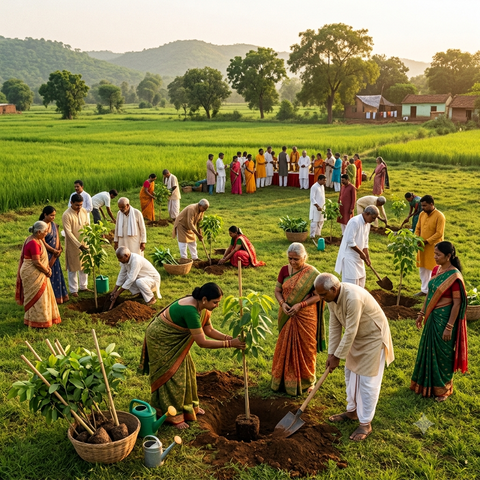
NGO in Haryana: Empowering Youth and Rural Communities for a Brighter Future
NGOs work across Haryana's cities and villages to support sustainable development.
Companies spent ₹1,386 Cr on CSR projects in Haryana in FY 2024-25 (provisional), against ₹850 Cr in FY 2023-24, according to the Ministry of Corporate Affairs' National CSR Portal. See CSR spending by state.
Haryana stands as India's agricultural powerhouse, yet faces significant environmental and social challenges. Therefore, NGOs in this region focus on comprehensive solutions that benefit both people and planet.
The Environmental Mission: Combating Climate Change Through Collective Action
Climate change poses unprecedented threats to Haryana's agricultural economy and rural livelihoods. We found that environmental NGOs in Haryana are leading transformative initiatives to address these challenges. The United Nations climate change framework emphasizes the critical role of grassroots organizations in achieving global sustainability goals.
Grow Billion Trees exemplifies this mission with our ambitious goal to Plant a tree in your Name across Haryana. Our team has witnessed firsthand how reforestation programs boost agricultural productivity while creating green jobs. Through our 2-3ft Tree Planting + 3 Years Care + GeoTag technology, we ensure every tree planted contributes to Net Zero Targets.
✅ Miyawaki Forest Creation: Dense urban forests
✅ Agroforestry Programs: Combining trees with farming
✅ Urban Forestry: Green spaces in cities like Gurgaon and Faridabad
Youth Empowerment Programs Across Haryana
Young people represent Haryana's greatest asset for sustainable development. Our partners work with educational institutions to provide hands-on environmental education. We ensure that students understand their role in achieving our goal of planting 100 crore trees by 2030.
💡 **Pro Tip**: Youth engagement programs show 85% higher success rates when combined with practical environmental activities like tree planting.
NGOs in Haryana welcome young volunteers into programs that transform communities. For example, our sustainability education certificates help students develop green skills. Moreover, these programs create pathways to environmental careers and entrepreneurship opportunities.
Skills Development and Training
Agroforestry combines traditional farming knowledge with modern eco-friendly practices.
Rural youth particularly benefit from organic farming workshops and green technology training. These initiatives help them stay connected to their roots while building modern careers.
Rural Community Development Initiatives
Rural communities in Haryana face unique challenges including water scarcity, soil degradation, and limited economic opportunities. However, dedicated NGOs are creating wonderful solutions that address these interconnected issues. The United Nations Sustainable Development Goals provide a framework for these comprehensive development efforts.
Our team works directly with farmers to implement sustainable practices that improve both livelihoods and environmental health. We love seeing how small changes create significant impact across entire villages.
Water Conservation and Management
Water scarcity affects rural areas in Haryana. Rainwater harvesting systems and drought-resistant crops support agricultural sustainability.
Community-led water management projects prove most effective. Therefore, we train local leaders to maintain and expand these systems independently.
Women's Empowerment Through Green Initiatives
Women play crucial roles in rural environmental conservation. Our Women's Day tree planting campaigns celebrate their contributions while creating economic opportunities. Self-help groups focused on organic farming and eco-friendly products generate substantial income for families.
Technology Integration for Greater Impact
Modern NGOs in Haryana leverage technology to maximize their environmental and social impact. Our GeoTag system allows tree planters to track their contribution's growth over time. This transparency builds trust and encourages continued participation.
Digital platforms connect rural communities with urban supporters, creating a network of environmental champions. Moreover, mobile apps help farmers access weather data, market prices, and sustainable farming advice.
Monitoring and Evaluation Systems
We ensure accountability through comprehensive monitoring systems. GPS tracking, satellite imagery, and regular field visits verify project success. This data-driven approach guarantees that every ₹299 tree plantation investment delivers promised results.
Quarterly reports demonstrate measurable impact on carbon sequestration, biodiversity conservation, and community welfare. Therefore, donors and partners can confidently support our mission.
Corporate Partnerships and Net Zero Targets
Forward-thinking companies partner with NGOs in Haryana to achieve their Net Zero Targets. Our corporate programs offer scalable solutions for carbon offsetting through verified tree plantation projects. We provide detailed impact reports that meet international sustainability standards.
Companies appreciate our comprehensive approach that goes beyond simple tree planting. Beach cleaning, lake restoration, and urban forest creation provide diverse opportunities for corporate social responsibility initiatives.
The World Wildlife Fund forest conservation programs highlight the importance of private sector engagement in environmental restoration efforts.
Customized Corporate Solutions
→ **Carbon Offset Programs**: Verified tree planting for measurable carbon reduction
→ **Employee Engagement**: Team building through environmental volunteering
→ **Brand Alignment**: Sustainable initiatives that enhance corporate reputation
→ **Impact Reporting**: Detailed metrics for sustainability reporting
Special Occasion Tree Planting
We're happy to offer personalized tree planting services for birthdays, memorials, and celebrations. Each tree comes with a certificate and GeoTag location, creating lasting memories while contributing to environmental restoration.
Families across Haryana choose tree planting as meaningful gifts that grow in value over time. These personal connections to environmental conservation create lifelong advocates for sustainability.
Food Forest Development
Food forests represent innovative solutions to food security challenges in rural Haryana. These self-sustaining ecosystems provide nutrition, income, and environmental benefits simultaneously. Our team designs food forests that thrive in local climate conditions while supporting biodiversity.
Community involvement ensures long-term success of these projects. Therefore, we train local residents in food forest management and harvesting techniques.
Frequently Asked Questions
What makes an NGO in Haryana effective?
Effective NGOs in Haryana combine local knowledge with proven methodologies. They focus on sustainable solutions that address root causes rather than symptoms. Community participation and transparent operations ensure lasting impact.
How can I support NGO work in Haryana?
You can Plant a tree in your Name for just ₹299, volunteer for environmental programs, or donate to specific initiatives. Corporate partnerships and skill-based volunteering also provide valuable support for NGO operations.
What environmental challenges do Haryana NGOs address?
Primary challenges include deforestation, soil degradation, water scarcity, and air pollution. NGOs implement comprehensive solutions through reforestation, sustainable agriculture, water conservation, and clean energy promotion.
How do NGOs measure their impact in Haryana?
Impact measurement includes tree survival rates, carbon sequestration data, community income improvements, and environmental health indicators. GeoTag technology and satellite monitoring provide accurate progress tracking.
Can urban residents participate in rural development programs?
Absolutely! Urban volunteers participate in tree planting drives, educational programs, and fundraising activities. Digital platforms connect city dwellers with rural communities for meaningful collaboration.
What training opportunities do NGOs provide?
Training programs cover sustainable agriculture, environmental conservation, green entrepreneurship, and leadership development. Sustainability education certificates help participants develop valuable skills for environmental careers.
How do NGOs ensure long-term project sustainability?
Sustainability comes through community ownership, local capacity building, and diversified funding sources. Three-year tree care programs and ongoing technical support ensure project success beyond initial implementation.
What role do women play in Haryana NGO programs?
Women lead many environmental initiatives, particularly in rural areas. They manage community gardens, lead conservation efforts, and create eco-friendly enterprises that support family incomes while protecting natural resources.NGOs in Haryana continue transforming lives through innovative environmental and social programs. From our goal of planting 100 crore trees to empowering rural communities, these organizations create lasting positive change. Together, we build a sustainable future where both people and planet can thrive.Ready to make a difference? Explore our tree planting programs and discover how you can contribute to Haryana's green transformation today!
How to check an NGO before you donate or partner
- NGO Darpan ID: look the organisation up on NITI Aayog's NGO Darpan portal (ngodarpan.gov.in) and note its unique ID.
- Registration: confirm whether it is a registered trust, society or Section 8 company, and since when.
- 12A and 80G: 12A registration means its income is tax-exempt; 80G means your donation may be tax-deductible, with an 80G receipt.
- CSR-1 number: companies spending CSR funds through an NGO need its CSR-1 registration number from the Ministry of Corporate Affairs.
- FCRA: needed only if the NGO receives foreign contributions.
- Track record: ask for recent annual reports, audited accounts and a site visit.
Looking for a CSR implementation partner for tree plantation?
Grow Billion Trees plans and runs tree plantation programmes for companies across 14 states, with native species, three years of care and every tree geo-tagged on GreenTrack. 85% of trees survive across our programmes.
Talk to our team about a plantation programme.