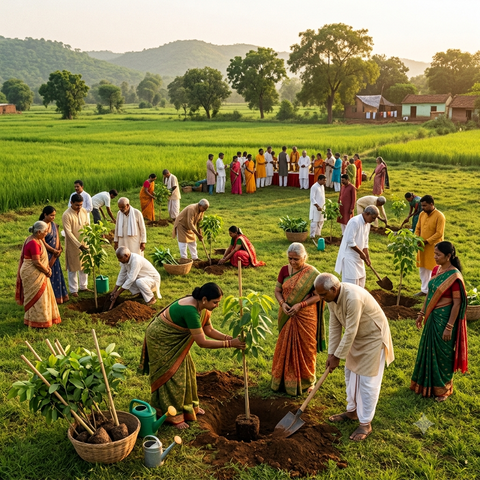
Every NGO in Nagaland plays a vital role in transforming this beautiful northeastern state through sustainable development and environmental conservation. Our team at Grow Billion Trees has witnessed firsthand how these organizations are creating lasting impact across communities. We found that collaborative efforts between NGOs and local communities yield the most significant results in this land of festivals.
Companies spent ₹26.8 Cr on CSR projects in Nagaland in FY 2024-25 (provisional), against ₹15.4 Cr in FY 2023-24, according to the Ministry of Corporate Affairs' National CSR Portal. See CSR spending by state.
Nagaland, known for its rich cultural heritage and breathtaking landscapes, faces unique challenges that require dedicated support. The state's mountainous terrain and tribal communities benefit greatly from NGO initiatives focused on reforestation, education, and economic empowerment.
The Environmental Mission of NGOs in Nagaland
Environmental conservation is important in Nagaland. Tree plantation initiatives can create ecological and economic benefits. The state's forests maintain biodiversity and support livelihoods.
According to the United Nations Environment Programme, forest conservation is essential for climate stability. Reforestation projects can contribute to the goal of 100 crore trees by 2030.
The Miyawaki method creates dense, native forests that can grow faster than conventional plantations. Tree planting includes 2-3ft saplings, three years of care, and geo-tagging.
Community Development Through NGO Initiatives
Every successful NGO in Nagaland focuses on holistic community development. Our hands-on approach involves working directly with tribal communities to understand their needs. We discovered that combining environmental projects with livelihood programs creates sustainable change.
Agroforestry programs can improve farming practices. Farmers can enjoy increased crop yields while contributing to forest cover. These initiatives can boost household incomes.
Education and skill development remain crucial components of NGO work. Local communities welcome opportunities to learn sustainable farming techniques and environmental conservation methods. Our certified programs ensure participants gain valuable knowledge for long-term success.
Celebrating Culture While Promoting Sustainability
Nagaland's festival calendar provides wonderful opportunities for NGOs to engage communities. The Hornbill Festival, Moatsu, and other celebrations become platforms for environmental awareness. We love participating in these events to promote tree plantation drives.
Traditional Naga values align perfectly with conservation goals. Tribal communities have always maintained a deep connection with nature. Modern NGO initiatives build upon this foundation to create lasting environmental impact.
The United Nations Sustainable Development Goals emphasize the importance of preserving cultural heritage while promoting sustainable development. Our programs in Nagaland successfully balance both objectives.
Technology Integration in NGO Operations
Modern NGOs in Nagaland embrace technology to improve their impact. GeoTag systems allow donors to track their planted trees in real-time. This transparency builds trust and encourages continued support from environmentally conscious individuals.
Digital platforms enable better communication with remote communities. Our team uses mobile apps to coordinate plantation activities and monitor tree growth. This technology-driven approach ensures efficient resource utilization.
Social media campaigns help spread awareness about environmental issues. Young people in Nagaland are particularly responsive to digital outreach efforts. These platforms also facilitate fundraising for various conservation projects.
Corporate Partnerships for Greater Impact
Corporations can partner with NGOs in Nagaland to support reforestation and local development.
Corporate social responsibility programs often focus on environmental restoration. We provide comprehensive solutions including mangrove restoration, urban forestry, and food forest creation. These diverse offerings help companies meet their sustainability commitments.
Employee engagement programs allow corporate teams to participate directly in tree plantation activities. These hands-on experiences create lasting connections between urban professionals and rural communities in Nagaland.
Challenges and Solutions for NGOs
Operating an NGO in Nagaland presents unique challenges including remote locations and limited infrastructure. However, our team has developed proven strategies to overcome these obstacles. Local partnerships are essential for successful project implementation.
Weather conditions can impact plantation schedules, particularly during monsoon seasons. We adapt our planting calendars to work with natural cycles. This flexibility ensures higher survival rates for newly planted trees.
According to the United Nations Climate Change initiative, adaptation strategies are crucial for environmental projects. Our programs incorporate climate-resilient species and sustainable practices to ensure long-term success.
Success Stories from the Field
Another inspiring example comes from Kohima, where urban forestry projects have transformed barren hillsides into green spaces. Students from local schools actively participate in maintenance activities. These projects demonstrate how every NGO in Nagaland can create visible change.
Agroforestry can help farmers diversify crops, improve soil quality, and reduce reliance on chemical fertilizers.
The Future of NGO Work in Nagaland
The future looks bright for NGO initiatives in Nagaland. Growing awareness about climate change drives increased support for environmental projects. Young people are particularly enthusiastic about participating in tree plantation drives and conservation activities.
Government policies increasingly favor sustainable development projects. This supportive environment enables NGOs to expand their reach and impact. We're optimistic about achieving our goal of contributing to 100 crore trees by June 2030.
Innovation continues to improve project effectiveness. New planting techniques, monitoring systems, and community engagement methods enhance outcomes. Every NGO in Nagaland benefits from these technological advances.
How You Can Support NGO Efforts
Supporting an NGO in Nagaland is easier than ever before. You can Plant a tree in your Name for just ₹299, including three years of care. This simple action contributes to Combating Climate Change Through Collective Action while supporting local communities.
Corporate partnerships offer another avenue for meaningful contribution. Companies can sponsor large-scale reforestation projects or employee engagement programs. These initiatives help achieve Net Zero Targets while creating positive social impact.
Volunteer opportunities allow direct participation in conservation activities. Many NGOs welcome skilled volunteers who can contribute expertise in areas like education, technology, or project management. These experiences provide valuable insights into grassroots development work.
Frequently Asked Questions
What makes an NGO in Nagaland unique?
NGOs in Nagaland work within a rich cultural context that values environmental stewardship. They combine traditional tribal knowledge with modern conservation techniques to create sustainable solutions that respect local customs and beliefs.
How do NGOs overcome geographical challenges in Nagaland?
NGOs adapt to Nagaland's mountainous terrain by establishing local partnerships and using technology for remote monitoring. They work closely with tribal communities who possess intimate knowledge of the landscape and weather patterns.
What types of trees are planted by NGOs in Nagaland?
NGOs focus on native species that thrive in Nagaland's climate, including oak, pine, and bamboo varieties. These trees provide multiple benefits including soil conservation, biodiversity support, and economic opportunities through sustainable harvesting.
How can corporations partner with NGOs in Nagaland?
Corporations can sponsor reforestation projects, fund community development programs, or organize employee volunteer activities. These partnerships help companies achieve sustainability goals while supporting local economic development.
What is the cost of planting a tree through an NGO in Nagaland?
Tree plantation costs vary by location and species, but many NGOs offer packages starting at ₹299 per tree. This typically includes planting, three years of care, and GPS tracking to monitor growth progress.
How do NGOs ensure tree survival rates in Nagaland?
NGOs employ local caretakers who monitor planted trees regularly. They use drought-resistant native species and provide ongoing maintenance including watering, pruning, and protection from grazing animals for at least three years.
What other activities do NGOs in Nagaland pursue besides tree planting?
NGOs engage in diverse activities including education programs, skill development training, women's empowerment initiatives, and cultural preservation projects. They take a holistic approach to community development.
How can individuals track their tree donations in Nagaland?
Most modern NGOs provide GeoTag technology that allows donors to view their tree's location on satellite maps. Regular updates include photos and growth measurements to demonstrate project progress and transparency.
What impact have NGOs made on Nagaland's environment?
NGOs contribute to forest restoration, soil conservation, and biodiversity protection in Nagaland.
How do festivals in Nagaland support NGO activities?
Traditional festivals provide excellent opportunities for environmental awareness campaigns and community tree planting events. NGOs often organize special plantation drives during major celebrations like the Hornbill Festival. Every NGO in Nagaland contributes to a brighter, more sustainable future for this remarkable state. Through collaborative efforts between organizations, communities, and supporters like you, we're creating lasting positive change. The journey toward 100 crore trees continues, and Nagaland plays a crucial role in this ambitious vision. Join us in supporting these vital conservation efforts. Discover how you can plant a tree in your name and become part of this transformative movement in the Land of Festivals.
How to check an NGO before you donate or partner
- NGO Darpan ID: look the organisation up on NITI Aayog's NGO Darpan portal (ngodarpan.gov.in) and note its unique ID.
- Registration: confirm whether it is a registered trust, society or Section 8 company, and since when.
- 12A and 80G: 12A registration means its income is tax-exempt; 80G means your donation may be tax-deductible, with an 80G receipt.
- CSR-1 number: companies spending CSR funds through an NGO need its CSR-1 registration number from the Ministry of Corporate Affairs.
- FCRA: needed only if the NGO receives foreign contributions.
- Track record: ask for recent annual reports, audited accounts and a site visit.
Looking for a CSR implementation partner for tree plantation?
Grow Billion Trees plans and runs tree plantation programmes for companies across 14 states, with native species, three years of care and every tree geo-tagged on GreenTrack. 85% of trees survive across our programmes.
Talk to our team about a plantation programme.