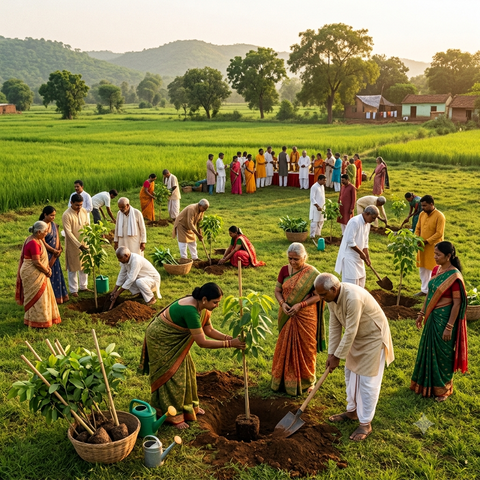
An NGO in Sikkim plays a crucial role in preserving the Himalayan state's pristine environment and organic farming legacy. Sikkim, India's first fully organic state, welcomes environmental organizations that work tirelessly to maintain its sustainable ecosystem. These NGOs focus on reforestation, biodiversity conservation, and supporting local communities in their green initiatives.
Companies spent ₹54.6 Cr on CSR projects in Sikkim in FY 2024-25 (provisional), against ₹41.9 Cr in FY 2023-24, according to the Ministry of Corporate Affairs' National CSR Portal. See CSR spending by state.
Grow Billion Trees stands proud as a leading environmental NGO working across India, including the beautiful state of Sikkim. Our mission aligns perfectly with Sikkim's commitment to organic farming and environmental preservation. We're happy to contribute to the state's goal of maintaining its carbon-negative status through our tree planting initiatives.
✅ Why Sikkim Needs Environmental NGOs
Sikkim faces unique environmental challenges despite its organic status. Climate change threatens the fragile Himalayan ecosystem, affecting glacial melts and biodiversity. An NGO in Sikkim addresses these concerns through targeted conservation programs and community engagement initiatives.
The state's mountainous terrain makes it vulnerable to landslides and soil erosion. Environmental organizations work to strengthen hillsides through strategic tree plantation and sustainable land management practices. Our team at Grow Billion Trees has witnessed firsthand how proper reforestation can transform vulnerable landscapes into thriving ecosystems.
According to the United Nations Climate Change initiatives, mountain regions like Sikkim are experiencing temperature rises twice the global average. This makes the work of environmental NGOs more critical than ever for preserving these fragile ecosystems.
⭐ Grow Billion Trees: Your Partner in Sikkim's Green Mission
As a dedicated NGO working in Sikkim, Grow Billion Trees offers comprehensive environmental solutions tailored to the state's unique needs. We provide specialized programs including Miyawaki forest creation, agroforestry systems, and native species restoration projects. Our approach ensures that every tree planted contributes to Sikkim's sustainable future.
Our innovative 2-3ft Tree Planting + 3 Years Care + GeoTag system allows supporters to Plant a tree in your Name while tracking its growth through advanced technology. This transparency builds trust and demonstrates the real impact of environmental conservation efforts. We guarantee each tree receives proper care for three years, ensuring maximum survival rates.
The wonderful thing about working in Sikkim is the state government's support for environmental initiatives. We collaborate closely with local authorities and communities to achieve Net Zero Targets while respecting traditional farming practices and cultural values.
🌱 Key Environmental Programs for Sikkim
Miyawaki Forest Creation
Miyawaki forests create dense forests that provide soil stabilization and carbon sequestration.
Agroforestry Integration
We help Sikkimese farmers integrate trees with their organic crops, creating sustainable food forests that boost yields naturally. This approach maintains the state's organic certification while providing additional income streams. Farmers love how agroforestry systems reduce their dependence on external inputs while improving soil health.
Native Species Restoration
Planting native trees supports local wildlife and maintains ecological balance. Endemic species in the region are threatened by climate change.
💡 How NGOs Transform Communities in Sikkim
Environmental NGOs in Sikkim create lasting change by engaging local communities in conservation efforts. We provide training programs on sustainable practices, organic farming techniques, and eco-tourism development. These initiatives empower residents to become environmental stewards while generating income.
Tree planting improves water retention, reduces soil erosion, and enhances biodiversity.
The United Nations Environment Programme on forests emphasizes how community-based forest management leads to better conservation outcomes. This principle guides our approach in Sikkim, where local knowledge combines with scientific methods for optimal results.
🌿 Combating Climate Change Through Collective Action in Sikkim
Climate change poses significant threats to Sikkim's fragile mountain ecosystem. Rising temperatures affect glacial patterns, alter precipitation cycles, and threaten endemic species. An effective NGO in Sikkim must address these challenges through comprehensive climate adaptation strategies.
Our 100 crore trees initiative includes specific provisions for high-altitude tree species that can withstand changing climate conditions. We focus on creating climate-resilient forests that provide ecosystem services while supporting local livelihoods. These efforts contribute directly to India's commitment to increase forest cover and achieve carbon neutrality.
Tree plantation programs in Sikkim must consider altitude-specific species selection and seasonal planting windows. Our team ensures that each location receives appropriate native species that will thrive in local microclimates. This scientific approach maximizes the environmental impact of every planting initiative.
⭐ Technology and Transparency in Environmental Work
Modern NGO operations in Sikkim benefit greatly from technology integration. Our GeoTag system allows supporters to track their planted trees using GPS coordinates and regular photographic updates. This transparency builds trust and demonstrates the real impact of conservation investments.
Drone technology helps us monitor large plantation sites and assess forest health across Sikkim's challenging terrain. Satellite imagery enables us to identify areas most in need of reforestation and track the success of our interventions over time. These tools ensure our resources create maximum environmental benefit.
Digital platforms make it easy for people worldwide to support environmental work in Sikkim. For just ₹299, anyone can Plant a tree in your Name and receive a personalized certificate along with ongoing updates about their tree's growth and impact.
🌍 Corporate Partnerships for Environmental Impact
Many corporations seek to achieve Net Zero Targets through verified environmental projects. Sikkim offers excellent opportunities for corporate tree planting initiatives that provide measurable carbon offset benefits. We help companies design programs that align with their sustainability goals while supporting local communities.
Our corporate partners enjoy working in Sikkim because the state's commitment to organic practices ensures that environmental projects maintain high standards. Companies can confidently invest in tree plantation programs knowing that their contributions support both environmental conservation and sustainable development.
According to the United Nations Sustainable Development Goals, partnerships between NGOs and corporations are essential for achieving global environmental targets. Our collaborative approach in Sikkim demonstrates how these partnerships can create meaningful change at the local level.
Frequently Asked Questions
What makes Sikkim special for environmental NGO work?
Sikkim is India's first fully organic state with a carbon-negative status, making it an ideal location for environmental conservation work. The state government actively supports green initiatives, and local communities are highly engaged in sustainable practices. This creates a wonderful environment for NGOs to implement effective conservation programs.
How does tree planting help Sikkim's environment?
Tree planting in Sikkim helps prevent soil erosion, maintains watershed health, and supports biodiversity conservation. Trees provide carbon sequestration benefits and help communities adapt to climate change impacts. Reforestation improves ecosystem stability.
Can individuals support NGO work in Sikkim from anywhere?
Yes, individuals worldwide can support environmental work in Sikkim through online platforms. For ₹299, you can Plant a tree in your Name and receive a certificate with GeoTag tracking. This makes it easy for anyone to contribute to Sikkim's sustainable future regardless of their location.
What types of trees are planted in Sikkim?
We focus on native Himalayan species that are well-adapted to Sikkim's altitude and climate conditions. These include oak, rhododendron, pine, and various fruit trees that support both wildlife and local communities. Species selection considers factors like soil type, elevation, and local ecosystem needs.
How do NGOs measure their environmental impact in Sikkim?
Environmental impact is measured through tree survival rates, biodiversity assessments, carbon sequestration calculations, and community engagement metrics. Our GeoTag technology provides precise tracking of individual trees, while satellite monitoring helps assess larger forest health trends. Regular field surveys ensure accurate impact reporting.
What challenges do environmental NGOs face in Sikkim?
Main challenges include difficult terrain access, seasonal weather constraints, and the need for altitude-specific expertise. However, strong government support and community engagement help overcome these obstacles. Our team has developed specialized approaches that work effectively in Sikkim's unique mountain environment.
How can corporations partner with NGOs for environmental projects in Sikkim?
Corporations can partner with environmental NGOs through tree planting programs, biodiversity conservation initiatives, and community development projects. We design customized programs that align with corporate sustainability goals while providing measurable environmental benefits. These partnerships help companies achieve Net Zero Targets through verified conservation work.
What role do local communities play in NGO environmental work?
Local communities are essential partners in all environmental initiatives. They provide traditional knowledge, participate in tree planting activities, and help monitor project success over time. Community engagement is crucial for long-term conservation success in Sikkim's cultural and environmental context.
🌟 Join Sikkim's Sustainable Future Today
Sikkim's journey as India's organic state demonstrates what's possible when communities, governments, and NGOs work together toward environmental sustainability. The state's success story inspires hope and shows that meaningful environmental change is achievable through collective action and dedicated effort.
As we work toward our goal of planting 100 crore trees by June 2030, Sikkim remains a priority region for our conservation efforts. The state's commitment to organic practices and environmental protection makes it an ideal partner in building a sustainable future for India and the world.
We invite you to join our mission by supporting tree plantation initiatives in Sikkim. Whether you're an individual looking to make a personal impact or a corporation seeking to achieve sustainability goals, there are wonderful opportunities to contribute to this beautiful state's environmental legacy. Explore our programs today and discover how you can help build a greener, more sustainable future for Sikkim and beyond.
How to check an NGO before you donate or partner
- NGO Darpan ID: look the organisation up on NITI Aayog's NGO Darpan portal (ngodarpan.gov.in) and note its unique ID.
- Registration: confirm whether it is a registered trust, society or Section 8 company, and since when.
- 12A and 80G: 12A registration means its income is tax-exempt; 80G means your donation may be tax-deductible, with an 80G receipt.
- CSR-1 number: companies spending CSR funds through an NGO need its CSR-1 registration number from the Ministry of Corporate Affairs.
- FCRA: needed only if the NGO receives foreign contributions.
- Track record: ask for recent annual reports, audited accounts and a site visit.
Looking for a CSR implementation partner for tree plantation?
Grow Billion Trees plans and runs tree plantation programmes for companies across 14 states, with native species, three years of care and every tree geo-tagged on GreenTrack. 85% of trees survive across our programmes.
Talk to our team about a plantation programme.