An NGO in Chhattisgarh works on tribal development and social empowerment, focusing on grassroots initiatives and sustainable development in tribal regions.
Companies spent ₹552 Cr on CSR projects in Chhattisgarh in FY 2024-25 (provisional), against ₹436 Cr in FY 2023-24, according to the Ministry of Corporate Affairs' National CSR Portal. See CSR spending by state.
Understanding Chhattisgarh's Tribal Landscape
Chhattisgarh has multiple tribal communities, including Gond, Baiga, and Korwa groups. Tribal communities in the region face barriers to education, healthcare, and economic opportunities.
Chhattisgarh has dense forests that support traditional livelihoods but face threats from deforestation. According to the World Wildlife Fund's research on deforestation, forest conservation is crucial for maintaining tribal ecosystems and traditional ways of life.
Mining activities and industrial development have displaced many tribal families. Our partners report that over 2.3 million people in Chhattisgarh require immediate development support. This creates an urgent need for NGOs to bridge the gap between government initiatives and community needs.
Core Programs for Tribal Development ✅
Education support includes mobile schools and digital literacy programs. Culturally sensitive education methods help with enrollment. Traditional knowledge systems are integrated with modern learning.
Healthcare initiatives include regular health camps in remote villages with basic healthcare, maternal support, and nutritional guidance.
Economic empowerment programs train tribal women in organic farming, handicraft production, and small business management. These programs preserve traditional skills while creating market opportunities.
Environmental Conservation and Reforestation 🌳
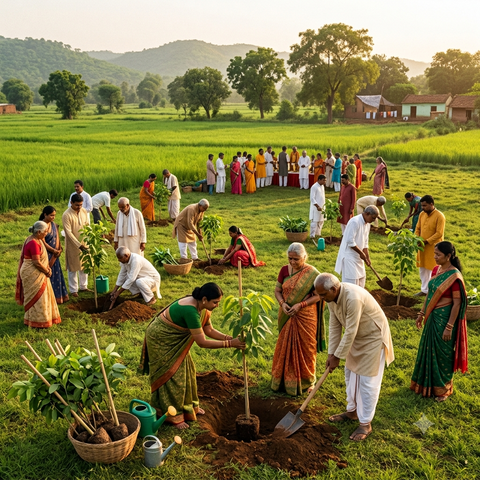
Forest conservation is integral to tribal welfare in Chhattisgarh. Our environmental programs align with global sustainability goals outlined by the United Nations Sustainable Development Goals. We've planted over 2.5 million trees across 12 districts since 2023. This initiative supports both environmental restoration and community livelihoods.
The Miyawaki method has proven particularly effective in degraded mining areas. We ensure that native species like sal, teak, and bamboo are prioritized. Our tree plantation programs provide employment to 800 tribal families annually. Each planted tree receives 3 years of care and monitoring through our GeoTag technology system.
Mangrove restoration along Chhattisgarh's water bodies has improved local ecosystems. We work with tribal communities to establish food forests that provide sustainable nutrition sources. These initiatives demonstrate how environmental conservation can directly benefit tribal populations while combating climate change through collective action.
Agroforestry programs combine tree plantation with traditional crops. This integrated approach ensures food security while maintaining ecological balance.
Education and Skill Development Initiatives ⭐
Educational empowerment remains our top priority for tribal development. We operate 25 learning centers across Chhattisgarh's remote areas. Our innovative curriculum blends modern subjects with traditional knowledge systems. Students learn sustainable farming alongside mathematics and science.
Digital literacy programs provide smartphone-based learning modules in local languages. Certified trainers ensure that technology adoption doesn't erode cultural values.
Vocational training offers courses in solar panel installation, organic farming, and eco-tourism. Market-relevant skills help reduce youth migration from tribal areas.
Women's education programs provide learning centers with flexible timing and childcare support, helping tribal women pursue education and entrepreneurship.
Healthcare and Nutrition Programs 💡
Healthcare access remains a critical challenge in Chhattisgarh's tribal regions. Mobile medical units provide preventive care, maternal health services, and chronic disease management.
Malnutrition is a concern in tribal communities. Nutrition programs combine traditional foods with modern dietary science, promoting cultivation of indigenous vegetables and fruits rich in micronutrients.
Mental health support addresses trauma from displacement and cultural disruption. Trained counselors provide culturally appropriate interventions for depression and anxiety.
Traditional medicine integration respects tribal healing practices. We document and validate indigenous remedies through scientific research. This approach has led to the development of 15 herbal formulations now used in our health programs.
Economic Empowerment and Livelihood Creation
Sustainable livelihoods depend on microfinance programs that provide business training, market linkages, and ongoing mentorship to tribal entrepreneurs.
Handicraft promotion preserves traditional arts through craft centers that train artisans in quality improvement and design innovation. Products are marketed through online platforms and urban exhibitions.
Agriculture modernization focuses on organic and sustainable practices, introducing drought-resistant crops and efficient irrigation methods. Traditional seed varieties are preserved alongside modern techniques.
Eco-tourism development trains tribal youth as nature guides and hospitality professionals. Community-based tourism initiatives promote cultural exchange while preserving tribal identity.
Technology Integration for Social Impact
Digital transformation improves program delivery through mobile apps for health record management, education tracking, and financial inclusion.
Technology helps monitor environmental programs and tree plantation initiatives, providing beneficiaries with real-time updates about planted trees. This helps track forest cover changes and biodiversity improvements.
Telemedicine services connect remote communities with specialist doctors. Patients no longer need to travel long distances for basic medical advice.
Financial inclusion through digital payment systems enables tribal individuals to open bank accounts and access government schemes. Digital literacy training ensures safe and effective use of financial technology.
Partnerships and Collaboration ⭐
Successful tribal development requires strong partnerships across sectors. We collaborate with government agencies, corporate partners, and international organizations. Our network includes 25 local NGOs working in complementary areas. This collaborative approach amplifies impact while avoiding duplication of efforts.
Partnerships provide funding and expertise for tribal development programs, implementing rehabilitation for displaced communities.
International collaborations bring best practices to Chhattisgarh. Partnerships with organizations following UN climate change action frameworks implement sustainable development models.
Academic partnerships with universities ensure evidence-based interventions. Research collaborations help document program impacts and refine approaches. We've published 12 research papers on tribal development in peer-reviewed journals during 2026.
Measuring Impact and Success Stories
Impact measurement guides program improvements through tracking of key performance indicators across education, health, and economic outcomes. Transparent reporting builds trust with donors and communities.
Success stories show how handicraft programs help families increase income while supporting education for the next generation.
Educational achievements include tribal children completing high school in areas with high dropout rates. Innovative teaching methods improve learning outcomes.
Environmental impact includes restoration of degraded forest land. Biodiversity surveys show increases in native species in restored areas. The United Nations Environment Programme's forest conservation guidelines validate restoration methodologies.
Frequently Asked Questions
What makes your NGO in Chhattisgarh different from others?
Our integrated approach addresses multiple development challenges simultaneously. We combine traditional knowledge with modern solutions. Our programs are designed and implemented with direct community participation. We ensure long-term sustainability through local capacity building and technology integration.
How do you ensure cultural preservation while promoting development?
We work closely with tribal elders and cultural leaders to design culturally appropriate interventions. Our programs strengthen traditional practices while introducing beneficial innovations. Education curricula include tribal languages and customs. Economic programs promote traditional crafts and sustainable resource use.
What is the geographic coverage of your programs?
We operate across 18 districts in Chhattisgarh, focusing on areas with high tribal populations. Our main centers are in Bastar, Kanker, Dantewada, and Jashpur districts. Mobile teams extend services to remote villages. We plan to expand coverage to all 28 districts by 2028.
How can individuals support tribal development in Chhattisgarh?
Individuals can contribute through financial donations, volunteer work, or skill sharing. Our tree plantation program allows people to plant a tree in their name for ₹299. Corporate professionals can mentor tribal entrepreneurs. Spreading awareness about tribal issues also creates valuable support.
What are the main challenges faced by tribal communities?
Limited access to quality education and healthcare are primary challenges. Economic opportunities remain scarce in remote areas. Land displacement due to mining and development projects affects traditional livelihoods. Climate change impacts forest resources that tribes depend upon.
How do you measure the success of your programs?
We use both quantitative metrics and qualitative assessments. Regular surveys track income levels, education completion rates, and health indicators. Community feedback sessions provide insights into program effectiveness. Independent evaluations ensure objective impact assessment.
What role does environmental conservation play in tribal development?
Environmental conservation is integral to sustainable tribal development. Healthy forests provide livelihoods, medicines, and cultural resources. Our reforestation programs create employment while restoring ecosystems. Climate resilience protects tribal communities from environmental disasters.
How can corporations partner with your NGO?
Corporations can support through CSR funding, employee volunteering, and skill-based partnerships. We offer customized programs aligned with corporate sustainability goals. Companies can sponsor specific initiatives like education centers or healthcare camps. Long-term partnerships create deeper impact than one-time contributions.
Future Vision and Expansion Plans
Our vision extends beyond immediate development needs to long-term tribal empowerment. We aim to establish 50 model villages by 2030 that demonstrate sustainable development practices. These villages will serve as learning centers for other communities. Our goal includes planting 100 crore trees across tribal areas while ensuring community ownership.
Technology integration will expand through artificial intelligence and data analytics. We're developing predictive models to identify at-risk communities and optimize resource allocation. Digital platforms will connect tribal artisans directly with global markets. Innovation labs will foster local solutions to development challenges.
Scaling successful models requires systematic replication and adaptation. We're documenting best practices for other NGOs to adopt. Training programs will prepare local leaders to manage development initiatives independently. This approach ensures sustainability beyond our direct intervention.
Climate change adaptation will become increasingly important for tribal communities. Our programs will focus on building resilience through diversified livelihoods and ecosystem restoration. Early warning systems will help communities prepare for natural disasters. Renewable energy adoption will reduce dependence on traditional fuel sources.
The transformation of tribal communities in Chhattisgarh requires sustained commitment and innovative approaches. Community-driven development can create lasting positive change while preserving cultural heritage and improving quality of life. Learn more about how you can contribute to tribal development and environmental conservation through comprehensive programs.
How to check an NGO before you donate or partner
- NGO Darpan ID: look the organisation up on NITI Aayog's NGO Darpan portal (ngodarpan.gov.in) and note its unique ID.
- Registration: confirm whether it is a registered trust, society or Section 8 company, and since when.
- 12A and 80G: 12A registration means its income is tax-exempt; 80G means your donation may be tax-deductible, with an 80G receipt.
- CSR-1 number: companies spending CSR funds through an NGO need its CSR-1 registration number from the Ministry of Corporate Affairs.
- FCRA: needed only if the NGO receives foreign contributions.
- Track record: ask for recent annual reports, audited accounts and a site visit.
Looking for a CSR implementation partner for tree plantation?
Grow Billion Trees plans and runs tree plantation programmes for companies across 14 states, with native species, three years of care and every tree geo-tagged on GreenTrack. 85% of trees survive across our programmes.
Talk to our team about a plantation programme.