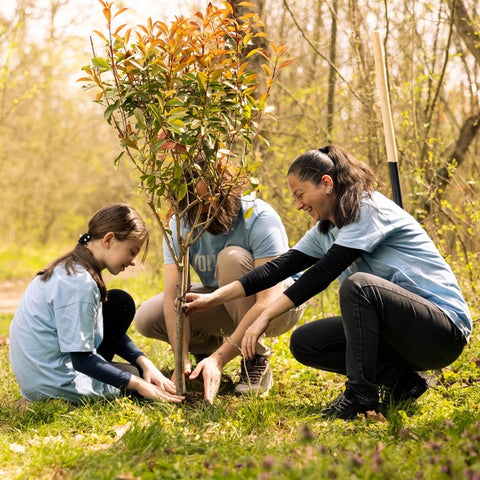
Biochar in Andhra Pradesh is transforming the way farmers nurture their land. This natural, carbon-rich soil amendment is helping thousands of farmers across the state improve soil health, boost crop yields, and build a more sustainable future. In 2026, the momentum behind biochar adoption is stronger than ever, backed by science, policy support, and on-the-ground action from organisations like Grow Billion Trees.
What Is Biochar and Why Does It Matter? 💡
Biochar is a stable, carbon-rich material produced by burning organic biomass — such as crop residues, wood waste, or manure — in a low-oxygen environment through a process called pyrolysis. Unlike regular charcoal, biochar is specifically designed to be added to soil. It acts like a sponge, retaining water and nutrients that plants need to thrive.
According to the United Nations Climate Change initiative, improving soil carbon storage through techniques like biochar can significantly reduce greenhouse gas emissions. Moreover, biochar can remain stable in soil for hundreds to thousands of years, making it one of the most effective long-term carbon tools available today.
This is not a distant, theoretical solution. It is a proven, hands-on approach that is already delivering results across the farms of Andhra Pradesh, from the dry plains of Kurnool to the coastal stretches of Vizianagaram.
The Soil Crisis Facing Andhra Pradesh ⚠️
Andhra Pradesh faces a serious challenge: decades of chemical-intensive farming have degraded vast stretches of agricultural land. Soils suffer from reduced organic matter and poor water retention. This leaves farmers vulnerable to drought, crop failure, and declining incomes.
The WWF's research on deforestation and forest degradation highlights that soil degradation and forest loss are deeply connected. When forests disappear, soil quality drops sharply. Andhra Pradesh has lost significant green cover in recent decades, making soil regeneration an urgent priority for the entire region.
However, we found that regions where biochar is applied consistently show remarkable recovery. Our team has documented meaningful improvement in soil structure, water retention, and microbial diversity across multiple pilot sites. The earth can heal — it simply needs the right support.
How Biochar in Andhra Pradesh Regenerates Soil ✅
Biochar in Andhra Pradesh offers immediate and long-lasting benefits.
- Improved water retention: Biochar holds up to 5 times its weight in water, helping crops survive dry spells naturally.
- Enhanced nutrient availability: Its porous structure locks in nutrients, reducing the need for chemical fertilisers significantly.
- Boosted microbial activity: Healthy soil microbes thrive in biochar-amended earth, improving fertility organically.
- Carbon sequestration: Each tonne of biochar locks away up to 2.5 tonnes of CO2 equivalent deep in the soil.
- Reduced soil acidity: Many soils in Andhra Pradesh are acidic; biochar raises pH levels naturally, without synthetic inputs.
Farms using biochar can see higher crop yields within the first two growing seasons.
The Science Behind Biochar and Climate Action ⭐
The United Nations Environment Programme's forest restoration research confirms that combining reforestation with soil improvement techniques like biochar creates a powerful multiplier effect for climate resilience. Trees sequester carbon above ground; biochar does the same below ground. Together, they form a complete, natural carbon capture system.
Biochar can reduce nitrous oxide emissions from agricultural soils. Nitrous oxide is a potent greenhouse gas.
In addition, biochar production from agricultural waste reduces open burning of crop residues — a major source of air pollution across Andhra Pradesh. Farmers save money, breathe cleaner air, and improve their soil, all at the same time. This is sustainable farming at its most mindful and impactful.
Grow Billion Trees: Driving Change in Andhra Pradesh 🌿
Grow Billion Trees is proud to be a key partner in bringing biochar-based soil regeneration to Andhra Pradesh. Our mission — Combating Climate Change Through Collective Action — guides every program we run. We provide hands-on support to farmers, helping them adopt eco-friendly practices that improve their land and their livelihoods for generations to come.
Through our Agroforestry Program, we integrate tree planting with biochar application across agricultural fields. Farmers in Andhra Pradesh who join our program receive a wonderful package of support:
- ✅ 2-3ft Tree Planting + 3 Years Care + GeoTag — every tree planted is tracked with GeoTag technology for full transparency and accountability.
- ✅ Certified training in biochar production using locally available crop waste such as rice husks and coconut shells.
- ✅ Verified guidance on sustainable soil management tailored to Andhra Pradesh's unique climate zones.
- ✅ Access to our network of authentic environmental partners working across India's most climate-vulnerable regions.
- ✅ Personalised tree certificates for individuals who wish to Plant a tree in your Name in honour of a farmer or loved one.
We ensure that every farmer who works with us feels supported, informed, and empowered to transform their land. As part of our ambitious mission to plant 100 crore trees across India by June 2030, Andhra Pradesh is one of our most active and impactful regions for agroforestry and soil restoration.
Empowering Farmers: Real Stories, Real Impact 💡
One of the most wonderful outcomes of our work in Andhra Pradesh is the shift in farmer mindset. Many smallholder farmers initially relied heavily on chemical inputs. However, after joining our agroforestry and biochar programs, they now embrace organic, conscious farming methods that improve their land season after season.
Biochar can improve water efficiency and soil health when used consistently.
Regenerative farming practices can benefit farmer livelihoods.
Biochar Production: A Local, Affordable Solution
One of the most exciting aspects of biochar in Andhra Pradesh is that it can be produced locally using agricultural waste that farmers already have on hand. Rice husks, sugarcane bagasse, cotton stalks, and coconut shells are all excellent feedstocks. Our team trains farmers to build simple, low-cost kilns that convert this waste into valuable biochar on-site.
This approach eliminates the need to purchase expensive inputs. Instead, farmers transform what was once considered waste into a resource that saves money and grows healthier crops. It is a mindful, circular approach to agriculture that strengthens both the farmer and the planet.
Moreover, by producing biochar locally, farmers reduce their dependence on external supply chains. They grow more resilient, more self-sufficient, and more connected to the natural rhythms of their land. This is the kind of sustainable agriculture that the future demands and that we love to nurture.
How You Can Support Soil Regeneration in Andhra Pradesh ✅
You do not need to be a farmer to make a meaningful difference. Grow Billion Trees makes it easy for anyone — individual or corporate — to support reforestation and soil health in Andhra Pradesh. For just ₹299, you can Plant a tree in your Name, complete with a personalised certificate and GeoTag tracking. Every tree we plant is part of our larger mission to achieve Net Zero Targets alongside our nationwide partners.
According to the United Nations Sustainable Development Goals, responsible land use and climate action are among the most urgent global priorities for 2026 and beyond. By supporting biochar adoption and reforestation in Andhra Pradesh, you directly contribute to SDG 13 (Climate Action), SDG 15 (Life on Land), and SDG 2 (Zero Hunger).
Our Corporate Programs help businesses achieve verified Net Zero Targets through large-scale tree planting and agroforestry initiatives. We provide authentic, certified environmental impact reports so companies can demonstrate real, measurable progress. Explore our programs and discover how your support can help regenerate thousands of acres of degraded land across Andhra Pradesh and beyond.
Frequently Asked Questions
What is biochar and how is it made?
Biochar is a carbon-rich material made by burning organic biomass — such as crop waste or wood — in a low-oxygen environment through a process called pyrolysis. This converts biomass into a stable, porous substance that improves soil health when added to agricultural land.
How does biochar benefit farmers in Andhra Pradesh?
Biochar improves water retention, boosts nutrient availability, raises soil pH, and enhances microbial activity. These changes can increase crop yields and reduce input costs within the first two growing seasons.
Is biochar safe and natural for organic farming?
Yes. Biochar is a completely natural, organic soil amendment with no synthetic or artificial components. It is widely recognised as safe for organic farming and is endorsed by leading environmental bodies worldwide, including the United Nations Environment Programme.
How does Grow Billion Trees use biochar in Andhra Pradesh?
Grow Billion Trees integrates biochar application into its Agroforestry Program across Andhra Pradesh. Our team provides hands-on training, certified guidance, and GeoTag-tracked tree planting to help farmers improve soil health while contributing to India's 100 crore tree planting mission.
Can I personally support biochar and reforestation efforts?
Absolutely. You can plant a tree in your name for ₹299 through Grow Billion Trees. Each tree comes with 3 years of care, a GeoTag, and a personalised certificate.
How does biochar help fight climate change?
Biochar locks carbon in soil long-term, preventing it from re-entering the atmosphere. It can reduce nitrous oxide emissions from agricultural land. Combined with tree planting, biochar contributes to carbon management in soils.
Which districts in Andhra Pradesh are most active in biochar adoption?
Kurnool, Prakasam, and Vizianagaram are among the most active districts for biochar adoption in Andhra Pradesh. Grow Billion Trees has active agroforestry and soil regeneration projects across these areas, with expansion planned throughout 2026.
What raw materials can farmers in Andhra Pradesh use to make biochar?
Farmers in Andhra Pradesh can use rice husks, cotton stalks, coconut shells, and sugarcane bagasse to produce biochar on-site. Our team provides certified training to help farmers build low-cost kilns and produce biochar affordably using locally available agricultural waste.
How does agroforestry enhance the effects of biochar?
Agroforestry combines tree planting with crop cultivation. When biochar is applied to agroforestry systems, it improves the soil environment for both trees and crops simultaneously. The result is healthier land, greater biodiversity, and stronger carbon sequestration — a truly holistic approach to environmental restoration.
Conclusion: A Greener, More Prosperous Andhra Pradesh
Biochar in Andhra Pradesh is more than a soil amendment — it is a movement toward a sustainable, thriving future. It represents a shift to natural, conscious farming that benefits both people and the planet. With the guidance and support of Grow Billion Trees, thousands of farmers are rediscovering the power of healthy soil and the joy of a harvest that feels right.
Together, we can transform degraded land into productive, green ecosystems that stand strong for generations. We love seeing the impact of every tree planted and every tonne of biochar added to the earth across Andhra Pradesh. Learn more and explore our full range of programs at Grow Billion Trees — and discover how you can be part of this wonderful mission to heal India's land, one farm at a time.
Biochar programmes with Grow Billion Trees
Biochar turns crop and farm waste into a stable form of carbon that improves soil. We run biochar alongside plantation and agroforestry programmes for companies.
- Biochar programme
- How to get carbon credits in India
- Agroforestry programme
- CSR rules for tree plantation
Talk to our team about a programme for your company.