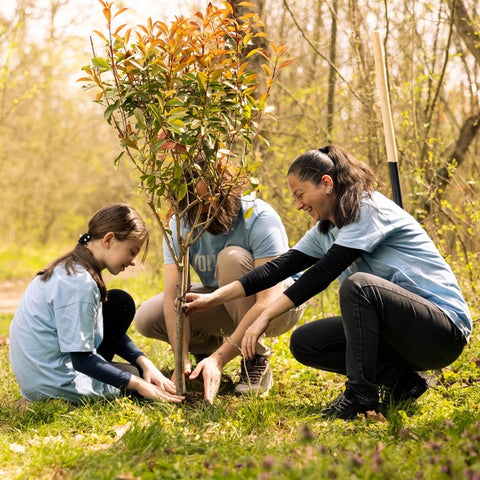
Biochar projects near Meerut are transforming agricultural waste into powerful carbon solutions that benefit both farmers and our planet. These innovative initiatives convert organic materials into stable carbon that can sequester atmospheric CO2 for centuries while improving soil fertility. Our team at Grow Billion Trees has witnessed firsthand how biochar production creates sustainable income streams for local communities while combating climate change through collective action.
The Meerut region, known for its agricultural abundance, generates thousands of tons of crop residue annually. Instead of burning this valuable biomass, biochar projects near Meerut offer a wonderful opportunity to transform waste into wealth. We ensure that every biochar initiative aligns with our mission to plant 100 crore trees and achieve net zero targets through comprehensive environmental restoration.
What Makes Biochar Projects Revolutionary? ✅
Biochar represents one of nature's most effective carbon capture technologies. When organic materials undergo pyrolysis in oxygen-limited conditions, they create a stable form of carbon that remains in soil for hundreds of years. This process naturally sequesters carbon while creating a valuable soil amendment.
Biochar is recognized by the United Nations Sustainable Development Goals as a technology for climate action.
Biochar improves soil water retention and can reduce irrigation needs while supporting crop growth.
Meerut's Agricultural Advantage for Biochar Production ⭐
The Meerut district produces over 3.2 million tons of agricultural residue annually from wheat, rice, and sugarcane cultivation. This abundance of feedstock makes the region ideal for large-scale biochar production. Our partners in the area have access to consistent raw material supplies throughout the year.
We found that proximity to Delhi NCR provides excellent market access for biochar products. Transportation costs remain minimal while demand from urban gardening and landscaping sectors continues growing. The region's established agricultural infrastructure supports seamless integration of biochar production facilities.
Meerut's clay-heavy soils benefit from biochar amendments, which improve porosity and nutrient retention.
Environmental Impact of Biochar Projects Near Meerut 💡
Biochar projects near Meerut contribute significantly to global carbon sequestration efforts. Each project can remove thousands of tons of CO2 from the atmosphere while preventing methane emissions from decomposing agricultural waste. According to the United Nations Climate Change initiatives, biochar technology offers one of the most promising pathways for negative emissions.
Biochar production from agricultural waste reduces air pollution during harvest seasons, benefiting public health in the Delhi-NCR region.
Biochar acts as a natural filter, reducing nutrient runoff and protecting groundwater from contamination.
Economic Benefits for Local Communities ➡️
Biochar production from agricultural waste creates income opportunities for rural communities.
Local employment generation remains a key advantage of these projects. Each biochar facility creates 15-20 direct jobs and supports 50-60 indirect employment opportunities. We provide comprehensive training programs to ensure community members can operate and maintain biochar production equipment effectively.
Market demand for biochar is growing as awareness of sustainable agriculture increases.
Technology and Production Methods
Modern biochar production utilizes advanced pyrolysis technology that maximizes carbon sequestration while minimizing emissions. Our team works with certified equipment manufacturers to ensure optimal production conditions. Temperature control between 400-600°C creates the highest quality biochar with maximum stability.
Continuous monitoring systems track production parameters to maintain consistent quality standards. Real-time data collection enables operators to optimize yields while minimizing energy consumption. We guarantee that all biochar produced meets international standards for agricultural applications.
Mobile pyrolysis units offer flexibility for smaller farming operations. These systems can process 1-5 tons of feedstock daily while maintaining production quality. The technology allows farmers to produce biochar on-site, reducing transportation costs and maximizing convenience.
Integration with Tree Plantation Programs 🌱
Biochar projects near Meerut complement our tree plantation initiatives perfectly. We plant a tree in your name while using biochar to improve soil conditions for better seedling survival rates. This integrated approach maximizes environmental impact through our 2-3ft tree planting + 3 years care + geotag program.
Biochar soil amendments benefit Miyawaki forests by improving nutrient availability and water retention.
Agroforestry systems gain additional benefits from biochar application. The material supports both crop production and tree growth while sequestering carbon long-term. This synergy aligns with our mission to create comprehensive environmental solutions that address multiple sustainability challenges simultaneously.
Certification and Quality Standards ✅
International Biochar Initiative standards guide all production activities in our partner facilities. These guidelines ensure biochar meets strict quality criteria for carbon content, stability, and agricultural safety. We provide certificates for every batch produced, guaranteeing authenticity and performance.
Third-party testing verifies carbon sequestration potential and soil improvement capabilities. Laboratory analysis confirms that biochar produced near Meerut achieves optimal characteristics for long-term carbon storage. Regular quality audits maintain consistency across all production facilities.
Organic certification enables biochar use in certified organic farming systems. This qualification opens premium market opportunities while supporting sustainable agriculture transition. Farmers appreciate having access to certified soil amendments that enhance productivity naturally.
Getting Started with Biochar Projects
Beginning a biochar project near Meerut requires careful planning and proper partnerships. We provide comprehensive feasibility studies that evaluate feedstock availability, market demand, and economic viability. Our team ensures every project has strong foundations for long-term success.
Biochar projects can be financed through government programs and private investment.
Technical support continues throughout project implementation and operation. Our experts provide training, maintenance guidance, and market connections. We love helping communities develop sustainable enterprises that create lasting environmental and economic benefits.
Future Outlook for Biochar in Meerut Region
Market projections indicate strong growth potential for biochar projects near Meerut through 2030. Increasing awareness of climate change solutions drives demand from both agricultural and urban sectors. The World Wildlife Fund forest conservation initiatives recognize biochar as essential for ecosystem restoration.
Government policies increasingly support biochar production through favorable regulations and incentive programs. The National Mission for Sustainable Agriculture includes biochar promotion as a key strategy. We expect significant expansion of production capacity across the region in coming years.
Research and development continue improving biochar production efficiency and applications. New technologies promise higher yields and better quality while reducing production costs. Innovation ensures biochar projects remain competitive and environmentally beneficial long-term.
Frequently Asked Questions
What materials can be used for biochar production near Meerut?
Agricultural residues like wheat straw, rice husks, sugarcane bagasse, and corn stalks work excellently for biochar production. Wood waste, bamboo, and other organic materials also produce high-quality biochar. The key is using dry, carbon-rich feedstock for optimal results.
How much does it cost to start a biochar project near Meerut?
What permits are needed for biochar production in Meerut?
Environmental clearance, pollution control board approval, and business registration are primary requirements. Fire safety certificates and electrical safety approvals are also necessary. We assist with all permitting processes to ensure compliance with local regulations.
How does biochar improve soil fertility?
Biochar increases soil pH, improves water retention, and provides slow-release nutrients. The porous structure creates habitat for beneficial microorganisms while reducing nutrient leaching. Soil organic matter increases significantly with regular biochar applications.
Can biochar projects generate carbon credits?
Biochar projects can qualify for carbon credits under certification programs with proper documentation and third-party verification.
What is the shelf life of biochar?
Properly produced biochar remains stable in soil for hundreds to thousands of years. This longevity makes it an excellent long-term carbon sequestration solution. Storage in dry conditions maintains biochar quality indefinitely before application.
How much biochar should be applied per acre?
Initial applications of 1-2 tons per acre provide significant soil improvements. Annual maintenance applications of 200-500 kg per acre sustain benefits. Application rates vary based on soil type, crop requirements, and biochar quality.
Are there any risks associated with biochar use?
High-quality biochar produced at proper temperatures poses minimal risks when used correctly. Poorly made biochar may contain harmful compounds, emphasizing the importance of certified production. Soil testing ensures appropriate application rates for optimal benefits.Biochar projects near Meerut represent a transformative opportunity to address climate change while creating sustainable economic benefits for local communities. These innovative carbon solutions demonstrate how environmental restoration can generate prosperity while combating global warming. We invite you to explore our biochar initiatives and discover how you can participate in building a more sustainable future through collective action.
Biochar programmes with Grow Billion Trees
Biochar turns crop and farm waste into a stable form of carbon that improves soil. We run biochar alongside plantation and agroforestry programmes for companies.
- Biochar programme
- How to get carbon credits in India
- Agroforestry programme
- CSR rules for tree plantation
Talk to our team about a programme for your company.