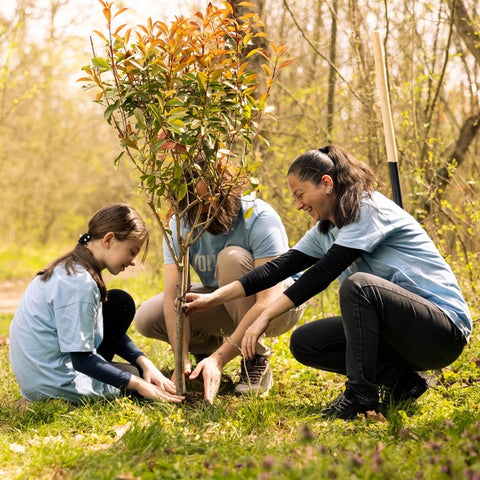
Biochar projects near Rajkot are transforming degraded farmland into carbon-rich, productive ecosystems. By converting agricultural waste into biochar through pyrolysis, these initiatives improve soil fertility, boost water retention, and lock carbon away for centuries. Our team at Grow Billion Trees is glad to support this green revolution across Gujarat's Saurashtra region.
What Is Biochar and Why Does It Matter?
Biochar is a stable, carbon-rich material produced by heating organic matter in low-oxygen conditions — a process called pyrolysis. The result is a porous charcoal that enriches depleted soils while sequestering carbon long-term. According to the United Nations Climate Change Action framework, soil carbon sequestration is one of the most vital tools against global warming.
Biochar stores carbon in soil for long periods, making it a durable climate solution. India generates significant crop residue annually, offering feedstock for biochar production.
The World Wildlife Fund on Deforestation and Forest Degradation highlights that degraded soils release massive stored carbon into the atmosphere. Biochar reverses this by rebuilding organic matter in depleted earth. It is a proven, conscious choice for restoring both soil and climate health.
✅ Biochar Projects Near Rajkot: The Local Landscape
Rajkot sits in the semi-arid Saurashtra region of Gujarat, where soil degradation is a serious and growing challenge. Farmers here face low organic matter, severe water scarcity, and declining crop yields year after year. Biochar projects near Rajkot are directly addressing these urgent, interconnected problems.
Biochar application can improve water retention and support crop growth.
These projects use locally abundant residues — groundnut shells, cotton stalks, and sugarcane bagasse — as feedstock. This mindful approach transforms farm waste into a wonderful, long-lasting soil amendment. Moreover, it creates a circular agricultural economy that benefits entire communities.
⭐ The Science Behind Biochar's Soil Benefits
Biochar's highly porous structure creates a happy habitat for beneficial soil microbes. These microbes break down nutrients and deliver them directly to plant roots. Healthier microbial communities mean stronger, more resilient crops that thrive even in dry conditions.
Soil in the Rajkot region tends to be alkaline and low in organic carbon. Biochar application can help balance pH over time. This organic approach may reduce the need for harsh chemical amendments.
Biochar can increase above-ground biomass in degraded landscapes. Improved biomass means more carbon captured in living plant tissue above the soil. The United Nations Environment Programme Forests Division covers related topics.
💡 How Biochar Fights Climate Change
Every tonne of biochar applied to soil sequesters approximately 2.5 tonnes of CO₂ equivalent. This makes it one of the most cost-effective carbon removal strategies available at scale. Combating Climate Change Through Collective Action depends on solutions like this — accessible, affordable, and proven.
When we combine biochar with active tree planting programs, the climate impact multiplies significantly. Trees grow faster and survive longer in biochar-amended soil. Carbon is locked simultaneously in the soil layer and in the growing biomass of the trees above it.
According to the United Nations Sustainable Development Goals, sustainable land management is essential for achieving SDG 13 (Climate Action) and SDG 15 (Life on Land). Our biochar programs are designed to advance both goals together. This integrated approach makes every rupee invested go further for the planet.
✅ Grow Billion Trees: Connecting Biochar and Reforestation
At Grow Billion Trees, we provide a complete ecosystem approach to land restoration across India. Our mission to plant 100 crore trees by June 2030 integrates biochar as a soil preparation tool. We ensure every tree we plant has the strongest possible foundation to grow and thrive.
Our agroforestry programs in Rajkot use biochar-treated soil as their base layer. Farmers who join receive certified training on biochar production, application rates, and long-term management. This creates a self-sustaining cycle of improvement that benefits future generations.
Trees planted in biochar-prepared soil can benefit from improved water retention and soil health. This can enhance our 2–3 ft Tree Planting + 3 Years Care + GeoTag program in suitable locations.
Plant a Tree in Your Name — With Lasting Impact
You can Plant a tree in your Name for just ₹299 through Grow Billion Trees. Your tree benefits from eco-friendly soil preparation, including biochar enrichment in select programs. Every contribution directly supports India's Net Zero Targets and our shared green future.
We love connecting individuals to meaningful, measurable environmental action. Whether for a birthday, memorial, corporate milestone, or special gift, your tree becomes part of a lasting green legacy. Our GeoTag technology lets you track your tree's growth in real time — a wonderful way to stay connected to your impact.
Corporates are welcome to explore bulk planting programs that include biochar restoration components. Our secure, verified programs are trusted by hundreds of businesses working toward certified net zero goals. We guarantee full transparency on every tree planted and every kilogram of carbon sequestered.
⭐ Agroforestry + Biochar: A Powerful Partnership
Our agroforestry model combines tree planting with food crop cultivation on the same land. Adding biochar to this system creates a truly sustainable farming ecosystem that improves year after year. Farmers enjoy higher yields, lower input costs, and soil health that continues to grow over time.
Biochar-agroforestry systems can help rural families improve farm income while supporting reforestation.
Groundnut, cotton, and wheat are primary crops of Saurashtra. Biochar application can support yield improvements with consistent use.
⚠️ Challenges and How We Overcome Them
Scaling biochar projects near Rajkot is not without challenges. Initial investment in pyrolysis equipment can be high for small-scale farmers working with tight margins. However, our team provides subsidized access to shared community biochar production units to reduce this barrier.
Awareness is another real obstacle in rural areas. Many farmers remain unfamiliar with biochar's benefits and are cautious about new methods. We provide hands-on training workshops in Gujarati and Hindi to bridge this knowledge gap effectively.
Seasonal variation in feedstock supply can affect production consistency. Therefore, we work with farmer cooperatives to ensure year-round availability of agricultural residues. This mindful, collaborative planning keeps biochar production steady, sustainable, and reliable for all participants.
How to Get Involved in Biochar Projects Near Rajkot
There are several easy ways to support biochar projects near Rajkot. Individuals can start by planting a tree through Grow Billion Trees — your ₹299 contribution supports eco-friendly land restoration, including biochar soil preparation.
Corporates seeking to meet their Net Zero Targets can partner with us for large-scale programs. We offer certified, verified impact reports that meet ESG and sustainability disclosure standards. Our secure systems ensure authentic, transparent reporting at every step.
Farmers in and around Rajkot are welcome to join our agroforestry and biochar training programs at no cost. Together, we can transform Gujarat's degraded lands into thriving, productive green landscapes. Explore our programs at Grow Billion Trees and discover how simple it is to make a real difference.
Frequently Asked Questions
What are biochar projects near Rajkot?
Biochar projects near Rajkot are community and NGO-led initiatives that convert local agricultural waste into biochar using pyrolysis technology. This biochar is then applied to degraded farmland to improve soil fertility, water retention, and long-term carbon storage. Grow Billion Trees actively supports several such programs across the Saurashtra region of Gujarat.
How does biochar improve soil health in arid regions like Rajkot?
Biochar's porous structure retains water and nutrients while supporting beneficial soil microbes. It can raise organic matter content in depleted soils and help balance alkaline pH over time.
Is biochar safe for organic and natural farming?
Yes, biochar is a certified, natural amendment approved for use in organic farming systems worldwide. It contains no synthetic chemicals or artificial additives. Many certified organic farmers in Rajkot now include biochar as a core part of their sustainable soil management approach.
How does biochar help fight climate change?
Biochar combined with reforestation can support climate mitigation. It stores carbon in soil long-term and is recognized as a nature-based climate solution.
How can I support biochar and tree planting in Rajkot?
You can Plant a tree in your Name for ₹299 through Grow Billion Trees, with contributions supporting soil restoration including biochar preparation. Corporates can explore our Net Zero partnership programs for larger-scale, certified impact. Every contribution, large or small, helps us reach our goal of 100 crore trees by 2030.
What crops benefit most from biochar in the Rajkot region?
Groundnut, cotton, and wheat are primary crops of Saurashtra. These crops can thrive in the well-aerated, moisture-retaining soil that biochar helps create.
Does Grow Billion Trees offer biochar training for farmers?
Yes, we provide hands-on training workshops for farmers interested in biochar production and field application. Sessions are conducted in Gujarati and Hindi for full local accessibility. Our certified trainers guide participants through every step — from feedstock collection and pyrolysis to safe, effective application in the field.
What is the estimated cost of biochar production for a small farmer?
Biochar can be produced from local agricultural residues and is often more cost-effective than chemical soil amendments.
Revive Your Soil. Restore the Planet.
Biochar projects near Rajkot represent a great convergence of ancient wisdom and cutting-edge environmental science. They save degraded soils, improve farmer livelihoods, and help India move toward its national climate goals. Every application of biochar is a step toward a greener, more sustainable earth.
At Grow Billion Trees, we are proud to nurture this wonderful transformation across Gujarat and beyond. Our programs boost soil health, grow forests, and support rural communities — all at once. Together, we are building a planet that will thrive and flourish for generations to come.
Discover how you can be part of this movement today. Plant a tree, support a farmer, and help us reach our mission of 100 crore trees by June 2030. Learn more and take action at Grow Billion Trees — because every tree, and every tonne of biochar, truly counts.
Biochar programmes with Grow Billion Trees
Biochar turns crop and farm waste into a stable form of carbon that improves soil. We run biochar alongside plantation and agroforestry programmes for companies.
- Biochar programme
- How to get carbon credits in India
- Agroforestry programme
- CSR rules for tree plantation
Talk to our team about a programme for your company.