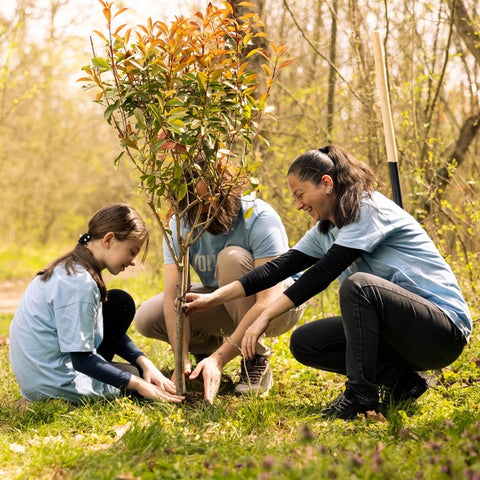
Biochar in Himachal Pradesh is emerging as one of the most powerful, natural tools to restore degraded Himalayan soils and strengthen climate resilience. This ancient yet proven technique converts organic biomass into carbon-rich charcoal through low-oxygen heating. Applied to mountain soils, it can transform soil health, boost water retention, and lock carbon for centuries. In 2026, as environmental pressure on the Himalayas intensifies, biochar offers a mindful, science-backed path forward.
Himachal Pradesh's fragile ecosystems face mounting threats. Soil erosion, deforestation, and unpredictable rainfall are pushing farming communities and forest biodiversity to the edge. Conscious adoption of biochar is helping farmers, foresters, and reforestation organisations like Grow Billion Trees build a greener, more resilient future together.
What Is Biochar and Why Does It Matter?
Biochar is produced through pyrolysis — heating organic material such as wood chips, crop residues, or prunings in a low-oxygen environment. Unlike open burning, pyrolysis captures carbon in a stable form rather than releasing it. The result is a porous, carbon-rich substance that improves soil structure naturally and sustainably.
According to the United Nations Climate Change initiative, soil carbon sequestration is a critical strategy for limiting global warming. Biochar can sequester carbon in soil, making it useful for carbon capture in farming and reforestation.
Biochar can improve crop yields in nutrient-poor soils and reduce dependence on synthetic fertilisers, supporting sustainable land management goals.
The Himalayan Soil Crisis: Why Himachal Pradesh Needs Biochar
Himachal Pradesh loses an estimated 16.4 tonnes of topsoil per hectare every year due to erosion. According to the World Wildlife Fund on deforestation and forest degradation, mountain regions are among the most vulnerable to land degradation worldwide. Apple orchards in Shimla, wheat fields in Mandi, and herb gardens in Kullu all suffer from declining soil fertility.
Deforestation compounds the crisis. Without tree cover, rainwater strips away topsoil rapidly. The result is a vicious cycle — less soil means fewer trees, and fewer trees mean even faster soil loss. Biochar breaks this cycle by improving soil structure and holding nutrients in place naturally.
Our team has observed firsthand how even modest biochar applications dramatically improve soil moisture retention in hilly terrain. Conscious farmers across Kullu, Shimla, and Mandi districts are already embracing this eco-friendly practice with wonderful results.
✅ How Biochar Works in Mountain Ecosystems
Biochar's porous structure acts like a natural sponge in the soil. It holds water and nutrients, making them available to plant roots during dry spells. This is especially vital in Himalayan regions where rainfall is seasonal and increasingly unpredictable due to climate change.
The United Nations Environment Programme on forests highlights that healthy forest soils depend on rich organic matter and thriving microbial communities. Biochar creates an ideal habitat for beneficial soil microbes, helping forests grow and thrive naturally over the long term.
In addition, biochar raises soil pH in acidic mountain soils. Many Himalayan soils have pH levels below 5.5, which limits nutrient uptake significantly. Adding biochar brings pH closer to neutral, improving plant growth and making reforestation far more effective.
Biochar can help improve seedling survival in reforestation efforts.
💡 Biochar and Carbon Sequestration: A Climate Game-Changer
Carbon sequestration through biochar is one of the most exciting developments in climate science today. When organic waste is converted to biochar instead of decomposing naturally, it prevents the release of CO₂ into the atmosphere. Research indicates biochar can sequester up to 1.8 tonnes of CO₂ equivalent per tonne of dry biomass processed.
For Himachal Pradesh, which has agricultural and forest residue, converting biomass waste into biochar represents an opportunity to support India's Net Zero Targets and global climate commitments.
We ensure that our biochar-integrated planting programs use verified carbon accounting frameworks to quantify sequestration benefits. Every project we run contributes measurably to a cleaner, healthier planet — backed by authentic, transparent data.
⭐ Grow Billion Trees: Leading Biochar-Integrated Reforestation in Himachal
At Grow Billion Trees, we are passionate about using every proven tool to restore India's forests. Our team integrates biochar application into reforestation and agroforestry programs across Himachal Pradesh. We ensure each planting site benefits from soil enhancement before trees go into the ground.
Our mission is to plant 100 crore trees across India by June 2030 — a bold goal that demands equally bold soil restoration strategies. Biochar is central to achieving this impact. Healthier soil means higher seedling survival, faster tree growth, and greater long-term environmental benefit for future generations.
We provide 2-3ft Tree Planting + 3 Years Care + GeoTag technology, so every tree you plant is tracked, nurtured, and verified. Our hands-on approach means we don't just plant trees — we grow forests that thrive for generations. This is Combating Climate Change Through Collective Action at its most meaningful and practical.
Through our agroforestry programs, we partner with local farmers in Himachal Pradesh to introduce biochar as part of sustainable land management. Farmers save on fertiliser costs while improving their yields and contributing to a greener earth. Our partners consistently report improved soil quality and happier, more productive farmland within two seasons.
✅ Key Benefits of Biochar for Himachal Pradesh Farmers and Forests
- Boost soil fertility: Biochar retains nutrients and supports microbial life naturally and sustainably.
- Improve water retention: Reduces drought stress in Himalayan farmlands and reforestation sites.
- Carbon sequestration: Locks CO₂ in soil for centuries, supporting Net Zero Targets nationwide.
- Save on fertiliser costs: Farmers can reduce input expenses.
- Increase crop yields: Biochar can improve productivity in Himalayan hilly soils.
- Support reforestation: Higher seedling survival rates help transform degraded land into thriving forests.
- Reduce open burning: Converts agricultural waste into a climate-positive resource instead of harmful smoke.
These benefits make biochar a wonderful, multi-purpose tool for farmers, foresters, and environmentalists alike. It is one of the great innovations in sustainable land restoration available in 2026.
Real-World Application: Biochar in Agroforestry Programs
Agroforestry — the integration of trees into farming systems — combined with biochar can increase soil organic carbon.
According to the United Nations Sustainable Development Goals, sustainable agriculture and land restoration are essential for achieving SDG 15: Life on Land. Biochar-integrated agroforestry directly supports this global agenda while improving local farmer livelihoods and the health of Himalayan ecosystems.
We love seeing farmers embrace eco-friendly practices that benefit both their families and the planet. Our certified agroforestry programs in Himachal Pradesh are a happy blend of ancient soil wisdom and modern environmental science. Together, we are building a future where farming and forests thrive side by side.
Biochar sourced from agricultural waste — apple tree prunings, rice straw, pine needles — gives new value to material that would otherwise be burned openly. Open burning releases harmful emissions and wastes carbon. Biochar production transforms this into a climate-positive, soil-enriching resource that nurtures the land for years to come.
How to Get Started with Biochar in Himachal Pradesh
Getting started with biochar is easy and accessible for farmers, landowners, and reforesters alike. Follow these simple steps to improve your soil naturally:
- Source biomass locally: Use crop residues, wood chips, or prunings from apple, walnut, and pine trees.
- Produce or procure biochar: Work with certified local producers or use small-scale pyrolysis units.
- Apply to soil: Mix biochar into the top layer of soil before planting.
- Charge with compost: Combine biochar with compost or manure to boost its nutrient-holding capacity.
- Plant and monitor: Track soil health and growth improvements over two to three seasons for best results.
For reforestation projects, our team recommends applying biochar directly into planting pits. This gives every sapling the best start in challenging mountain conditions. When you Plant a tree in your Name through Grow Billion Trees, your tree benefits from our biochar-enriched soil preparation — a guarantee of healthy, long-term growth.
Frequently Asked Questions
What is biochar and how is it made?
Biochar is a carbon-rich charcoal made by heating organic material — wood, crop residues, or leaves — in a low-oxygen environment through pyrolysis. This preserves carbon in a stable form that can be added to soil to improve fertility, structure, and microbial activity naturally.
Why is biochar important for Himachal Pradesh specifically?
Himachal Pradesh's mountain soils face severe erosion, acidity, and nutrient loss due to deforestation and climate change. Biochar in Himachal Pradesh addresses these challenges by improving soil structure, water retention, and microbial health in fragile Himalayan ecosystems where conventional farming inputs often fall short.
How does biochar help with climate change?
Biochar sequesters carbon in the soil for hundreds to thousands of years, removing CO₂ from the atmosphere permanently. This makes it a powerful natural solution for supporting Net Zero Targets and reducing India's overall carbon footprint through sustainable land management.
Can biochar be used in organic farming?
Yes. Biochar is a certified organic soil amendment when produced from natural biomass without chemical additives. It is widely used in organic farming systems to boost fertility, improve soil health, and reduce reliance on synthetic fertilisers — making farming truly sustainable.
How does Grow Billion Trees use biochar in its programs?
Grow Billion Trees integrates biochar into its agroforestry and reforestation programs across Himachal Pradesh. Our team applies biochar to planting sites before tree installation, improving seedling survival and long-term soil health. This supports our mission of planting 100 crore trees across India by June 2030.
What is the cost of biochar application for small farmers?
Biochar can be produced from on-farm waste and help farmers reduce fertiliser costs.
Is biochar safe for all soil types in the Himalayas?
Biochar is generally safe and beneficial for most Himalayan soils, especially acidic and nutrient-poor soils common at higher altitudes. Application rates should be tailored to specific soil conditions for the best results, and combining biochar with compost further enhances its effectiveness.
How does biochar support tree planting and reforestation?
When added to tree planting pits, biochar can improve moisture retention and nutrient availability around young roots, helping reforestation efforts.
Growing a Greener Future Together
Biochar in Himachal Pradesh is far more than a soil amendment. It is a climate solution, a livelihood enhancer, and a powerful reforestation accelerator that nurtures the earth from the ground up. As 2026 brings new urgency to environmental action, integrating biochar into land management offers a wonderful, natural path toward a healthier planet.
At Grow Billion Trees, we are glad to be at the forefront of this green movement. Our hands-on programs combine biochar, agroforestry, and GeoTag-verified tree planting to create lasting, meaningful impact. Together, we can transform Himachal Pradesh's landscapes and contribute to our shared goal of 100 crore trees across India.
Welcome to a future where every tree grows in healthy, carbon-rich, organic soil. Discover how you can Plant a tree in your Name for just ₹299 and be part of this wonderful mission. Explore our programs at Grow Billion Trees and join us in Combating Climate Change Through Collective Action — one tree, one handful of biochar, and one conscious choice at a time.
Biochar programmes with Grow Billion Trees
Biochar turns crop and farm waste into a stable form of carbon that improves soil. We run biochar alongside plantation and agroforestry programmes for companies.
- Biochar programme
- How to get carbon credits in India
- Agroforestry programme
- CSR rules for tree plantation
Talk to our team about a programme for your company.