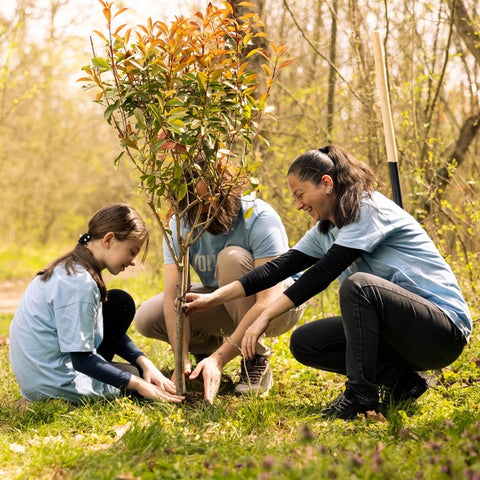
Biochar projects near Gwalior are transforming degraded, carbon-depleted land into thriving green ecosystems — offering one of the most sustainable and science-backed solutions to soil restoration and reforestation in central India. In 2026, as climate urgency reaches a critical peak, combining biochar technology with large-scale tree planting is proving to be a great leap forward for Gwalior's landscapes and communities.
What Is Biochar and Why Does It Matter? ✅
Biochar is a carbon-rich material created by heating organic matter — such as crop residue, wood chips, or sugarcane bagasse — in a low-oxygen environment through a process called pyrolysis. This locks carbon into a highly stable form that can persist in soil for hundreds to thousands of years. The result is a powerful, natural soil amendment that fundamentally improves earth health.
For background, see United Nations Climate Change initiative. Biochar sequesters atmospheric carbon into the soil. It also enhances soil water retention, stimulates microbial activity, and raises nutrient availability — making it suited to Gwalior's semi-arid agricultural landscape.
Biochar-amended soils retain more moisture than untreated soil. In Gwalior, where monsoons are erratic and dry spells are prolonged, this water retention is important for farming and forests.
The Environmental Challenge Around Gwalior 💡
Gwalior, located in Madhya Pradesh, faces serious environmental stress. Decades of intensive farming, uncontrolled deforestation, and rapid urban expansion have left thousands of hectares of land degraded, compacted, and stripped of organic matter. The World Wildlife Fund warns that deforestation and forest degradation continue to strip ecosystems of their capacity to support biodiversity, clean water, and stable local climates.
The Chambal ravine belt near Gwalior consists of deeply gullied wasteland. These ravines, carved by erosion over generations, are challenging landscapes for reforestation. Enriching this soil with biochar before planting native trees can improve sapling survival rates and long-term forest establishment.
However, the scale of degradation demands more than conventional tree planting. Biochar projects near Gwalior must address soil chemistry, hydrology, community participation, and sustained aftercare. This is where mission-driven organisations like Grow Billion Trees step in with structured, impact-focused programs.
How Biochar Projects Near Gwalior Work ✅
Effective biochar projects near Gwalior follow a rigorous, science-backed process designed to maximise both ecological and social outcomes. Here is a step-by-step breakdown of how these programs operate:
- Site Assessment → Soil scientists evaluate pH levels, texture, organic carbon content, and biodiversity potential of the target area before any intervention begins.
- Biochar Production → Locally sourced agricultural waste — rice husks, crop stalks, or wood offcuts — is converted into high-quality biochar using kilns or advanced retort systems, reducing waste while creating value.
- Soil Amendment → Biochar is blended with organic compost and applied at rates of 2 to 10 tonnes per hectare, depending on the soil's specific condition and restoration goals.
- Native Tree Planting → Indigenous species such as Neem, Peepal, Mahua, Arjun, and Jamun are planted in biochar-enriched beds, ensuring the highest possible survival rates for each sapling.
- Long-Term Monitoring → Every tree receives 2-3ft Tree Planting + 3 Years Care + GeoTag tracking, ensuring accountability and long-term health monitoring through transparent technology.
This integrated approach is what makes biochar projects near Gwalior especially impactful. They do not merely plant trees — they build the ecological foundation that allows entire forests to thrive for generations to come.
Grow Billion Trees: Leading Reforestation With Purpose ⭐
Grow Billion Trees works to plant 100 crore trees across India by 2030, through programs including Miyawaki dense forests, agroforestry, mangrove restoration, urban forestry, and food forest creation, with biochar soil treatment integrated into planting.
Healthy soil is the foundation of forest growth. Biochar-amended earth supports tree establishment. Partnerships with local farming communities work when families benefit directly from trees and harvests.
We provide both corporates and individuals a transparent, verified, and certified path to contribute to India's green future. Through our GeoTag technology, every tree can be tracked in real time. This builds trust with our partners and enables measurable progress toward their Net Zero Targets — turning environmental commitments into verified, living results.
Restoring Chambal Ravines: A Biochar Success Story 💡
The Chambal ravines near Gwalior represent one of India's most severe land degradation challenges. However, they also offer a wonderful canvas for ecological restoration. Our team has found that biochar application to ravine soil reduces erosion by stabilising the soil structure while simultaneously increasing organic matter content from near-zero to measurable levels within one growing season.
Biochar-treated soil supports tree establishment in ravine landscapes, helping to stabilise soil and rebuild forest canopy on degraded terrain.
The United Nations Environment Programme highlights forests as essential buffers against climate change, biodiversity loss, and rural poverty. Restoring the Chambal ravines through biochar-integrated reforestation directly advances these global goals at a local level.
Agroforestry and Biochar: Empowering Gwalior's Farmers ✅
Agroforestry — integrating trees with food crops — pairs well with biochar soil treatment. In farmed landscapes, this approach improves soil conditions and supports crop growth alongside tree establishment.
Farmers also save significantly on chemical fertiliser costs, as biochar naturally boosts soil nutrient retention. In addition, they earn supplementary income through timber, fruit harvests, and carbon credit programs. This model transforms Combating Climate Change Through Collective Action from an abstract ideal into a lived, daily reality for rural families across the Gwalior region.
Moreover, every farmer who joins our agroforestry program becomes a certified steward of the earth. Together, these farmers collectively contribute to India's ambitious reforestation targets while building a more secure and prosperous future for their households.
Plant a Tree in Your Name Near Gwalior ⭐
One of the most conscious, mindful things you can do in 2026 is to Plant a tree in your Name through Grow Billion Trees. When you do, you receive a personalised tree certificate, GPS-tagged location details of your tree, and regular growth updates — making this a wonderful, eco-friendly gift for birthdays, memorials, anniversaries, Women's Day, or any occasion worth celebrating.
Starting at just ₹299 — which includes 2-3ft Tree Planting + 3 Years Care + GeoTag — this is an accessible way to make a lasting positive impact on the planet. Our certified partners guarantee that every tree is planted responsibly in biochar-enriched soil and cared for with diligence through its most formative years.
We love seeing our community of tree planters grow. Thousands of verified customers have rated our programs highly, praising the transparency and authenticity of our impact reporting. Trusted by individuals, schools, and large corporations alike, Grow Billion Trees ensures that your contribution is real, tracked, and lasting.
Corporate Biochar Programs: Achieving Net Zero Near Gwalior
For businesses operating in or around Gwalior, biochar-integrated tree planting offers a powerful and verified route to achieving Net Zero Targets. According to the United Nations Sustainable Development Goals, urgent action on climate, biodiversity, and responsible consumption is required from all sectors of society — and corporate India is rising to this challenge.
Many Indian companies have committed to net zero goals. Grow Billion Trees partners with businesses to design green programs — Miyawaki forests, mangrove restoration, agroforestry with biochar. Programs support ESG reporting and carbon documentation.
Biochar projects near Gwalior offer an authentic, impact-driven way for companies to meet their environmental commitments — while directly restoring the natural landscapes of Madhya Pradesh for future generations.
Frequently Asked Questions
What are biochar projects near Gwalior?
Biochar projects near Gwalior are environmental restoration initiatives that apply biochar — a natural, carbon-rich soil amendment — to degraded land before planting native trees. These projects improve soil health, boost reforestation success rates, and sequester carbon in the Gwalior region of Madhya Pradesh.
How does biochar improve soil health in semi-arid regions like Gwalior?
Biochar improves semi-arid soil by enhancing water retention, increasing microbial diversity, raising organic carbon content, and reducing nutrient leaching. It supports better growth of trees and crops in treated soils.
Can individuals participate in biochar tree planting near Gwalior?
Yes. Through Grow Billion Trees, anyone can plant a tree in their name starting at just ₹299. Your tree is planted in biochar-enriched soil, given three years of professional care, and tracked via GeoTag technology so you can follow its entire growth journey online.
What tree species are planted through biochar projects near Gwalior?
Native species such as Neem, Peepal, Mahua, Arjun, and Jamun are commonly planted in biochar-amended soils near Gwalior. These species are well-adapted to the local climate, support regional biodiversity, and provide ecological as well as economic benefits to local communities.
How do biochar projects benefit farmers near Gwalior?
Biochar reduces dependence on chemical fertilisers, conserves soil moisture during dry spells, and supports growth. Agroforestry systems provide supplementary income through fruit and timber harvests.
Are biochar projects near Gwalior scientifically verified?
Yes. Our biochar programs follow protocols aligned with India's agricultural research institutions and international environmental standards. We provide certified reports, GeoTag-verified tree records, and transparent impact data for both individual and corporate partners — ensuring full authenticity and accountability.
How does biochar contribute to India's climate goals in 2026?
Biochar sequesters carbon in soil for centuries, directly reducing atmospheric CO2 levels. Combined with large-scale reforestation, it supports India's nationally determined contributions under the Paris Agreement and advances the collective goal of planting 100 crore trees across India by 2030.
What is included in the ₹299 tree planting package from Grow Billion Trees?
The ₹299 package includes 2-3ft Tree Planting + 3 Years Care + GeoTag tracking. You also receive a personalised tree certificate and regular growth updates. Corporate packages are available for larger Net Zero programs with custom reporting and dedicated program managers.
Why are Chambal ravines near Gwalior ideal for biochar reforestation?
The Chambal ravines are severely degraded land. Biochar stabilises soil structure, raises organic matter content, and supports tree establishment, making these landscapes suitable for ecological restoration.
Grow Forests, Restore Earth — Start Today
Biochar projects near Gwalior represent a wonderful convergence of ancient ecological wisdom and modern environmental science. By enriching the earth before we plant, we give every tree the best possible foundation to grow, thrive, and endure for decades. The results speak for themselves — in healthier soils, stronger forests, and more resilient communities.
At Grow Billion Trees, we believe that Combating Climate Change Through Collective Action is not just possible — it is essential, and it starts with each one of us. Together, we can restore Gwalior's landscapes, save its ravines, improve farmer livelihoods, and contribute to planting 100 crore trees across India. Every tree planted today is a gift to our shared future on this planet.
Ready to make your impact real? Explore our tree planting programs at Grow Billion Trees and plant a tree in your name today — starting at just ₹299, with 2-3ft Tree Planting + 3 Years Care + GeoTag included. Let us grow this greener, more hopeful future together.
Biochar programmes with Grow Billion Trees
Biochar turns crop and farm waste into a stable form of carbon that improves soil. We run biochar alongside plantation and agroforestry programmes for companies.
- Biochar programme
- How to get carbon credits in India
- Agroforestry programme
- CSR rules for tree plantation
Talk to our team about a programme for your company.