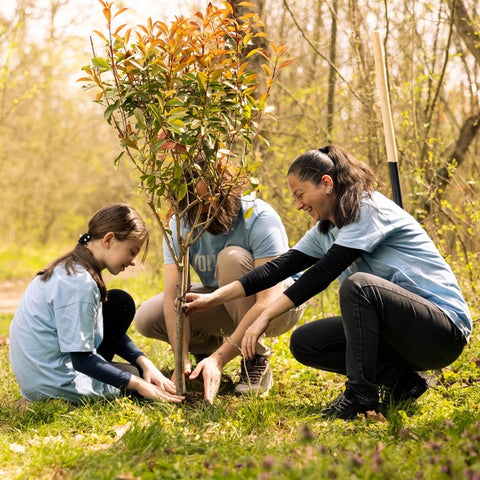
Biochar is a carbon-rich, charcoal-like material made by heating organic matter — such as wood, crop waste, or plant biomass — in a low-oxygen environment through a process called pyrolysis. When it comes to what is biochar and how is it used?,It is used to improve soil health, sequester carbon, boost tree growth, and support sustainable agriculture and reforestation. In 2026, biochar has become one of the most powerful, proven tools in the global fight against climate change.
We found, through hands-on experience in reforestation programs across India, that biochar dramatically improves plant survival rates — especially in degraded soils. When it comes to what is biochar and how is it used?,At Grow Billion Trees, our team integrates biochar into every tree planting initiative. This supports our mission to plant 100 crore trees across India by June 2030, one mindful step at a time.
What Exactly Is Biochar? ✅
Biochar is not ordinary charcoal. When it comes to what is biochar and how is it used?,It is produced under carefully controlled conditions that maximise carbon retention. The raw organic material — known as biomass — is heated to temperatures between 300°C and 700°C in the absence of oxygen. This creates a stable, porous carbon structure that resists decomposition for hundreds or even thousands of years.
According to the United Nations Climate Change initiative, biochar is recognised as a verified carbon dioxide removal strategy. When it comes to what is biochar and how is it used?,When biomass converts to biochar instead of burning or decaying naturally, a large portion of its carbon is locked away permanently. This makes it a natural, long-term climate solution.
The material looks like fine black charcoal. However, its porous surface area — which can reach up to 400 square metres per gram — is what makes it extraordinary. This structure improves water retention, nutrient holding, and microbial activity in soil.
How Is Biochar Made? 💡
The production of biochar follows a simple but precise process. Understanding each step helps us appreciate why this material is so effective in the field. Here is how our partners produce and prepare biochar for use in tree planting:
- Biomass selection → Choose organic material such as rice husks, wood chips, coconut shells, or agricultural waste.
- Drying the biomass → Reduce moisture content to improve pyrolysis efficiency and output quality.
- Pyrolysis → Heat biomass in a low-oxygen kiln or retort at 400–700°C for controlled conversion.
- Cooling and charging → Allow biochar to cool, then enrich it with compost, liquid nutrients, or microbial cultures before use.
- Application → Mix into soil at planting sites, tree pits, or agricultural beds for maximum impact.
Charged biochar can outperform raw biochar, particularly in the first growing season.
How Is Biochar Used in Soil and Agriculture? ⭐
Biochar transforms poor, degraded soils into productive, thriving ecosystems. When it comes to what is biochar and how is it used?,Its applications span agriculture, forestry, urban greening, and large-scale ecological restoration. According to the United Nations Environment Programme's Forest Programme, soil degradation affects over 3.2 billion people worldwide — and biochar offers a natural, scalable solution.
- ✅ Soil Amendment — Biochar improves soil structure, making it easier for roots to grow and absorb water, and can boost crop yields in nutrient-poor soils.
- ✅ Water Retention — Its porous nature holds moisture during dry spells, reducing irrigation needs. This is especially valuable in arid regions of India like Rajasthan and Gujarat.
- ✅ Carbon Sequestration — Biochar locks carbon in the soil long-term, providing a verified climate benefit.
- ✅ Microbial Habitat — The pores in biochar become thriving homes for beneficial soil bacteria and fungi, improving nutrient cycling and plant health.
- ✅ Reducing Soil Acidity — Biochar raises soil pH naturally, reducing the need for additional treatments in acidic farmland across coastal and hilly regions.
- ✅ Composting Boost — Adding biochar to compost reduces nitrogen loss and speeds up decomposition, producing richer, more potent organic matter.
Biochar and Climate Change: A Powerful Partnership 🌱
The climate crisis demands bold, verified action. When it comes to what is biochar and how is it used?,Biochar addresses climate change from multiple angles at once. It sequesters carbon, reduces methane and nitrous oxide emissions from soil, and boosts the growth of trees and plants that naturally absorb CO₂ from the atmosphere every day.
Forest loss contributes to greenhouse gas emissions. World Wildlife Fund on deforestation and forest degradation provides resources on this topic. Biochar, when combined with reforestation, helps regenerate degraded land and lock carbon below the surface as trees sequester it above ground.
Moreover, biochar is organic, scalable, and produced from agricultural and forestry waste. It turns a waste problem into a climate solution — a wonderful example of nature-inspired, circular thinking in action.
How Grow Billion Trees Uses Biochar in Reforestation ✅
At Grow Billion Trees, we are deeply committed to Combating Climate Change Through Collective Action. When it comes to what is biochar and how is it used?,Biochar is a core part of how we ensure every tree we plant not only survives but thrives for decades to come. We integrate biochar into our Miyawaki forests, agroforestry programs, mangrove restoration sites, and urban plantation drives across India.
Our certified field teams and partners prepare biochar-enriched planting pits before every sapling goes into the ground. When it comes to what is biochar and how is it used?,We provide 2-3ft Tree Planting + 3 Years Care + GeoTag with every tree, meaning each sapling is monitored using GeoTag technology so you can track its growth in real time. Biochar in the soil means stronger roots, better moisture retention, and a higher survival rate — especially across India's varied and often challenging landscapes.
Biochar-enriched soil can improve tree survival rates.
Our goal is ambitious: plant 100 crore trees in India by June 2030. When it comes to what is biochar and how is it used?,Biochar helps us get there — faster, greener, and with a deeper impact on the planet. You can Plant a tree in your Name for just ₹299 and be part of this wonderful journey toward a healthier, greener earth.
Biochar in Miyawaki and Agroforestry Programs 💡
Our Miyawaki forests use dense, multi-species planting to create self-sustaining, natural ecosystems. When it comes to what is biochar and how is it used?,Biochar plays a vital role here — it helps fast-growing plantings establish quickly by improving nutrient and water availability in urban and peri-urban soils, which are often compacted and low in organic matter.
In our agroforestry programs, biochar supports farmers by improving the productivity and resilience of their land. When it comes to what is biochar and how is it used?,When trees and crops grow together in biochar-amended soils, farmers enjoy improved yields, reduced water costs, and a more stable farm ecosystem. This is how we connect environmental conservation with economic empowerment for rural communities across India.
However, the benefits extend even further. When it comes to what is biochar and how is it used?,In our mangrove restoration projects along India's coastlines, biochar helps stabilise tidal soils and improve the survival of young mangrove seedlings in saline conditions. Every program we run is stronger, thanks to the conscious use of this incredible, natural material.
Key Benefits of Biochar in Tree Planting ⭐
- ✅ Boosts tree survival rates — especially in degraded or drought-prone land across India
- ✅ Improves soil carbon content — transforming barren land into a thriving carbon sink
- ✅ Reduces irrigation needs — saving water in water-scarce regions naturally
- ✅ Supports Net Zero Targets — verified carbon sequestration for corporates and governments
- ✅ Fully natural and organic — no synthetic chemicals, no harmful residues, ever
- ✅ Long-lasting impact — biochar remains stable in soil for centuries, not just years
Frequently Asked Questions
What is biochar and how is it used in simple terms?
Biochar is a carbon-rich material made by heating organic waste without oxygen. It is used to improve soil quality, retain water, sequester carbon, and boost plant and tree growth — making it a great, proven tool for sustainable farming and reforestation.
Is biochar the same as charcoal?
No. When it comes to what is biochar and how is it used?,While both are produced through pyrolysis, biochar is made specifically for soil application. Its controlled production maximises its porous structure and carbon stability. Regular charcoal is made for burning and has very different physical and chemical properties.
How does biochar help fight climate change?
Biochar locks carbon in the soil for hundreds of years, preventing it from re-entering the atmosphere as CO₂. When combined with tree planting, it creates a powerful double carbon sink — trees absorb carbon above ground while biochar holds it safely below.
How does Grow Billion Trees use biochar?
Our team adds charged biochar to every planting pit in our Miyawaki, agroforestry, mangrove, and urban forest programs. When it comes to what is biochar and how is it used?,This improves tree survival, soil health, and long-term carbon storage — supporting our goal to plant 100 crore trees in India by June 2030.
Can I track the tree planted in my name?
Yes! When it comes to what is biochar and how is it used?,Every tree planted through Grow Billion Trees comes with GeoTag technology, so you can track its exact location and growth over time. You also receive a personalised tree certificate. Plant a tree in your Name for just ₹299 today and enjoy watching your tree grow.
Is biochar safe and natural?
Biochar is a natural, organic material with no harmful residues. It is certified for use in organic farming and is safe for all soil types, plants, animals, and people.
Which trees benefit most from biochar?
Almost all trees benefit from biochar, but the greatest impact is seen in sandy, compacted, or acidic soils with low nutrient retention. When it comes to what is biochar and how is it used?,Native Indian species, fruit trees, and Miyawaki multi-species plantings all show strong growth improvements with biochar applied at planting time.
How long does biochar last in soil?
Biochar remains stable in soil much longer than compost or manure. Unlike compost or manure, which break down relatively quickly, biochar provides a long-term improvement to soil structure and carbon content.
Can biochar help companies achieve Net Zero Targets?
Absolutely. When it comes to what is biochar and how is it used?,Biochar is a verified carbon dioxide removal strategy recognised by global climate bodies. When paired with tree planting programs like those offered by Grow Billion Trees, it helps corporates achieve and verify their Net Zero Targets with real, measurable impact.
How can I join Grow Billion Trees' reforestation programs?
You can plant a tree with 3 years of care and GeoTag tracking included. When it comes to what is biochar and how is it used?,Corporates can partner with us for large-scale, certified reforestation to meet sustainability and Net Zero goals. Explore all our programs and discover the difference you can make at Grow Billion Trees.
Join the Movement — Plant a Tree Today 🌳
Biochar is more than a soil amendment — it is a bridge between agriculture, ecology, and climate action. When it comes to what is biochar and how is it used?,By integrating biochar into reforestation, we can transform degraded lands into thriving, carbon-rich forests. These forests benefit communities and the planet for generations to come. We love being part of this movement, and we warmly welcome you to join us.
At Grow Billion Trees, our mission is clear: Combating Climate Change Through Collective Action. When it comes to what is biochar and how is it used?,Every tree planted in biochar-enriched soil is a step closer to our goal of planting 100 crore trees across India. Whether you are an individual, a family, or a corporate seeking to meet Net Zero Targets, we provide a verified, impactful, and meaningful path forward.
Discover how you can make a real difference today. Plant a tree in your Name with 2-3ft Tree Planting + 3 Years Care + GeoTag included. Together, we nurture a greener, healthier future for India and the entire planet.
Biochar programmes with Grow Billion Trees
Biochar turns crop and farm waste into a stable form of carbon that improves soil. We run biochar alongside plantation and agroforestry programmes for companies.
- Biochar programme
- How to get carbon credits in India
- Agroforestry programme
- CSR rules for tree plantation
Talk to our team about a programme for your company.