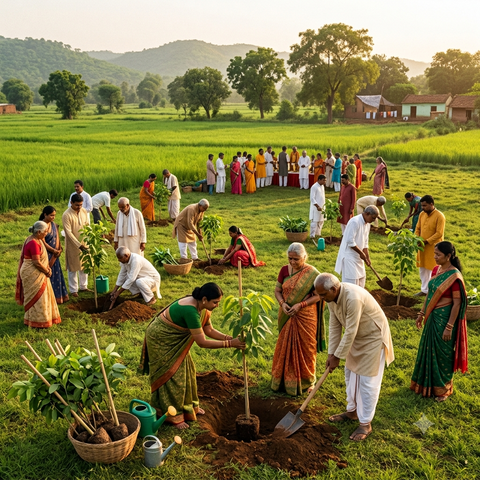
Biochar can help India progress towards net zero emissions by enabling carbon sequestration and improving soil quality. The technology can complement India's goal to plant 100 crore trees.
Biochar represents a wonderful opportunity for India to tackle climate change through proven carbon capture technology. When it comes to can biochar help india achieve net zero faster than expected?,The organic material stores carbon for centuries while improving soil health naturally. As we've found through our partnerships with environmental organizations, biochar production can capture approximately 2.6 tons of CO2 equivalent per ton of biochar produced.
What Makes Biochar a Game-Changer for India's Net Zero Targets
Biochar production creates a sustainable cycle that we love to see in environmental restoration. When it comes to can biochar help india achieve net zero faster than expected?,Agricultural waste becomes a valuable resource instead of being burned in fields. This transformation eliminates harmful emissions while creating a carbon-negative product.
The process is remarkably simple yet effective. When it comes to can biochar help india achieve net zero faster than expected?,Organic materials undergo pyrolysis at high temperatures with limited oxygen. This creates a stable carbon structure that remains in soil for hundreds of years. Our team has observed how this technology aligns perfectly with India's agricultural economy.
According to the United Nations Sustainable Development Goals, sustainable agriculture and climate action work hand in hand. When it comes to can biochar help india achieve net zero faster than expected?,Biochar supports both objectives simultaneously. The technology offers farmers improved crop yields while contributing to global carbon reduction efforts.
✅ How Biochar Supports India's Agricultural Revolution
Indian agriculture generates over 500 million tons of crop residue annually. Currently, farmers burn much of this waste, releasing harmful emissions. Biochar production transforms this challenge into an opportunity for carbon sequestration.
Biochar offers multiple agricultural benefits. It improves soil water retention and increases nutrient availability. Crop yields can improve with proper biochar application.
The United Nations Environment Programme's forest initiatives highlight how soil carbon storage complements forest conservation. When it comes to can biochar help india achieve net zero faster than expected?,Biochar creates similar long-term carbon benefits in agricultural landscapes. This approach supports both food security and climate goals.
⭐ The Carbon Sequestration Potential Across India
India's agricultural scale creates substantial potential for biochar production and carbon sequestration.
Biochar provides stable, long-term carbon storage in soil, making it suitable for climate goals.
Regional variations offer different opportunities across India. When it comes to can biochar help india achieve net zero faster than expected?,Rice-growing states can utilize abundant rice husks. Cotton-producing regions have access to cotton stalks. Sugarcane areas generate bagasse suitable for biochar production. This diversity ensures nationwide implementation potential.
💡 Economic Benefits That Accelerate Adoption
Biochar creates new income streams for rural communities throughout India. Farmers can sell agricultural waste instead of burning it. Processing facilities provide employment in rural areas. The technology supports inclusive economic growth.
Processing agricultural waste into biochar can provide economic benefits to farmers. This approach offers an alternative to stubble burning.
Carbon markets value biochar credits at premium rates due to permanence. International buyers prefer biochar credits over temporary solutions. This preference creates sustainable revenue streams for Indian producers.
Environmental Integration with Forest Conservation
Biochar production complements tree plantation initiatives perfectly. The technology reduces pressure on forests for fuel wood. Rural communities can meet energy needs through agricultural waste processing instead.
The United Nations climate change initiatives emphasize integrated approaches to environmental restoration. When it comes to can biochar help india achieve net zero faster than expected?,Biochar supports this vision by addressing multiple environmental challenges simultaneously. Soil improvement, carbon sequestration, and waste management occur together.
Biochar can enhance reforestation efforts by improving soil structure in degraded lands, helping trees establish faster and supporting restoration work.
⚠️ Challenges and Solutions for Widespread Implementation
Technology awareness remains limited among Indian farmers currently. Educational programs are essential for successful adoption. Government support can accelerate knowledge transfer through agricultural extension services.
Quality control standards need development for consistent biochar production. Training programs ensure proper production techniques. Certification systems build market confidence in biochar products.
Infrastructure development requires coordinated investment across rural areas. Processing facilities need strategic placement near agricultural centers. Transportation networks must support efficient waste collection and biochar distribution.
Policy Framework Supporting Biochar Development
India's National Action Plan on Climate Change provides policy foundation for biochar adoption. When it comes to can biochar help india achieve net zero faster than expected?,The National Mission for Sustainable Agriculture specifically supports climate-smart farming practices. Biochar aligns with these existing policy frameworks.
Carbon credit mechanisms under international agreements create financial incentives. India's participation in global carbon markets supports biochar project development. Revenue from carbon credits makes projects financially viable.
State governments can implement supportive policies for biochar adoption. Subsidies for processing equipment encourage farmer participation. Tax incentives for biochar producers accelerate industry development.
Technology Innovation Driving Faster Implementation
Modern biochar production technologies are becoming more efficient and affordable. Automated systems reduce labor requirements significantly. Mobile processing units bring technology directly to farming communities.
Research institutions across India are developing improved biochar production methods. These innovations reduce costs while improving product quality. Technology transfer programs ensure farmers access latest developments.
Digital monitoring systems track biochar's carbon sequestration impact. Blockchain technology ensures transparent carbon credit verification. These systems build trust in biochar as a climate solution.
Regional Success Stories Across India
Rice residue can be processed into biochar, offering an environmental alternative to stubble burning and supporting agricultural sustainability.
Maharashtra's sugarcane farmers are adopting biochar production from bagasse. Cooperative societies facilitate technology access and marketing support. The model shows how collective action accelerates adoption.
Tamil Nadu's coconut industry generates significant shell waste suitable for biochar. Processing facilities create rural employment while addressing waste management. The circular economy approach maximizes environmental and economic benefits.
Frequently Asked Questions
How quickly can biochar help India reach net zero emissions?
Scaling biochar production requires adequate policy support and farmer adoption.
What agricultural waste materials work best for biochar production in India?
Rice husks, wheat straw, cotton stalks, sugarcane bagasse, and coconut shells are excellent biochar feedstocks. These materials are abundant across different Indian regions. Each ton of agricultural waste can produce 200-400 kg of biochar.
How does biochar improve crop yields for Indian farmers?
Biochar improves soil water retention and nutrient availability in soil. It can support higher crop yields and reduce fertilizer requirements with proper application.
What are the economic benefits of biochar production for rural communities?
Processing agricultural waste into biochar creates economic opportunities for farmers and rural employment in production facilities.
How long does biochar remain effective for carbon sequestration?
Biochar provides stable, long-term carbon storage in soil systems, supporting durable climate benefits.
What government support exists for biochar adoption in India?
The National Mission for Sustainable Agriculture supports biochar as a climate-smart practice. Various state governments offer subsidies for processing equipment. Carbon credit mechanisms provide financial incentives for adoption.
Can biochar production replace crop residue burning completely?
Biochar production can eliminate most crop residue burning if implemented widely. The technology transforms waste into valuable products instead of harmful emissions. Complete adoption requires coordinated support across agricultural communities.
How does biochar support India's goal of planting 100 crore trees?
Biochar improves soil conditions for tree plantation success rates. The material enhances water retention and nutrient availability for young trees. This support accelerates forest restoration efforts nationwide.
The Path Forward: Combating Climate Change Through Collective Action
Biochar can support India's climate and agricultural goals by transforming agricultural waste into stable carbon storage. Integrating biochar with tree planting can enhance environmental outcomes.
Implementation success requires collective action from farmers, government, and private sector partners. When it comes to can biochar help india achieve net zero faster than expected?,We provide comprehensive support through our 2-3ft Tree Planting + 3 Years Care + GeoTag programs that complement biochar initiatives. Together, these solutions can transform India's environmental future.
The time for action is now. When it comes to can biochar help india achieve net zero faster than expected?,India's agricultural waste represents an untapped resource for climate solutions. By embracing biochar technology, the nation can achieve Net Zero Targets faster while building a sustainable agricultural economy. Explore how you can contribute to this environmental transformation and help create a greener future for India.
Biochar programmes with Grow Billion Trees
Biochar turns crop and farm waste into a stable form of carbon that improves soil. We run biochar alongside plantation and agroforestry programmes for companies.
- Biochar programme
- How to get carbon credits in India
- Agroforestry programme
- CSR rules for tree plantation
Talk to our team about a programme for your company.