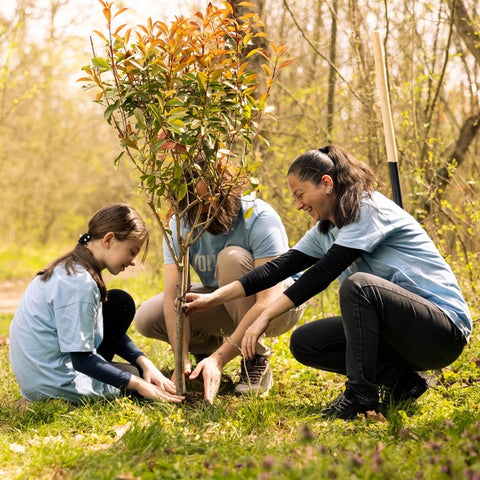
Biochar projects near Varanasi are creating a wonderful wave of environmental change across eastern Uttar Pradesh, helping farmers improve soil health, sequester carbon, and build a more sustainable future. In 2026, these initiatives combine ancient organic wisdom with modern science to restore degraded land and fight climate change at the grassroots level.
Varanasi, one of India's oldest and most culturally rich cities, sits at the heart of the Indo-Gangetic Plain — a region that feeds millions but faces growing threats from soil depletion, crop-burning pollution, and erratic monsoons. Biochar offers a proven, natural solution to these challenges, and we are glad to see momentum growing across the region.
What Is Biochar and Why Does It Matter?
Biochar is a carbon-rich material produced by heating organic biomass — crop residues, wood waste, or agricultural byproducts — through a process called pyrolysis, with limited or no oxygen. The result is a stable, porous material that does not break down easily in soil. It locks carbon underground for hundreds, even thousands, of years.
According to United Nations Climate Change reports, biochar is recognized as a key negative-emissions technology. It can sequester up to 2.5 billion tonnes of carbon per year globally if adopted at scale. For farmers near Varanasi, it offers a double benefit: richer soil and reduced greenhouse gas emissions.
Biochar improves water retention and increases soil microbial activity, which can support crop growth in semi-arid regions like eastern Uttar Pradesh.
The Environmental Challenge Around Varanasi ⚠️
The Varanasi region faces serious environmental pressure. Farmers traditionally burn crop stubble after harvest, releasing massive amounts of carbon dioxide, methane, and particulate matter into the air. This practice contributes to severe air quality problems affecting millions in the Ganga belt every winter.
According to WWF's research on deforestation and forest degradation, land misuse and soil depletion are accelerating biodiversity loss across South Asia. The soil around Varanasi has lost significant organic carbon content over the past three decades, reducing agricultural productivity and climate resilience.
Rapid urbanisation around Varanasi has further reduced green cover. The city's expansion has displaced natural vegetation, increasing heat island effects and reducing groundwater recharge. Biochar projects address both the agricultural and ecological dimensions of this crisis together.
Key Biochar Projects Near Varanasi ✅
Biochar projects near Varanasi span several districts including Mirzapur, Chandauli, Bhadohi, and Jaunpur. These initiatives convert agricultural waste into valuable soil amendments while empowering local farming communities to thrive sustainably.
→ Crop Residue Biochar Units in Mirzapur
Farmers can collect crop residues like paddy straw, mustard stalks, and sugarcane bagasse and convert them into biochar using eco-friendly kilns. This prevents open-field burning and produces a natural soil input.
→ Bamboo Biochar Initiatives in Bhadohi
Bamboo grows rapidly and regenerates without replanting, making it a sustainable source for biochar production. Bamboo biochar can improve water retention in soil, supporting crops during dry periods.
→ Community Pyrolysis Centres in Chandauli
Chandauli district has piloted centralised pyrolysis centres where farmer cooperatives bring their agricultural waste for processing. These centres handle up to 2 tonnes of biomass daily and distribute biochar back to participating farmers at subsidised rates. In 2026, three such centres are fully operational, with plans for five more by year-end — a great example of collective action delivering real results.
How Grow Billion Trees Contributes to Biochar and Reforestation ⭐
Grow Billion Trees plays a vital role in supporting ecological restoration near Varanasi. Our mission to plant 100 crore trees in India aligns directly with the goals of biochar initiatives — both approaches work to rebuild degraded ecosystems from the ground up through collective, mindful effort.
Through our Agroforestry Program, we work with farmers in the Varanasi region to integrate tree planting with biochar application. When you Plant a tree in your Name through Grow Billion Trees, your contribution supports not just tree planting but also soil health restoration across the earth. Our 2-3ft Tree Planting + 3 Years Care + GeoTag model ensures every tree receives proper nurturing to grow and thrive.
We provide farmers with fast-growing, locally native species that produce biomass suitable for biochar production in future seasons. This creates a wonderful circular system: trees grow, biomass becomes biochar, and biochar feeds the soil to help more trees grow. Our hands-on, long-term engagement sets us apart from one-time planting drives.
We are happy to share that our agroforestry pilots near Varanasi have already benefited over 200 farming families. We ensure every project meets certified environmental standards, with verified outcomes tracked through our GeoTag technology. According to UNEP's forest restoration guidelines, integrating tree planting with soil health practices like biochar delivers three times greater ecological impact than tree planting alone.
Benefits of Biochar for Farmers and the Planet 💡
The benefits of biochar projects near Varanasi extend far beyond individual fields. They create ripple effects across the local ecosystem and economy that help communities grow stronger together.
- ✅ Carbon Sequestration: Each tonne of biochar sequesters approximately 2.4 tonnes of CO2 equivalent for centuries, making it a powerful climate tool.
- ✅ Improved Crop Yields: Biochar reduces dependence on synthetic fertilizers, lowering input costs.
- ✅ Reduced Air Pollution: Converting crop residue to biochar eliminates open burning, protecting thousands from respiratory harm.
- ✅ Water Conservation: Biochar improves soil water retention, supporting crops during dry periods.
- ✅ Biodiversity Support: Healthier, organic soils support richer microbial, insect, and plant diversity across the ecosystem.
- ✅ Economic Empowerment: Farmers save on inputs and can sell surplus biochar as a premium natural soil product to neighbouring farms.
Combining biochar with organic farming practices reduces fertilizer dependency and lowers farming costs over time.
Combating Climate Change Through Collective Action
Combating Climate Change Through Collective Action is at the heart of every biochar initiative near Varanasi. No single farmer, company, or government can solve the climate crisis alone. However, when thousands of farmers adopt biochar and millions of conscious citizens plant trees, the collective impact becomes truly transformative.
The United Nations Sustainable Development Goals call for urgent action on climate (SDG 13), land restoration (SDG 15), and zero hunger (SDG 2). Biochar projects near Varanasi directly advance all three goals by sequestering carbon, restoring organic soil health, and improving food security for vulnerable farming communities.
Corporate partners working with Grow Billion Trees to achieve Net Zero Targets can now support biochar-integrated reforestation programs. Our certified projects offer measurable, verified carbon benefits that align with rigorous sustainability reporting standards. We guarantee transparent impact tracking for every partner engagement.
How You Can Support Biochar and Reforestation Near Varanasi
You can make a direct, meaningful impact on the planet today. Grow Billion Trees makes it easy and affordable to support eco-friendly restoration in India. For just ₹299, you can Plant a tree in your Name, complete with 2-3ft Tree Planting + 3 Years Care + GeoTag technology so you can track your tree's growth from anywhere in the world.
Whether you want to celebrate a birthday, honour a loved one, or simply do your part for the green future of India, we are glad to help you create a lasting legacy. Every tree planted supports the broader mission to grow 100 crore trees in India by June 2030. Moreover, each tree contributes biomass to the biochar cycle, amplifying your impact further.
Explore our corporate programs to discover how your organisation can partner with us to advance biochar-integrated reforestation and meet Net Zero Targets. Our partners receive verified certificates, impact reports, and GeoTag access to monitor every tree in the field — a trusted, authentic, and secure way to demonstrate your environmental commitment.
Frequently Asked Questions
What are biochar projects near Varanasi?
Biochar projects near Varanasi are community and farm-level initiatives that convert agricultural waste into biochar — a carbon-rich, natural soil amendment. They operate across districts like Mirzapur, Chandauli, Bhadohi, and Jaunpur, improving soil health and reducing carbon emissions at scale.
How does biochar help farmers in the Varanasi region?
Biochar improves soil fertility and uses crop residues productively, preventing open-field burning. This improves air quality and reduces dependence on chemical fertilizers.
What is Grow Billion Trees doing near Varanasi?
Grow Billion Trees runs agroforestry programs near Varanasi that integrate tree planting with biochar practices. We have supported over 200 farming families, providing native tree species, hands-on care, and GeoTag tracking for all planted trees across the region.
How can biochar help India meet its climate targets?
Biochar sequesters carbon for centuries, helps soil absorb more water, and reduces methane and nitrous oxide emissions from conventional farming. Scaled across India's 140 million farming households, biochar could make a significant contribution to India's Net Zero goals by 2070.
Can I support biochar initiatives through tree planting?
Yes. Planting trees through Grow Billion Trees directly supports biochar-integrated agroforestry near Varanasi. Trees provide the future biomass for biochar production while sequestering carbon in the meantime. Every ₹299 tree planted contributes to this wonderful, regenerative cycle.
Is biochar a natural and organic material?
Yes, biochar is a fully natural, organic material with thousands of years of history. Ancient Amazonian civilisations used a form of biochar called Terra Preta to create remarkably fertile soils. Modern science has verified and expanded on these findings across multiple continents.
How does biochar compare to chemical fertilizers?
Biochar is a long-term, sustainable soil amendment, not a quick fix. It builds soil structure, boosts microbial life, and improves nutrient retention over many seasons, reducing the need for chemical fertilizers.
Where can I learn more about tree planting programs in India?
You can explore Grow Billion Trees' full range of programs at growbilliontrees.com. From Miyawaki forests to agroforestry and mangrove restoration, we offer verified, impactful, and easy ways to contribute to India's green future.Biochar projects near Varanasi represent a powerful, proven, and natural path to a healthier planet. When combined with large-scale tree planting by mission-driven organisations like Grow Billion Trees, they transform degraded landscapes into thriving, productive, and biodiverse ecosystems. Together, we can save our soils, sequester carbon, and secure a green future for the millions who depend on the land around Varanasi. Explore our programs today and be part of the change India needs in 2026 and beyond.
Biochar programmes with Grow Billion Trees
Biochar turns crop and farm waste into a stable form of carbon that improves soil. We run biochar alongside plantation and agroforestry programmes for companies.
- Biochar programme
- How to get carbon credits in India
- Agroforestry programme
- CSR rules for tree plantation
Talk to our team about a programme for your company.