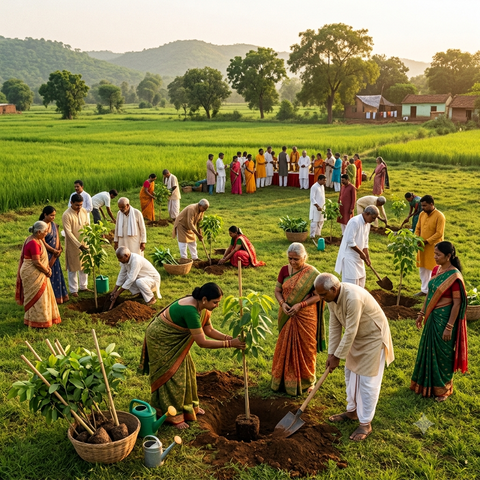
The Miyawaki Forest in Bhiwandi uses a Japanese afforestation technique that creates dense, native woodland in urban spaces. In 2026, Bhiwandi can participate in Maharashtra's urban greening movement by planting native trees and building green cover.
Developed by botanist Akira Miyawaki, this method plants multiple native species together, triggering rapid natural growth. Trees grow faster, wildlife returns sooner, and the ecosystem becomes self-sustaining within years. Our team has found firsthand that this approach transforms barren plots into thriving green lungs for local communities. We love seeing how quickly these forests take root and boost biodiversity in urban zones.
💡 What Is the Miyawaki Method?
The Miyawaki method is a nature-based reforestation technique that mimics natural forest growth. It involves planting native, multi-layered species at high density on small urban plots. The result is a self-sustaining, eco-friendly forest that grows without irrigation or fertiliser after the first three years.
According to the United Nations Environment Programme's forests programme, native forest restoration is among the most effective tools for reversing biodiversity loss and combating climate change. The Miyawaki approach is a proven, scalable solution that aligns with these global goals.
Key characteristics of the Miyawaki method include:
- ✅ Faster growth than conventional plantation methods
- ✅ Native species for biodiversity support
- ✅ Carbon absorption greater than monoculture planting
- ✅ Self-sustaining ecosystem within just 2–3 years
- ✅ Effective on natural plots as small as 100 square metres
Why Bhiwandi Needs Urban Forests
Bhiwandi is one of Maharashtra's fastest-growing industrial hubs, home to logistics parks, textile mills, and a rapidly expanding population. However, rapid development has stripped away much of its natural green cover. Air quality levels regularly exceed safe limits, and the urban heat island effect is intensifying every year.
The World Wildlife Fund's report on deforestation and forest degradation highlights that urban areas face the sharpest green cover loss globally. Bhiwandi reflects this troubling trend. Therefore, Miyawaki forests are not just desirable but essential for the city's long-term health and sustainability.
Cities with active urban forest programmes show improvements in air quality and lower ambient temperatures. For residents and workers in Bhiwandi, this means healthier air, cooler streets, and improved quality of life.
⭐ Popular Miyawaki Plantation Projects in India
India has embraced the Miyawaki method with great results across multiple cities. These projects demonstrate the transformative power of dense, natural planting in urban environments. For example, results from Mumbai to Hyderabad show that even small plots can grow into thriving ecosystems within a few years.
Mumbai Metropolitan Region
Miyawaki forests have been established in Mumbai's suburbs. These green corridors support local bird species and help filter air pollutants from the urban environment.
Pune's Urban Greening Initiative
Miyawaki forests are used in Pune's residential colonies and tech parks. These forests thrive without external irrigation or maintenance after the initial establishment period.
Hyderabad's Corporate Forest Belt
Hyderabad's IT corridor has embraced Miyawaki forests as part of green campus initiatives. Multiple tech campuses now host dense native forests, contributing to Hyderabad's goal of planting 1 crore trees. In addition, several housing societies have adopted this method to improve local biodiversity and reduce heat stress on residents.
Delhi-NCR Urban Forest Programme
Delhi's urban forest department has planted Miyawaki forests across over 200 locations in parks, roadsides, and institutional campuses. This programme is a proven model for other Indian cities. As a result, Delhi has reported measurable improvements in local air quality and biodiversity in forest zones.
✅ Corporate Participation in Miyawaki Forests
Corporations recognise Miyawaki forests as an effective way to meet Net Zero Targets and ESG commitments. Grow Billion Trees works with corporate clients on Miyawaki projects across India's cities.
- ⭐ Mahindra & Mahindra — has supported urban forest initiatives near its Maharashtra manufacturing facilities
- ⭐ Tata Consultancy Services (TCS) — runs green campus programmes with native forest planting at scale
- ⭐ Infosys — known for its extensive campus greening, including structured native species planting
- ⭐ HDFC Bank — supports reforestation and urban greening as part of its CSR commitments
- ⭐ Larsen & Toubro (L&T) — invests in green belt creation near industrial and infrastructure zones
- ⭐ Wipro — drives biodiversity and carbon offset programmes through certified tree planting
These corporations understand that investing in Miyawaki forests delivers verified, authentic environmental impact. Moreover, they benefit from stronger brand reputation, improved employee well-being, and measurable carbon offset data for sustainability reporting.
🌱 How Grow Billion Trees Is Transforming Bhiwandi
Grow Billion Trees is actively working to establish Miyawaki Forests in Bhiwandi and across India's industrial cities. Our mission is to plant 100 crore trees by June 2030 — and Bhiwandi is a vital part of that vision. We provide end-to-end solutions, from site assessment to 2-3ft Tree Planting + 3 Years Care + GeoTag technology that lets you track your forest's growth in real time.
We ensure every project meets the highest ecological standards. Our hands-on approach means we assess soil quality, select the right native species mix, and monitor each site throughout the care period. We provide transparent reporting so every partner — whether corporate or individual — can see the real-world impact of their contribution.
We are glad to work with corporates, residential societies, municipal bodies, and conscious individuals alike. Our partners span companies seeking to achieve Net Zero Targets, housing societies wanting greener surroundings, and individuals ready to Plant a tree in your Name as part of a living legacy. Together, we are Combating Climate Change Through Collective Action, one forest at a time.
According to the United Nations Climate Change initiative, scaling nature-based solutions like Miyawaki forests is critical to limiting global warming. Grow Billion Trees is proud to align with this global priority, making it easy and impactful for everyone to participate in India's green revival.
What We Offer for Miyawaki Projects
- ✅ Site assessment and soil preparation for optimal, natural growth
- ✅ Native species suited to Bhiwandi's climate
- ✅ GeoTag technology for real-time, verified tree tracking
- ✅ Three years of dedicated care, monitoring, and support
- ✅ Certified documentation for corporate ESG and CSR reporting
- ✅ Personalised tree certificates for gifting and special occasions
✅ Benefits of Miyawaki Forest in Bhiwandi
Planting a Miyawaki Forest in Bhiwandi delivers eco-friendly benefits that extend far beyond aesthetics. These forests are powerful, sustainable tools for improving air quality, restoring biodiversity, and securing a greener future for the city's residents.
- → Improved air quality: Dense foliage absorbs pollutants and fine particulate matter
- → Biodiversity boost: Native species attract birds, insects, and small animals to urban areas
- → Carbon sequestration: Miyawaki forests absorb carbon faster than standard plantations
- → Urban cooling: A green canopy reduces ambient temperatures by 3–5°C
- → Groundwater recharge: Increased soil permeability improves local water tables naturally
- → Community well-being: Green spaces reduce stress and improve mental health for all residents
According to the United Nations Sustainable Development Goals framework, restoring urban forests directly supports SDG 11 (Sustainable Cities), SDG 13 (Climate Action), and SDG 15 (Life on Land). Bhiwandi's Miyawaki forests are a mindful, future-forward step toward all three goals.
Frequently Asked Questions
What is a Miyawaki Forest in Bhiwandi?
A Miyawaki Forest in Bhiwandi is a dense, native forest planted using the Japanese Miyawaki method in urban areas. It uses multiple native tree species planted close together to create a self-sustaining ecosystem. These forests grow faster than conventional plantations.
How does the Miyawaki method work?
The Miyawaki method involves preparing soil with organic matter, then planting a mix of native shrubs, sub-trees, trees, and canopy species at high density. Competition between plants triggers rapid upward growth. After 2–3 years, the forest becomes self-sustaining and maintenance-free, thriving on its own.
Why is Bhiwandi a good location for Miyawaki forests?
Bhiwandi's rapid industrial growth has reduced its natural green cover significantly. High air pollution, rising temperatures, and loss of biodiversity make it an ideal candidate for Miyawaki reforestation. Even small urban plots can host thriving forests that benefit thousands of residents.
How can corporates participate in Miyawaki projects in Bhiwandi?
Corporates can partner with Grow Billion Trees to sponsor Miyawaki forests as part of their CSR and Net Zero Targets. We provide verified impact reports, GeoTag tracking, and certified documentation for ESG reporting. Many leading Indian companies have already joined our programme and seen great results.
How long does a Miyawaki forest take to establish?
A Miyawaki forest becomes self-sustaining within 2–3 years of planting. The initial growth phase is rapid — trees typically reach 2–4 metres in the first two years. After the third year, the forest requires no irrigation, fertilisation, or external maintenance.
Can individuals plant a Miyawaki tree in Bhiwandi through Grow Billion Trees?
Yes. Grow Billion Trees allows individuals to Plant a tree in your Name as part of Miyawaki projects across India, including Bhiwandi. You receive a personalised certificate, a GeoTag to track your tree, and the knowledge that your contribution is making a real ecological impact.
What native species are used in Bhiwandi's Miyawaki forests?
Bhiwandi's Miyawaki forests use native Maharashtra species such as Neem, Peepal, Jamun, Karanj, Arjun, and Kadamba. These species are well adapted to the local climate and soil, ensuring high survival rates and rapid, healthy growth.
How does a Miyawaki forest help combat climate change?
Miyawaki forests absorb carbon and restore biodiversity. Dense native forests improve groundwater recharge and reduce urban heat.
Join the Green Revolution in Bhiwandi
The Miyawaki Forest in Bhiwandi is more than a planting project — it is a movement to transform how India's industrial cities relate to nature. Every tree planted is a step toward cleaner air, cooler streets, and a sustainable, green future for all. Together, we can build the natural infrastructure Bhiwandi deserves and nurture the planet we all share.
Grow Billion Trees makes it easy, transparent, and impactful to be part of this journey. Whether you are a corporate looking to meet Net Zero Targets, a community group wanting a greener environment, or a conscious individual ready to Plant a tree in your Name — we are here to help. Explore our Miyawaki programmes and discover how your contribution can grow into a forest. Learn more at Grow Billion Trees and take action for the earth today.
Plan a Miyawaki forest with Grow Billion Trees
We design, plant and care for Miyawaki forests for companies, campuses and cities, with native species chosen for the site and three years of care. Every tree is geo-tagged and tracked on GreenTrack, and 85% of trees survive across our programmes.
- Miyawaki forest programme
- What a Miyawaki forest costs
- Miyawaki forests across India
- Projects across India
- CSR rules for tree plantation
Talk to our team about a programme for your company.